Actor Alfie Williams was just 13 when he filmed 28 Years Later, the long-awaited follow-up to Danny Boyle’s iconic zombie horror franchise, 28 Days Later.
In the 2025 Boyle film, he took on the role of Spike, a 12-year-old living on an idyllic, isolated English island 28 years after a viral zombie outbreak that left the British Isles under quarantine. When his father takes him out for his first hunt in a coming-of-age ritual, he discovers the horrors of life off the island, as well as opportunity to aid his sickly mother, before embarking on a harrowing quest to track down a doctor who might be able to make her well again.
On Friday, Jan. 16, the sequel, 28 Years Later: The Bone Temple, hits theaters, and we’re expecting it to shake things up in a big way. This time around, director Nia DaCosta has taken the helm, and Spike’s journey is about to get wilder and even more frightening as he’s forced to join a cult called The Jimmies, led by the cruel and charismatic Jimmy Crystal (played by Jack O’Connell).
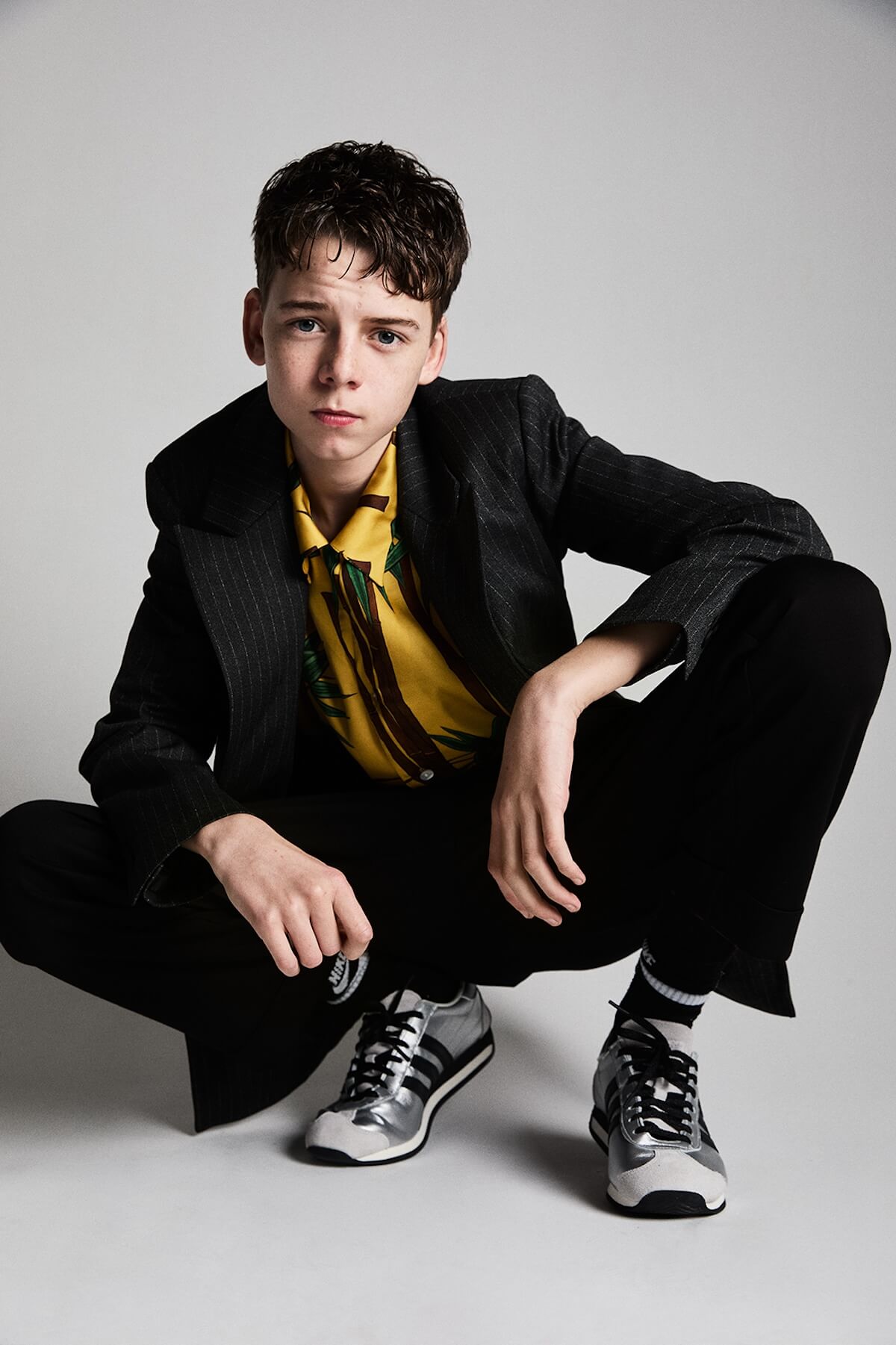
Now 15, Alfie is preparing for the world to finally see the fruits of his efforts. We had the pleasure of hopping on a Zoom call with him before the big London premiere to learn all about his process, filming the films back-to-back with Danny Boyle and Nia DaCosta and his favorite experiences on set. Read our full interview with him below.
Sweety High: We’re coming up on almost two years since you started filming the two 28 Years Later films. How does it feel looking back, and knowing that people are finally going to see the finished product?
Alfie Williams: I think what’s crazy is just seeing how much I’ve grown. In the first film, I’d just turned 13. I’m 15 now, so it’s great seeing Spike grow up—me as well.

(Photo credit: David Reiss)
SH: Now that you’re older, do you look back at that performance and think about all of the things you could have done differently?
AW: All the time, all the time. Every time I rewatch 28 Years, I’m looking at scenes and being like, “Oh, I wish I could have done that different. Wish I could have done that.” But the past is in the past. The only thing you can do is just remember it for future films and just know what to do better.
SH: Going into this process, had you seen 28 Days Later or 28 Weeks Later? Were you familiar at all with the franchise?
AW: To be honest, no, I wasn’t. I’d heard of it, but I hadn’t watched it. When I got the audition for 28 Years Later, I watched 28 Days Later to see what I was going into, and I really enjoyed it. It’s amazing.
SH: Would you consider yourself a horror movie fan?
AW: Yeah, I like horror. My favorite horror movie is The Thing. John Carpenter, he’s amazing. I love horror.
SH: What can you tell us about the new film, and what Spike dealing with in this second part of his journey?
AW: He’s dealing with a lot. Just trying to escape, and get away from these psychopaths. He’s forced to join them and he knows that it could possibly hurt the ones he loves, and he could lose his life. He just knows he has to get away from them.
SH: t’s pretty clear from the final moments of 28 Years Later that what’s about to happen in The Bone Temple is going to be quite different from what came before it. How would you describe the tone of the first film compared to the second?
AW: I mean, it’s a whole different scenario, isn’t it? The first one felt very gritty. It had that Danny Boyle feel. And I think the audience reaction to the Jimmies was, “These guys are so weird.” That’s kind of what Spike was feeling when he first saw them as well. It is a weird sight. It’s meant to be like that. But I think once people get to know the Jimmies, they’ll love them.
Also read about: Ashby Gentry on the Evolution of Alex Walter and Season 2 of My Life With the Walter Boys
SH: We’ve seen a bit of how acrobatic the Jimmies are, and in the first film, Spike had to get pretty proficient with a bow and arrow. What kind of training did you undergo to bring the character to life?
AW: I did a lot of archery training. I think I did three months training at a local place and I got really, really good at it. I still go now, sometimes.
SH: Have there been times you’ve impressed yourself with what you’ve learned?
AW: I got a couple of videos of me hitting targets from really, really far away. I guess when you start off, you’re always going to be pretty bad at it, you know? But once you get used to it, and once you can calculate the range and stuff, it gets pretty easy.
(Photo credit: David Reiss)
SH: Production for these films was pretty unusual. The two were shot back to back, and with different directors. How were those two filming processes different for you, and what was it like working with Danny Boyle versus Nia DaCosta?
AW: With Danny, this is pretty much his franchise. He started it with Alex [Garland]. Danny knows what he wants. When we’d finished a scene, he knew if we got it. Nia, on the other hand, has come into this with a new perspective. She hasn’t directed any previous 28 Days movies, so Nia was very experimental. She wanted different takes of us doing different stuff, to get a good idea of how she wanted it done. They were different in that way, but equally as talented.
SH: Do you think their different approaches to directing brought out something different in your performance or how you felt about bringing Spike to life?
AW: Not really. I talked it through with both of them about Spike. We would constantly be discussing Spike’s origin—the stuff you don’t see. What his life was like on the island, and how he’s feeling now that he’s left. Those discussions would help a lot.
Also read about: Actor and Martial Artist Nhut Le Talks the DCU and Becoming Peacemaker‘s Judomaster
SH: How much do you see of Spike in yourself? Are you alike in many ways?
AW: I suppose we share some of the same characteristics. I was saying this the other day, that when Spike goes on to the island in the first movie, he has no idea what he’s doing. That’s the exact same way I felt going on to this film set with all of these absolutely huge actors and this massive production. It is overwhelming at times, but like Spike, after you do it for long enough, you get used to it and it becomes easy. We share a similar personality in that way.
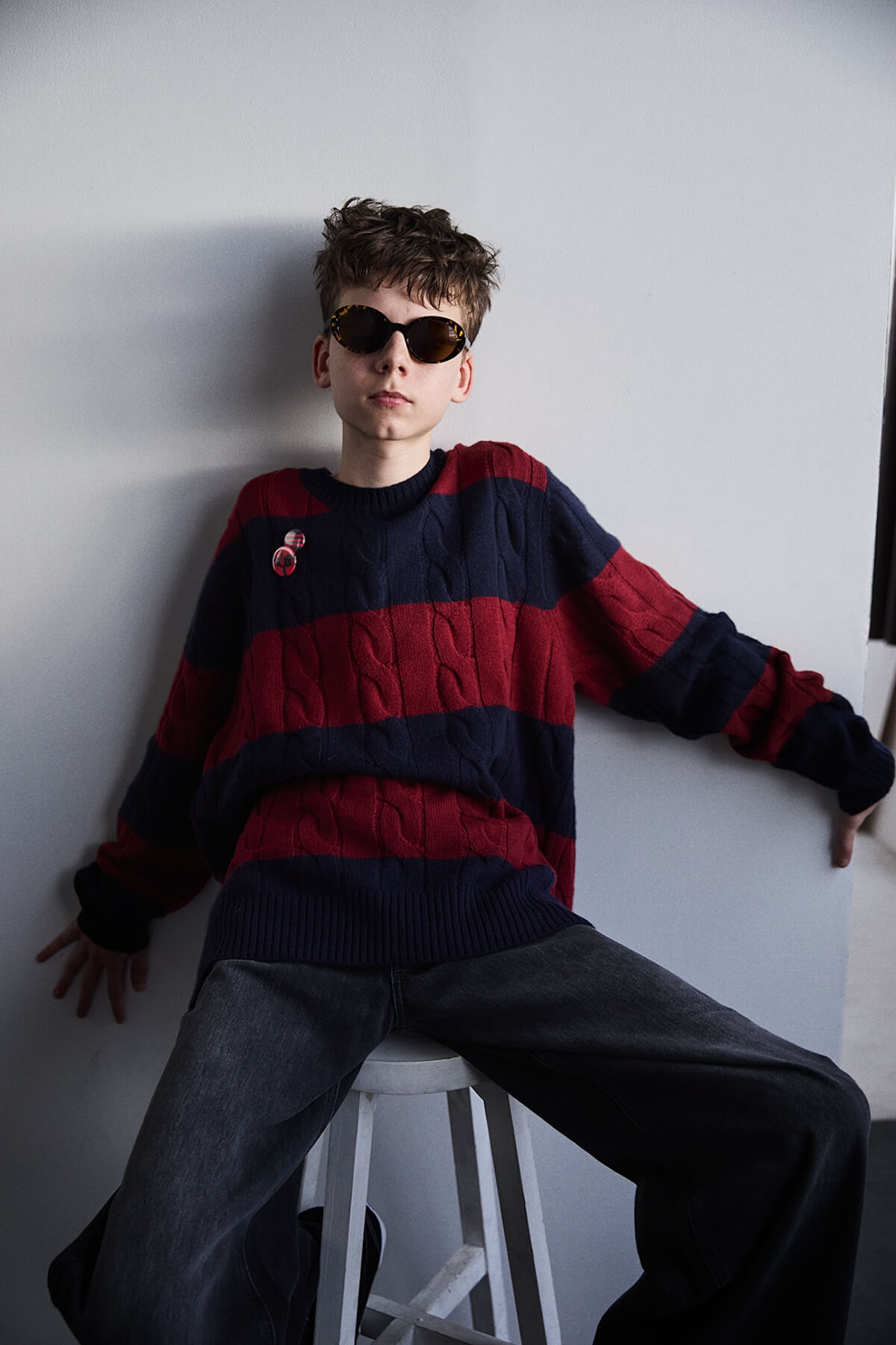
(Photo credit: David Reiss)
SH: As you just mentioned, both films are packed with cinematic legends and immense talents. As the newcomer on set, was there any wisdom your costars shared with you or anything they passed on that’s stuck with you?
AW: I remember there was one time with Jack [O’Connell]. It was the first scene in the film I had to do with Jack, and it’s a really tough scene. That was tough to get into, so Jack asked us to come over and speak to him for a moment. I went over and he just said, “Focus on what you have to do. Get in there, smash it, and it’ll be all right.” And I did. Jack was always there for us. He gives a lot of advice.
And on the first film, with Danny, he taught me how to use the light and not to be blocked. I was doing a scene with Aaron Taylor-Johnson, and I had to creep up behind him. There was this light in the room facing on me, and you couldn’t see us, because there was a huge shadow behind us. Danny taught me, before you do a scene, you should always look where the lights are, where the shot is, and adjust yourself.
SH: Do you have a favorite memory from filming each film?
AW: For the first film, we spend time at a place called Osea Island, and it’s beautiful. It felt like America at times, and you had to ride around on these bikes, because there were no cars. One day we had off, where we were staying had a pool. All of the cast and crew were at the pool. I just went, “Hey, why don’t I just ride my bike into the pool?” So that’s what I did. Nobody knew I was doing it. I hopped on my bike, rode forward and I jumped off into the pool, and so did the bike.
And then this guy, Dan—he’s a really nice guy—wanted to try. So he got on his bike, but there was a splash of water from where I got out of the pool. When he was riding, he slipped, and fell, and smashed his head and went straight into the pool. It just went silent. Everyone was waiting. And then he came out, and everyone was cheering. It was amazing. That was such a nice island, where all the causeway scenes were.
On the second film, we were in an EZ-Up tent, just waiting to start a scene, and all of a sudden, Jack came in, and he picked up a guitar. He just started playing the guitar and singing. It was this folk song. And everyone joined in, dancing and singing. They didn’t know the lyrics, but they were doing it anyway. It was just so nice. I didn’t know at the time, but he was doing Sinners. He’d just finished Sinners, and I think that was the song he was playing. I didn’t know! It was just such a nice moment. One that sticks with you.
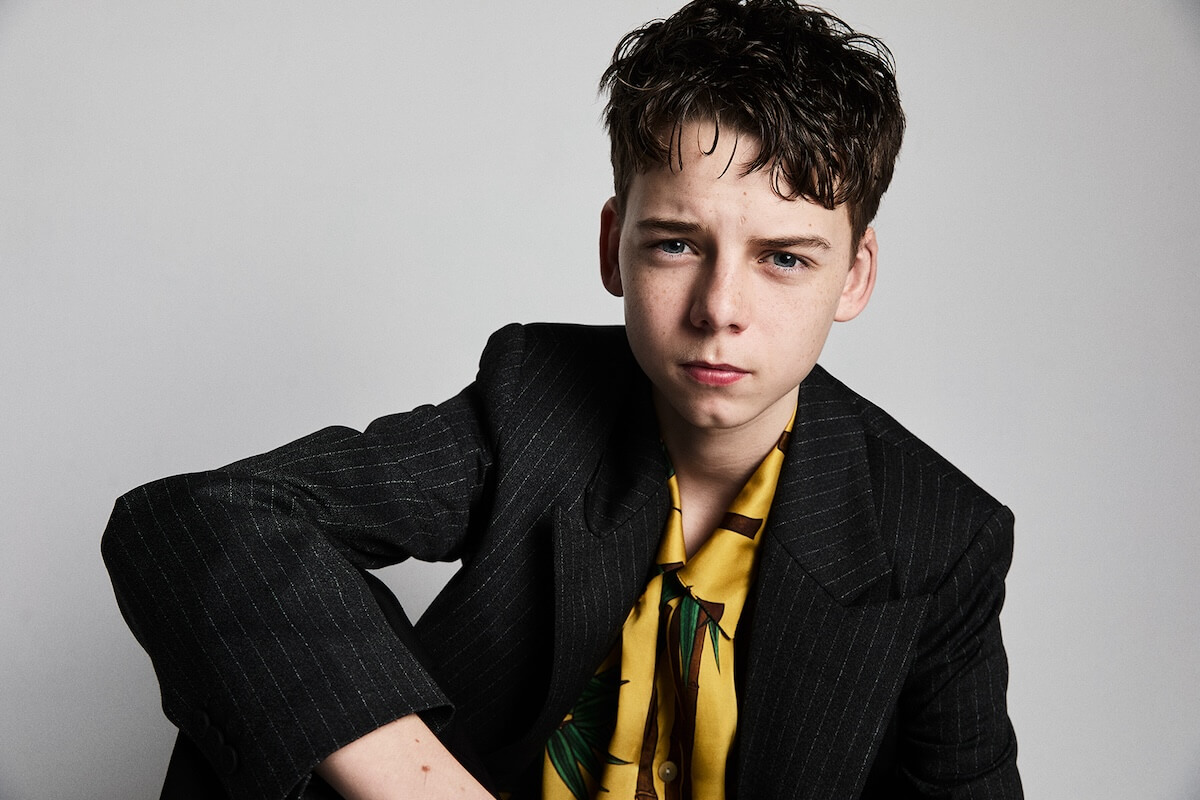
(Photo credit: David Reiss)
For more from the young actors in our favorite franchises, click HERE to read our interview with Kevin Chacon on his role in the new season of Percy Jackson and the Olympians.