Perhaps it’s not as simple as reaping what we sow.
Good people make bad decisions for complex reasons. Whether we should face punishment is a question no one can answer. After all, that’s what makes us human, and it’s exactly what Charlotte B. Plumb explores in her stunning debut, Reap & Sow.
The gothic novel, out in exactly one week, follows Eda Shaw, a young woman who runs her family’s shop. Beyond its gorgeous antiques is something sinister: the chance to sell your soul for the life of your dreams.
Eda’s father knows; he made the sacrifice himself years ago. Standing at a crossroads of her own, Eda must make an equally difficult decision that will forever change the trajectory of her future.
Now, thrust into a new world of wacky characters and a deceptively charming demon counterpart, she will fight to protect her bloodline and seek clarity about the past.
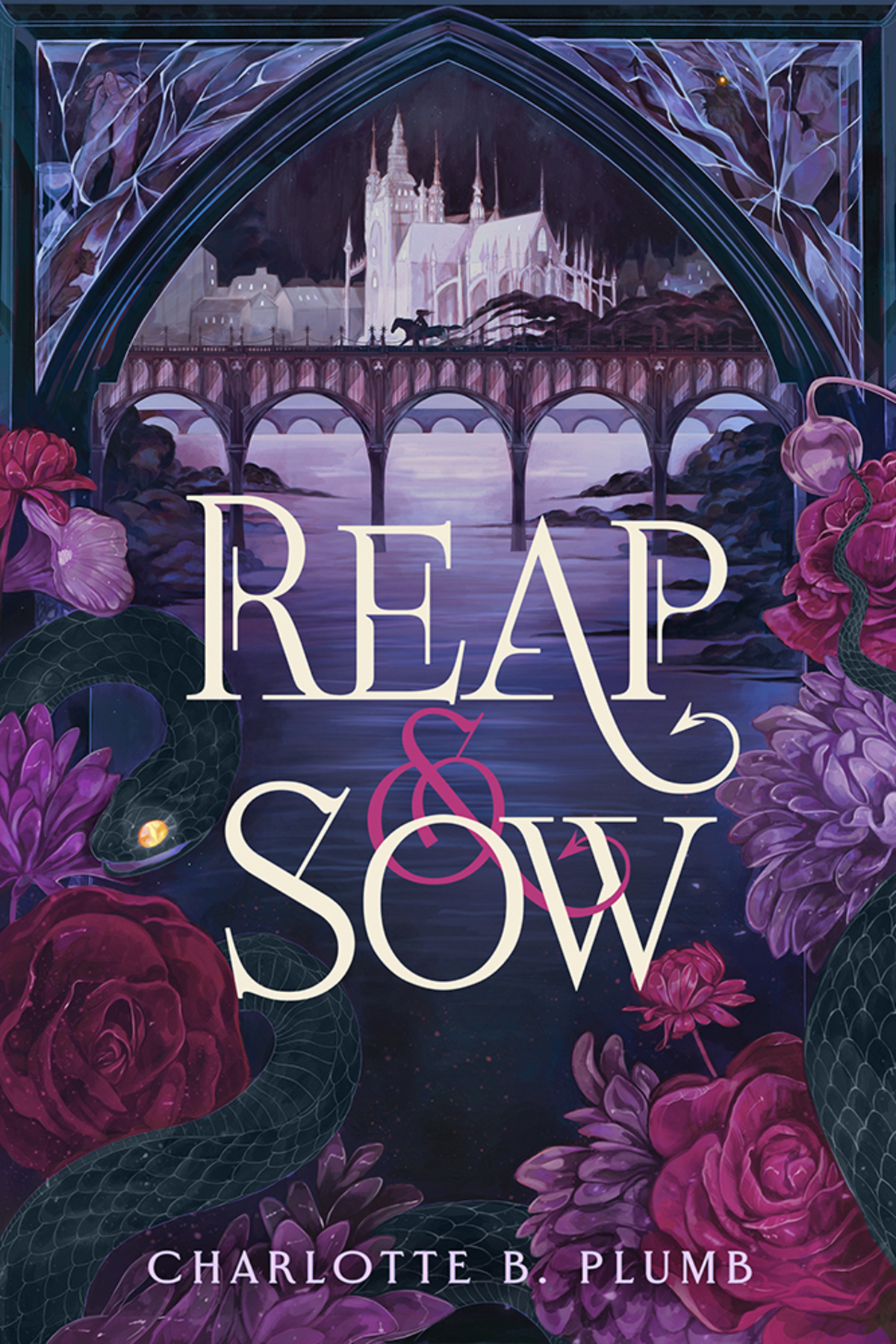
(Reap & Sow via Penguin Random House)
As the story calls, “You can be whatever you wish, Eda. The world is yours. You need only decide to seek it out.”
So, grab your tissues and laugh your heart out, because Eda taking the world into her hands will make you feel all of the feels.
Ahead, Charlotte shares her whirlwind journey with Reap & Sow, the first book under Berkley XO, the newest offshoot from Penguin Random House’s bestselling Berkley imprint. Yes, Peaky Blinders is involved (in the words of Charlotte, “Thomas Shelby fans unite”). Continue reading to learn more about the creation of this atmospheric fantasy, the development of her deeply relatable protagonist and eccentric side characters and the message behind the story. Reap & Sow is yours to keep on Oct. 6.
Sweety High: Eda has a complex dynamic with her siblings and father—fiercely loyal yet sometimes frustrated, while understanding the choices they must make throughout the story. How did you develop the intricate threads of their relationships?
Charlotte B. Plumb: Eda’s family is important to the narrative because they are all she has, at least at the beginning. Her whole world has been her brothers, the family shop and the generational legacy and trauma left behind by her father.
It was important to me to fully explore those relationships because, without them, we can’t get a sense of who Eda is. Her family and upbringing have reinforced her decisions and worldview. As much time as I spent on world-building and the romance, I also wanted to focus on who each of the characters are and develop them as their own, even though we’re in Eda’s head throughout the story.
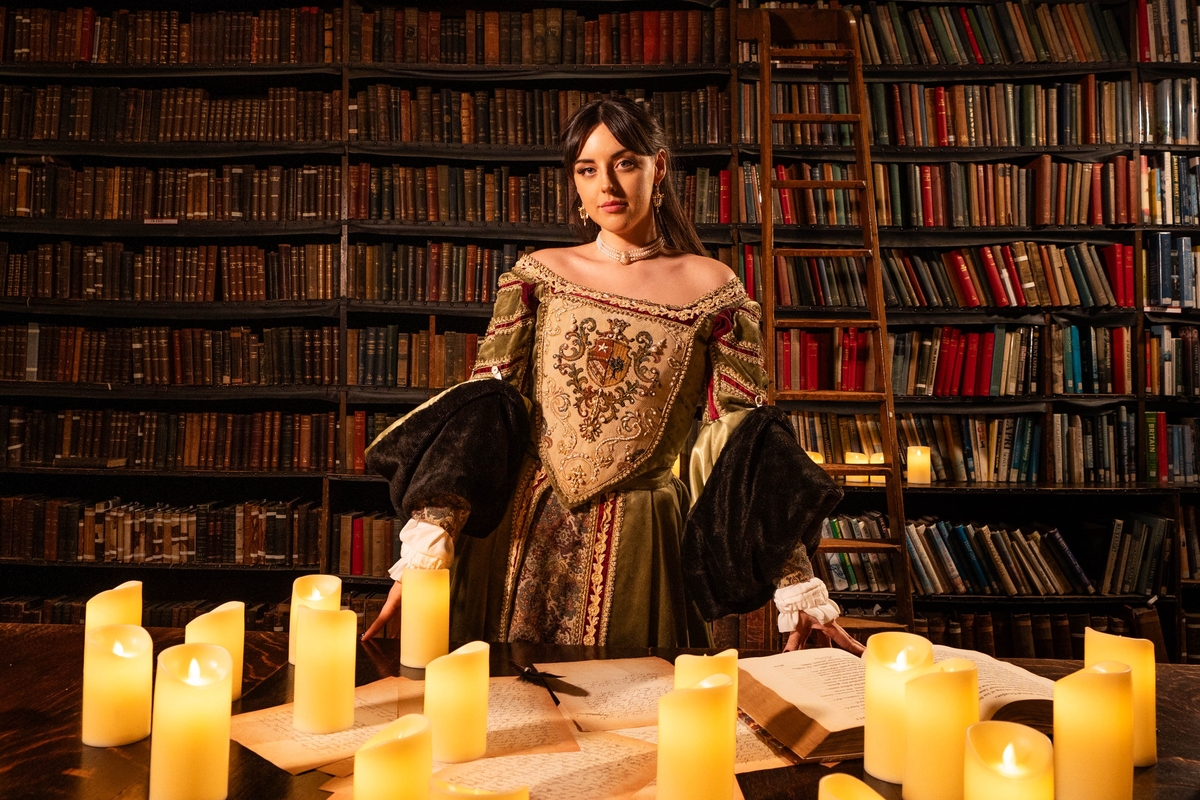
(Photo credit: Bo Francisco Films)
SH: That’s definitely apparent in characters like Tripp and Robin. They are secondary, but they feel like they have individual lives beyond Eda. How do you ensure that your side characters aren’t one-dimensional?
CBP: You see this a lot in all sorts of books, where readers talk about characters that can capture people’s hearts. I think side characters make the story in so many instances because the main character—you’re in their head, but they’re interacting with these other characters. How they respond to others says a lot about who they are as a person. It doesn’t come across as strongly if those side characters don’t feel like real people. If they feel like props who are there to deliver exposition for the sake of the story, readers can see through that. And for me, I want every character that comes on the page to feel like they’ve lived a life before they appeared. Like they were doing something, or they’ve got their own relationships.
There are little ways to make sure they feel multifaceted. Maybe, you can tell they’re saying one thing, but they’re thinking something else. Or, they have habits like playing with a piece of jewelry. It can even be where they live. In Robin’s case, her boat, Oriana, has those personalized touches, such as her hand-crocheted cushions and the things she keeps in her kitchen. These are clues to explain who the person is, which helps the reader feel like this world is real.
Also read about: Netflix’s Icebreaker Adaptation Has Cast Its Two Leads
SH: Eda and Kit have such fun banter with their romantic tension. How do you balance the two?
CBP: I’ve always enjoyed stories where there feels like a romance before they’ve done anything physically romantic. It’s much more earned when that physical intimacy happens. Banter is like a cerebral foreplay, an intellectual dance where characters are testing boundaries. They’re seeing how their wits match one another, and it helps build intense chemistry before any physical act has taken place. And it’s rarely about being funny. Humor is often a character not saying something or shielding themselves from having to say what they truly think and feel. That’s the case with Kit, where he uses humor to deflect, like many people, in self-defense.
It’s also a great way to have characters challenge one another in a safe way. It’s a lot about reading between the lines with humor, and that’s fun for readers to try and pick up on how these two character are orbiting one another, particularly if you’ve got a lot of dark, tense stuff happening. It’s a real sense of levity, and in my opinion, the best romantic relationships are the ones where someone can make the other laugh. Sometimes, especially in some genres, it’s difficult to find that because serious things are happening. But if they can incite laughter in one another, it’s an ecstatic feeling.
SH: Reap & Sow has a gothic tone. It also takes from Doctor Faustus, which predates the gothic era. Were there any classic authors or even real-world experiences that helped you create this atmosphere?
CBP: It’s interesting because it’s only when people ask you these questions that you’re like, “Oh, how did I do this?” Funnily enough, the initial idea for Reap & Sow came when I was watching an episode of Peaky Blinders. I will say, the end of the book is nothing like Peaky Blinders at all. But I was watching an episode of that show, and this thought popped into my head: what would a sort of family on the wrong side of the law look like in a fantasy setting? If they were on the wrong side of the law, what would they be trading in?
Whilst I don’t think the book is anything like Peaky Blinders, that British, gritty city, particularly Birmingham in the 1920s, has a footprint in the final novel. I also knew I wanted it to be slightly more higher fantasy, so I took it to an earlier period. When I was researching historical eras and fashion, I swayed towards Tudor and Elizabethan England. It all fed into it so beautifully because I was thinking about neo-gothic architecture and how it would complement a rainy, British island city. Once [Reap & Sow] had a flavor and sense of setting, it lent itself so well to gothic, dark and gritty topics.
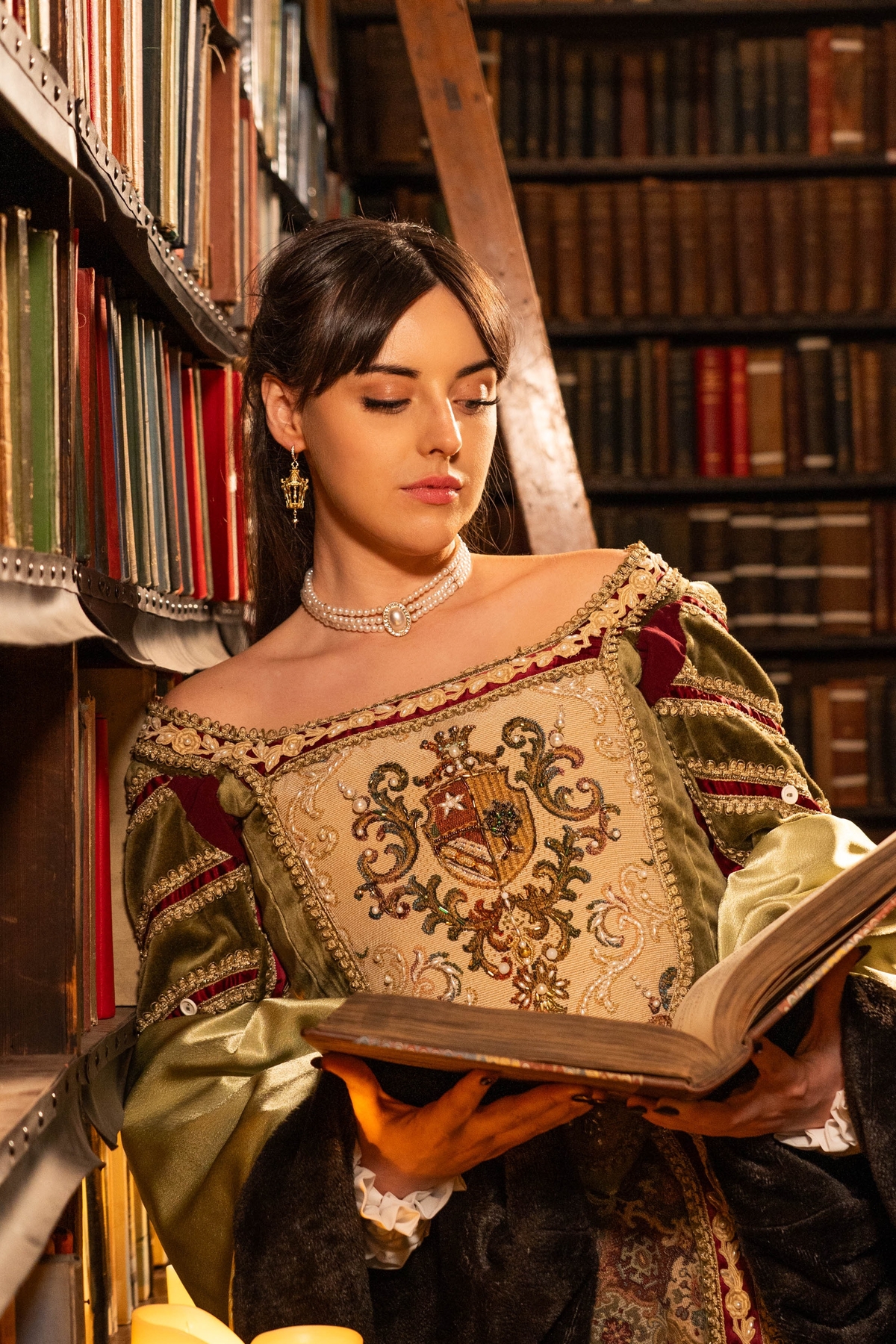
(Photo credit: Bo Francisco Films)
SH: Also, the voice feels very British. As a British author, why is it important that you maintain that level of authenticity in your prose?
CBP: It’s the soul of the book. That’s what makes a story distinct from the next, you know? It’s an invisible thread that connects readers to a character and puts them in their point of view. Having Eda be quite British, as well as the world around her, felt very natural and intuitive to me as an English author.
If a voice feels overly manufactured or from a perspective you don’t fully understand, it can shatter the illusion you try to build. So, I just decided to fully lean into my own Britishness.
I was actually kind of concerned about this [laughs]. I brought it up to my agents and editors when I first got the book deal, and I said “Will a U.S. audience connect to this?” Because it clearly has that British flavor that I chose to lean into. Both my agents and editors were like, “Absolutely. Not a problem. U.S. audiences love British stuff.”
Also read about: Everything You Wanted to Know About The Hunger Games: Sunrise on the Reaping
SH: Exactly!
CBP: I’ll take your word for it. It was an unfounded worry, to be honest. I’m glad I did it because it helped ground the story. I took so much inspiration from Elizabethan England because it felt natural.
SH: The last page of the book leaves us on a cliffhanger. On Instagram, you shared that this will be a duology. Is there anything else you can tease to readers about Eda and Kit’s arc?
CBP: I don’t want to say too much. I’ve just finished the first draft of the sequel, which will be the last book in Eda and Kit’s story. We’re focusing more on the reality of what it means to be a human and a demon in this relationship. It’s two people from literally different worlds, how that affects them as a pair and what challenges that poses. It’s an exploration of Kit’s world, which was important because the story is about mirrors, reflections and pacts. These characters are foils of one another.
In Reap & Sow, we spent so much time in Eda’s world with Kit being a stranger in a strange land. We’re flipping that in the second one. Readers can expect bigger stakes and a bigger cast.
There’s a fair bit more action in this one, and I’ve had such a fun time writing it. I hope that readers will enjoy it. I’m proud of it, and I think it’s a good exploration of Eda and Kit and how they are together. There’s internal and external stuff, which I always enjoy in stories. The internal story is more important than the plot. What they are going through together is the most interesting part in my eyes.
And a good dose of humor, just like the first one!
SH: This is the first book to be released under Berkley XO. What does it mean to you to carry that torch?
CBP: The short answer is that it is completely surreal. It is an interesting cocktail of low-key terror mixed with excitement because the whole thing is daunting. It’s not a hyperbole to say that it was something I ever expected for myself. It’s one of those things you hear about—you know, someone getting a great deal with a publisher—and you think it will never happen to you, obviously. Then, it did.
I’ve always been a writer and loved writing as a hobby in my personal time. I tried to get serious about it in my mid-20s and knew that I wanted to finish a book. My first book, I queried it, and it was crickets. I remember thinking that I had a choice. I could say that was it, and this world wasn’t for me. I’ll put the laptop down because the reality is that most people try to get published and it never happens. But I realized I didn’t want to stop writing, even if someone could guarantee that I would never be published.
Reap & Sow is my second book, and I had a sense that this one had something that the first one didn’t. There was a marketability that the first one didn’t have, and the idea ran away from me almost faster than I could catch up to it. I had a completely opposite experience. I had loads of requests and multiple offers of representations. It was also a quick submission process before we sold to Berkley XO, then to the UK, and we sold foreign rights, too. It happened so quickly that I couldn’t even process that it happened.
I guess my instinct was correct that something about this story could capture people’s interest because I didn’t have any connections in the industry. I don’t know any agents. I was another cold email going out there, hoping that someone would read it and like my sample pages.
This experience has been wonderful. Berkley XO is a brand new imprint, and [Penguin Random House] is so excited about launching it. It’s a brilliant time for crossover. That line between YA and adult is blurred now, and I think it’s what people want.
I feel fortunate that they want me to be part of their inaugural list. I know there’s an element of luck as well, though. You have to write something at the right time, and that was part of the case. It’s been a wild trip in the best way possible because I feel enthusiasm for all sides of the story. I couldn’t ask for a better start as a debut author, and I’m very thankful
.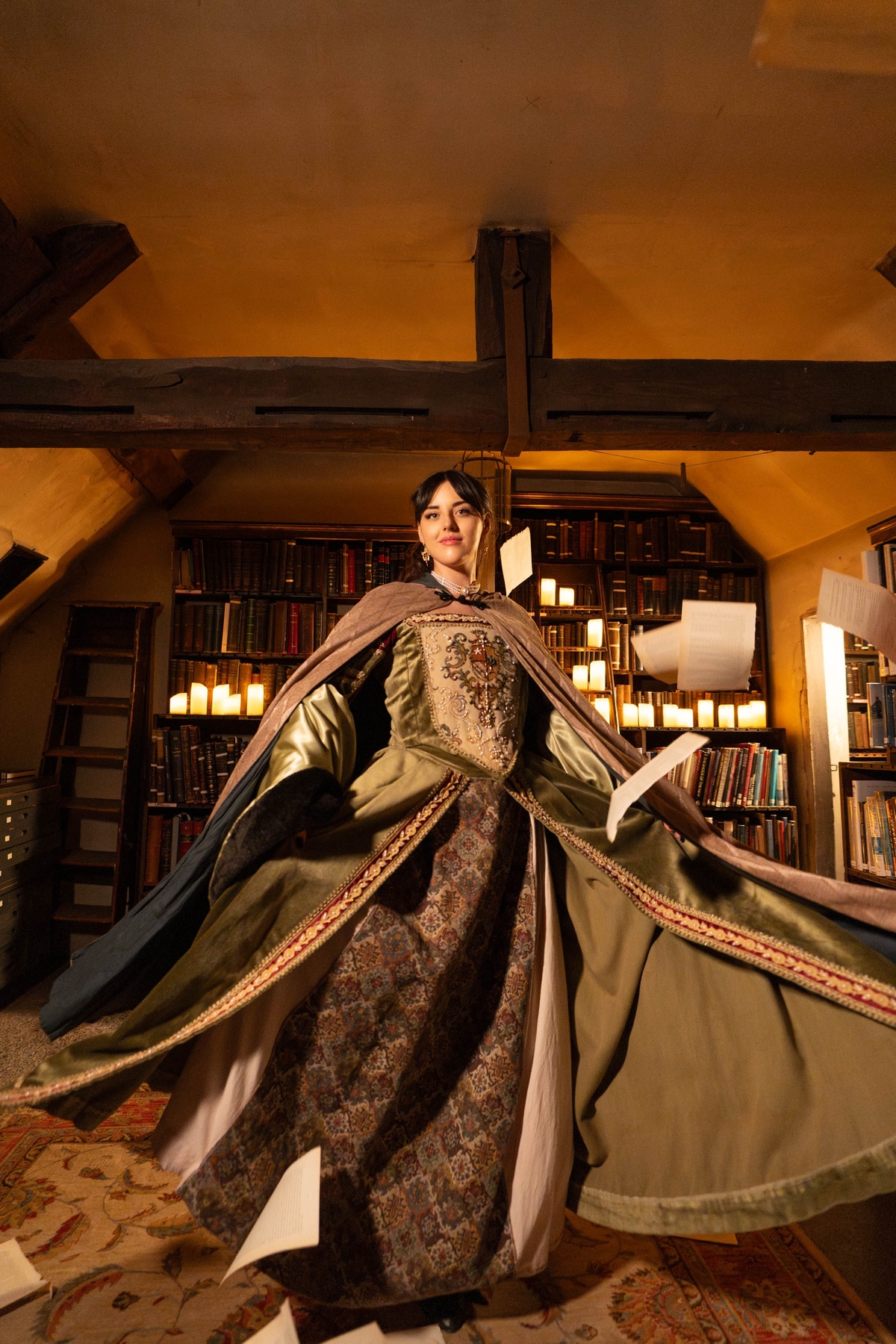
(Photo credit: Bo Francisco Films)
Also read about: 29 Classic Quotes From Emily Brontë’s Wuthering Heights to Use as Instagram Captions
SH: What do you hope readers will take away from this story?
CBP: You want to leave your audience with a certain feeling. For me, reading has always been about escapism. That’s why I love fantasy, because it’s so transportive. No matter what’s going on in your life, fantasy stories can teach us a lot about the real world and transport us away from it.
I hope readers feel transported and the magic of that feeling. I want them to have an emotional connection to the characters. I would love for them to close the book and still be thinking about the characters.
On a deeper level, this story has grim and dark elements, but I hope readers will feel a thread of hopefulness. The story talks about morality, what makes someone a monster and what makes someone human. How someone looks can be deceiving to who they really are. In the world we live in today, it’s easy to feel disillusioned and hopelessness. I’d like this book to be a small reminder that humans can be brilliant. There’s a lot to love about humanity.
Curious to learn more about our other favorite books? Click HERE to discover our favorite book releases from September 2026.