Transylvanian-born pop artist Sorana is turning her late-night overthinking into a hyperpop horror movie with her new single “BULLIES.”
The track is part of her upcoming debut album, Shift, which explores mental health and how easy it is to get trapped in your own head.
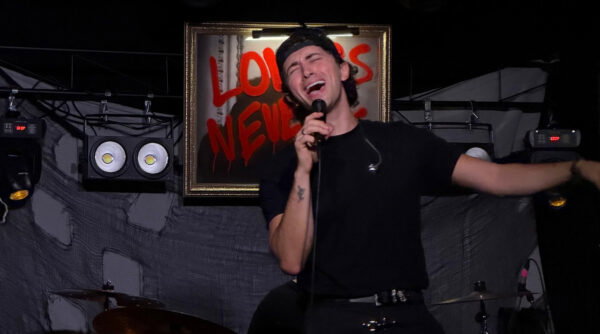
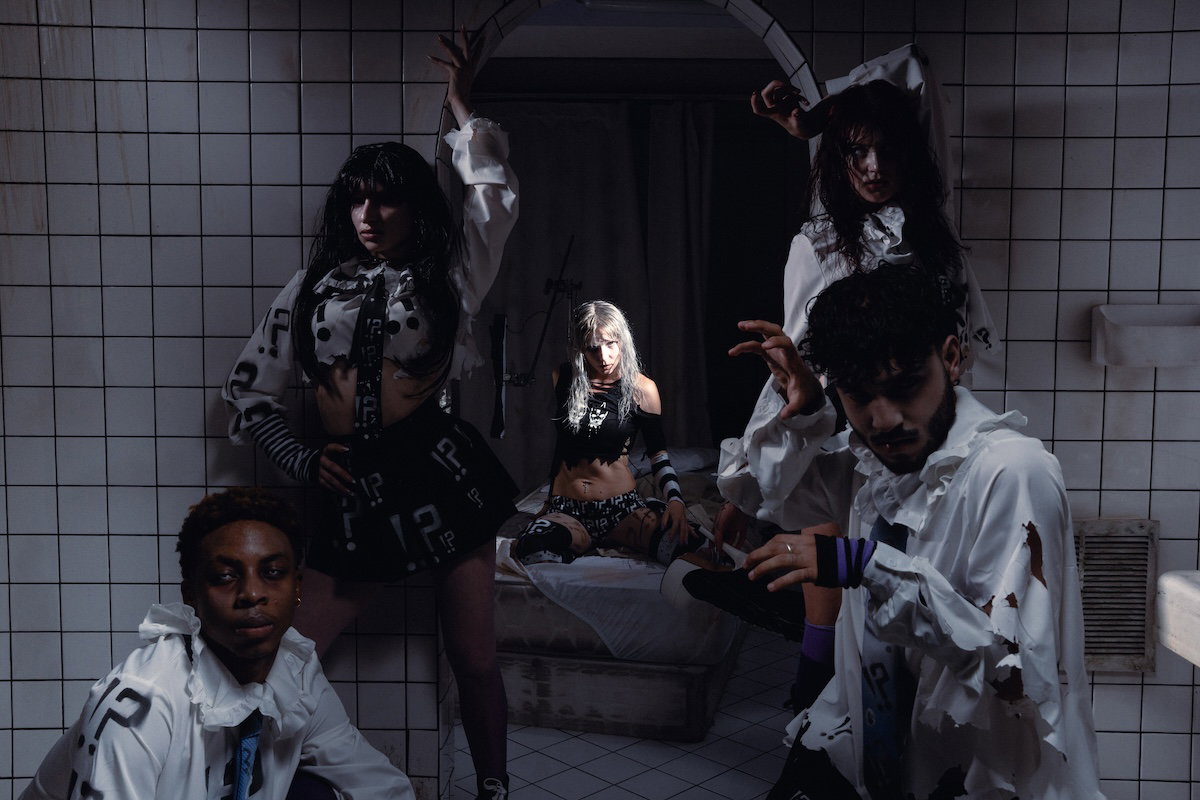
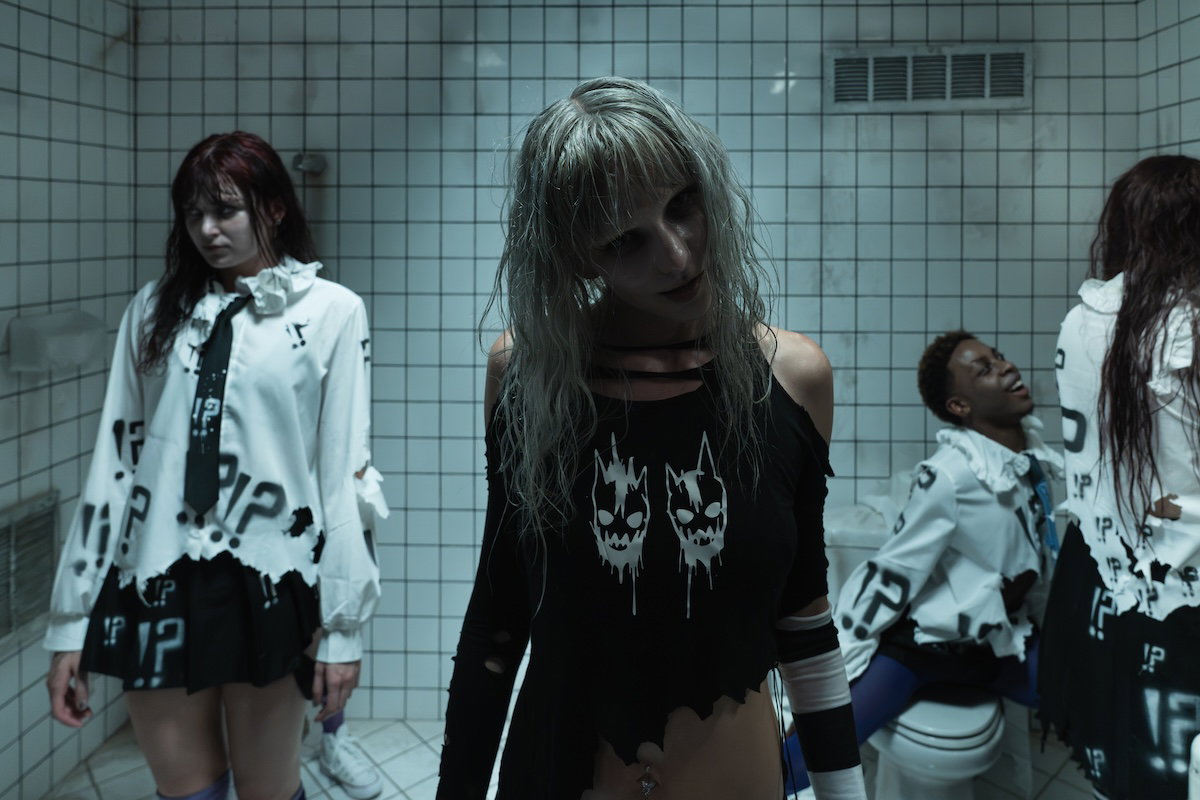
Co-written by Madison Love and produced by Inverness, “BULLIES” pairs hyperpop hooks with heavy beats and dark humor. The music video, directed by Sorana and Neve Abcari, is the first of 10 videos filmed for Shift, turning the artist’s intrusive thoughts into literal mean girls.
Classically trained in piano, Sorana has surpassed 5 billion streams as a songwriter, with credits for KATSEYE, The Chainsmokers, Charli xcx and Jennie. She launched her solo career in 2022 with “redruM,” a No. 1 collaboration with David Guetta.
Sweety High caught up up with Sorana to talk about directing the “BULLIES” video, balancing humor and vulnerability and the story behind Shift. Read our full interview with her below.
(Photo credit: Max Durant)
Sweety High: For the “BULLIES” music video, how did you come up with the idea of intrusive thoughts as schoolgirl bullies? Why did the horror-movie framing feel right for telling this story of anxiety and overthinking?
Sorana: I’ve always battled bad thoughts in my head, and I’ve always been an anxious person. The whole story started with the thought, “Voices in my head are bullies.” I wanted to write a song about that. The whole album is about my mental health journey and how I got it to feel better and less suffocating.
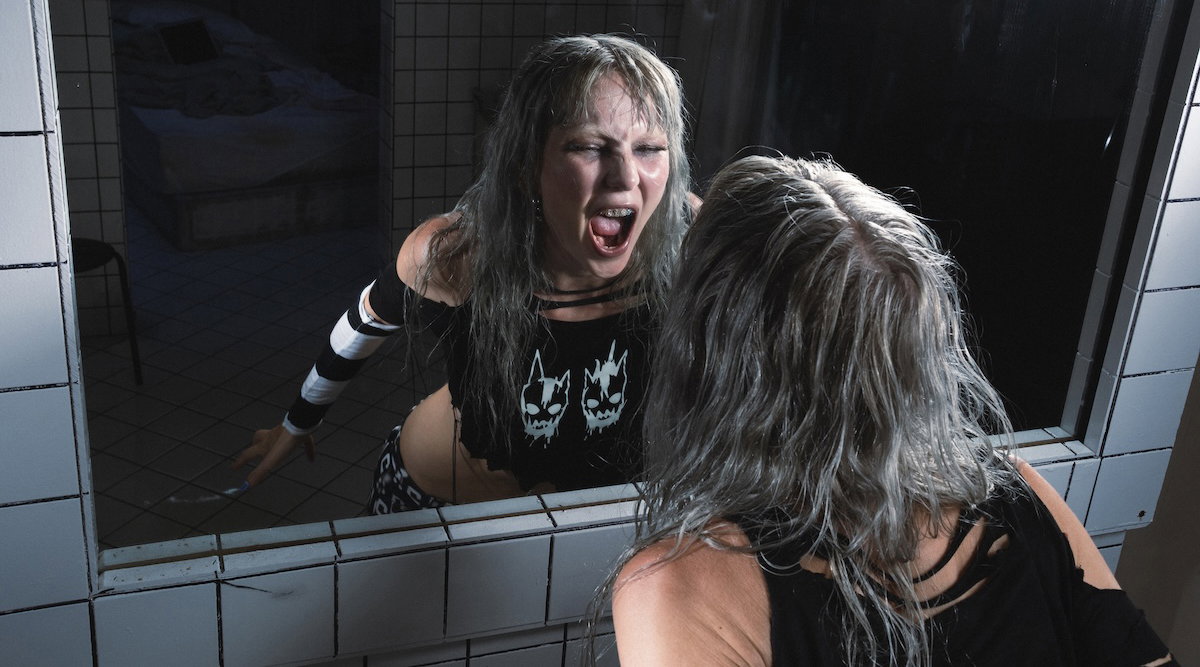
The story starts at the worst place. A lot of times, I would be up at night overthinking things, and then you spiral until you’re not even in the present anymore. As my friends and I were writing the song, I had this visual in my head: I’m in a white bathroom, and my thoughts materialize as people and start beating me up.
You can be your own worst enemy, and I think you have to acknowledge that to be able to change it. Dealing with mean girls at school can be one of the worst things you go through as a teenager, and I thought it was a good depiction of what it’s like in my head sometimes when I say bad things to myself.
Mean girls are scary, and so are the voices in my head sometimes. The whole album is like a therapy session. I’m trying to figure things out. It’s uncomfortable because it feels uncomfortable to be in my head, and it’s very true to how it feels to overthink and have anxiety. To me, that’s real horror.
SH: What was the experience of directing the music video? Is it challenging to bring such a personal experience to life visually? Were there any moments on set that came to life differently than you anticipated?
Sorana: I wrote this album in 2025 and shot three music videos for it. Then, earlier this year, I realized I hadn’t gone deep enough into the story.
I decided to go back to the drawing board. I sat at my computer for about two months, diving into the story and why I wrote these songs. Sometimes it isn’t clear at first. A title comes into my head, or a song comes out of my subconscious, and I have to think about it to get to the bottom of why I wrote it.
I think that’s work you need to do as an artist to be able to show what you mean. Writing the stories behind each song helped me understand what the album was about. Then I knew exactly what I wanted to express visually and what the visuals could add to the story already in the song.
I don’t want the visuals to just repeat the lyrics. They have to show a different side of the story and complete it, like a movie.
I’m an all-in type of person, and this is my favorite music I’ve ever made, so I thought it deserved that. I wrote all the stories, then made mock-ups of every video with my choreographer, Logan Donnelly. We worked on the choreography in the studio and filmed mock-ups with the camera angles I wanted.
It was pretty straightforward on set because we had prepared so well. We knew how everything would look, and the team at No Storage Productions is amazing.
(Photo credit: Max Durant)
SH: How do you balance humor and vulnerability in your songs?
Sorana: My songs are always kind of sarcastic, and I’m always making fun of myself. With a line like, “Where’s my phone? Let me ask ChatGPT,” I’m making fun of the fact that I, like a lot of people, ask ChatGPT a lot of ridiculous questions.
The vulnerable part is that it’s real. I’m talking about thoughts I’ve had over the past few years and being open about struggling with my mental health.
If I write about these things and make everything very serious, it stops being fun. It’s nice to have a balance. We have horror, but we also have pop and choreography, which makes it easier to digest.
I think self-irony helps you grow as a person, too. If you can make fun of yourself, things don’t feel quite so serious, and you can move on.
Also read about: Knox Talks My Midwest Best, His Midwest Roots and the Unexpected Success of ‘Go for Broke’
SH: You’ve described the 3 a.m. spiral as the root of this song. What does that usually look like for you, and do you have any advice for others on breaking out of it or learning from those moments?
Sorana: I’ll be in bed feeling anxious about something, watching Netflix instead of sleeping when I know I need to sleep. Then I can’t sleep, so I start scrolling on TikTok. I see people doing things I want to do, and I start spiraling: “Why am I not doing that?”
It often starts with comparing myself to people on social media or doubting myself. I’m still figuring out how to get out of those thoughts.
What I tell myself is that I’ve always made it through the hard times, so I’ll probably make it through the next one. The more I prove to myself that I can get through things, and that nothing is as dramatic as it seems in my head, the easier it becomes to think positively.
It takes time. You need those experiences of getting through things that stressed you out to start feeling more confident about the future. It’s a process.
Also, don’t scroll at 3 a.m. Learn the choreography to “BULLIES” instead! For me, moving my body is a great way to get out of my head and release some of that energy.
[ADD IMAGE: second Sorana photo + credit line]
SH: “BULLIES” is just the first of 10 videos filmed for Shift. What can we expect next? Any recurring characters or motifs we should watch out for?
Sorana: This project brings all my characters together. There are my blue braids, which I call my Sailor Moon wig. Then Wiggy, the first light-up wig I made, is making an appearance.
I also finally dared to show myself without my wigs. I always felt like I needed tricks to be cool, and I’m finally accepting myself as I am, too.
I made a new light-up wig that’s the brightest of them all, and she’s going to debut in one of the upcoming music videos.
I like having alter egos and different characters, so it’s cool that people can see all these sides of me in one place.
(Photo credit: Max Durant)
SH: What do you hope listeners, especially ones who’ve been battling their own thoughts, feel when they hear “BULLIES”?
Sorana: I want the song and video to offer a release from those thoughts. The video is a fight scene, and it’s about releasing all that energy from spiraling. That’s also why the song is hardstyle.
For me, movement is a great way to get out of my head. I want people to hear the song, dance to it, go crazy, and get out of their heads and into real life.
So I guess you have to learn the choreography! There’s the fight choreography or the chorus choreography. I want people to have something physical they can do to release that energy.
Also read about: Olivia Soli on Heartbreak, Healing and Finding Happiness
SH: Where does “BULLIES” fit into the wider story of Shift? Is there anything you can tease about what’s coming next?
Sorana: “BULLIES” is the start. It’s the worst of it: the voices in my head are bullies, everything’s dark, and it’s a horror movie. The question is, “How do we get out of this?”
The whole album is a journey through little worlds: things I’ve gone through and things I need to work on to improve my life. The main song, “Shift,” takes you through the stories of the other songs.
It relates a lot to my life because I’ve had to reinvent myself so many times. I moved from my hometown in Transylvania to the capital of Romania, then to London, then to L.A.. Every time, I had to start from zero, reinvent myself, grow, and gather more strength.
Starting again can feel harder each time. You have to work on yourself and your mental health, keep going, and build more strength, ambition, and resilience. That represents me a lot.
With this album, I want to inspire people to try their best to make their life a reality they love.
SH: How does your training as a classical pianist show up in how you write or build songs, especially in the hyperpop and electronic genres you’ve been exploring recently?
Sorana: Piano gave me an understanding of music and melody. Learning an instrument at a young age really helps with musicality in general. It’s not specific to hyperpop or pop; it gave me an amazing foundation as a composer.
I’ve always been musical, but learning so much music at a young age made it easier for me to write songs later, whatever those songs were. It definitely made me a better composer.
SH: After years writing for artists like KATSEYE, Charli xcx and JENNIE, what was the hardest part of keeping a song for yourself? What do you know now as a solo artist that you didn’t as a writer?
Sorana: I try to separate those two sides so there’s no conflict. In the past, I did struggle to choose which songs to keep, and I would get upset if certain songs were sent to other artists, even though I knew I couldn’t keep everything.
As an artist, you have a personality and a lane you explore. The deeper you go into that, the clearer your identity becomes. Keeping every song wouldn’t make sense for me. If I’m making hyperpop or electronic music and I write an R&B song or a straightforward pop ballad, I wouldn’t necessarily keep it for myself.
As a songwriter, you have to be personal, too, but a lot of the time you’re thinking, “What’s the next hit I can write?” That’s the goal.
When I write as an artist, the goal is to make something I really relate to and can get behind. I used to have stage fright, and that stopped when I started performing songs I truly loved, because performing them was exciting to me. Not every song makes me feel like that, even if I wrote it.
Also read about: All the Reasons Why KATSEYE Is Still the Group Everyone’s Talking About
SH: Is there a song you’ve written for someone else that you secretly wish you’d kept?
Sorana: No, there isn’t.
I love having different sides of my personality showcased. That’s why we have the hard drive concept I built at soranasharddrive.com: the hard drive is my brain. I’m a prolific writer, and I love having all these different ways to express my creativity. I don’t need to sing every song.
I love being a chameleon and writing different things. Being only an artist would narrow my universe. Giving songs to other artists makes my world bigger and lets me show more of who I am.
[ADD IMAGE: third Sorana photo + credit line]
SH: You design your own costumes and light-up wigs. Is there anything specific we should watch for in the “BULLIES” era?
Sorana: I’ve designed a whole collection of clothes, including pieces with glow-in-the-dark prints. I’m wearing them in the “BULLIES” video and the upcoming videos, and I’ll be choosing specific items from the collection to release as merch!
SH: Is there anything else we should know about you or your new music right now?
Sorana: I’ve written my favorite album ever, and I’ve gone all in creatively in every way.
I designed a whole collection of clothes, probably over 100 items, with my designer friend in Romania, Constantine, who is also manufacturing the collection I’m wearing.
I made a new wig and a whole interactive website, soranasharddrive.com, that takes you through the lore of the world. I’ve shot music videos for the whole project, so it’s going to be like a movie.
I want people to watch the story unfold in real time as much as possible. You can always go back and watch everything, and it will make sense, but I’d love people to experience it as it happens.
(Photo credit: Sorana)
For more from artists reflecting on identity and expectations through their music, check out Paris WYA Talks Shedding Expectations and Embracing Her Truest Self With Her MANNEQUIN EP.