35 Bizarre Animals You Won’t Believe Exist in Real Life
This world is full of such strange and wondrous creatures that sometimes, you have to see them to believe them.
While some animals are beautiful or awe-inspiring, others make you do a double-take just because they're so plain weird. It can be tough to believe that these incredible products of nature really exist somewhere out there.
However, we assure you that every bizarre creature on this list is the real deal. Click through to check out 35 of the weirdest living things on the planet.

(via Shutterstock)
1. Aardwolf
You've probably heard of an aardvark, but an aardwolf? While this small mammal is related to hyenas, their behavior is quite different, because instead of hunting down bigger animals, they're actually insectivores. Termites are an aardwolf's preferred meal, and like an aardvark, they use a long, sticky tongue to slurp up about 250,000 termites nightly.

(via Shutterstock)
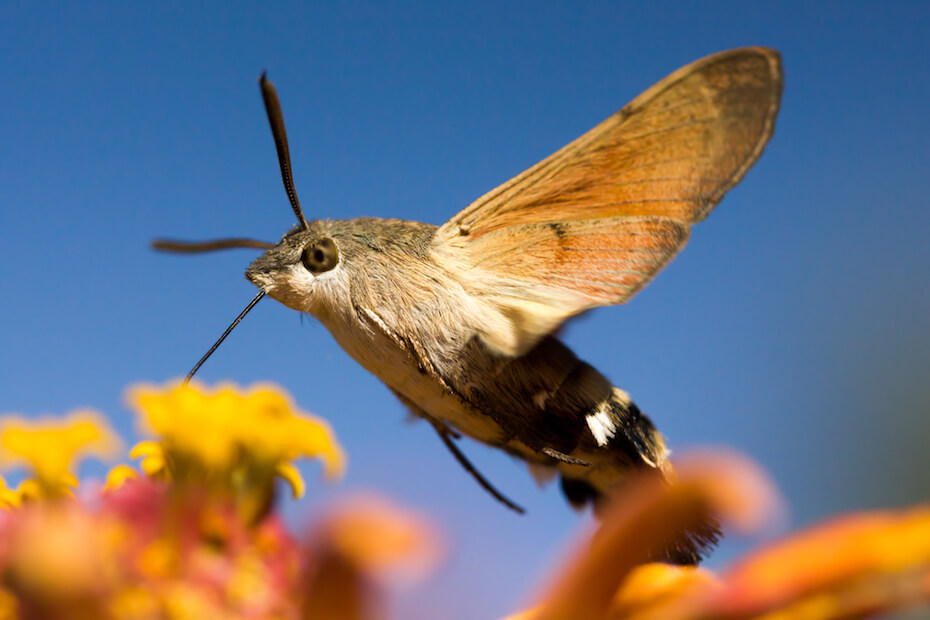
2. Hummingbird Hawk-Moth
The hummingbird hawk-moth gets its name from its behavior, which very much resembles that of a hummingbird. This moth flaps its wings rapidly to hover in place while it feeds on flowers with its long proboscis, and due to its size can even be mistaken for the minuscule birds. They have a huge range, living from Portugal in the west all the way to Japan in the east, preferring areas with warmer climates.
(via Shutterstock)
3. Blue Dragon
The blue dragon, which goes by the scientific named glacuus atlanticus, is also known as the blue angel and sea swallow, and despite its appearance is actually a sea slug. What you're seeing in the image above is actually the blue dragon's belly. They use the surface tension of water to float around, allowing winds and ocean currents to transport them to areas where they can feed on Portuguese man o' war and other oceanic critters.

(via Shutterstock)
4. Sunda Flying Lemur
Also known as the Sunda colugo, the Sunda flying lemur sometimes resembles a bearskin rug more than it does a living, breathing animal. Hailing from Malaysia, this animal is technically neither a lemur nor a flying creature. Instead, the webbed skin between its limbs allows it to leap and glide between trees, where it forages for plants and fruits at night.

(via Shutterstock)
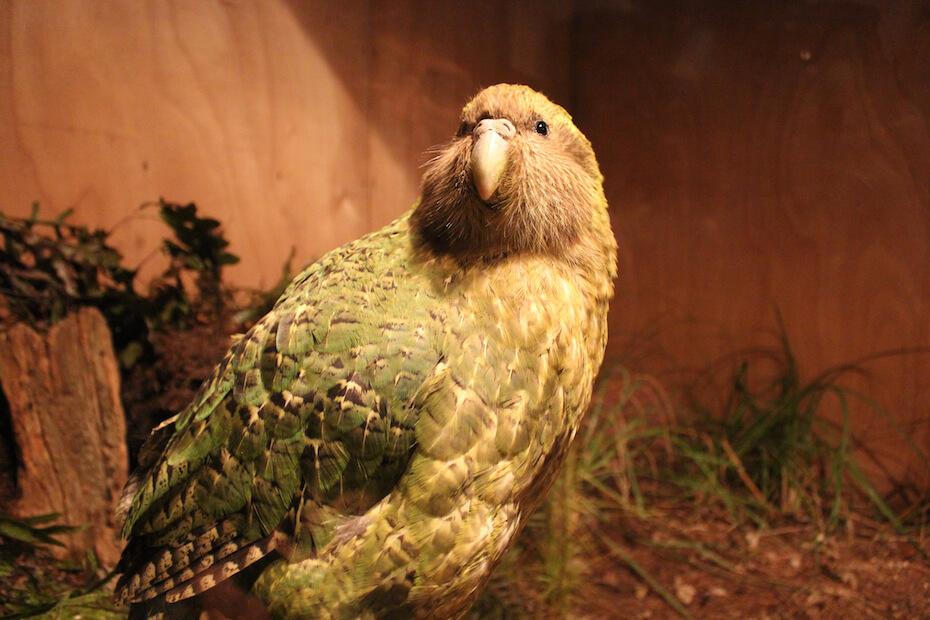
5. Kākāpō
The Kākāpō, also known as the owl parrot, is a bird from New Zealand that happens to be the heaviest parrot in the world. It's also the only flightless parrot alive. Huge efforts have been made to maintain populations of this unusual animal, which have a total known adult population of just over 200 after being threatened by humans and the predators they brought along with them. We think these cuties are certainly worth protecting.
(via Shutterstock)
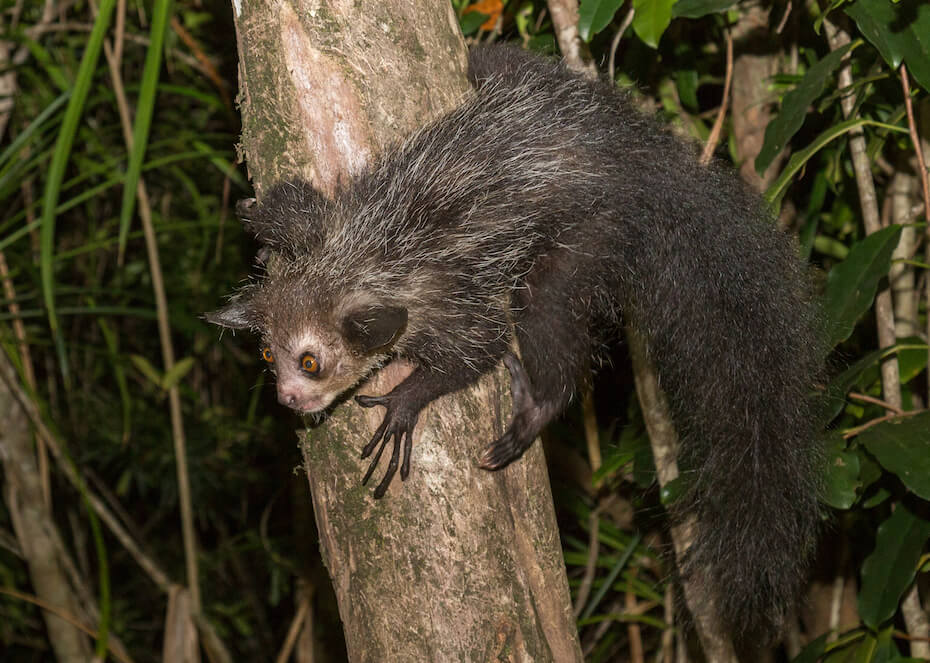
6. Aye-Aye
In theory, aye-ayes should be pretty cute. They're nocturnal lemurs that live in the trees of Madagascar. However, there are certain features that tend to make them look downright creepy. For one, they have long, rodent-like teeth that never stop growing, and a long, thin middle finger that they use to forage for bugs hiding in holes in trees. Their slender hands, unruly fur and bulging eyes truly make them stand out.
(via Shutterstock)
7. Mexican Mole Lizard
The Mexican mole lizard is also known as the five-toed worm lizard, and lives only in the Baja California Peninsula in Mexico. It kind of resembles a fleshy pink earthworm with legs, which makes sense, given that most of the Mexican mole lizards closest relatives are "worm lizards," which have long, snake-like bodies that lack legs.

(via Shutterstock)
Also read about: The Cute But Rascally Animal You Are, Based on Your Zodiac Sign
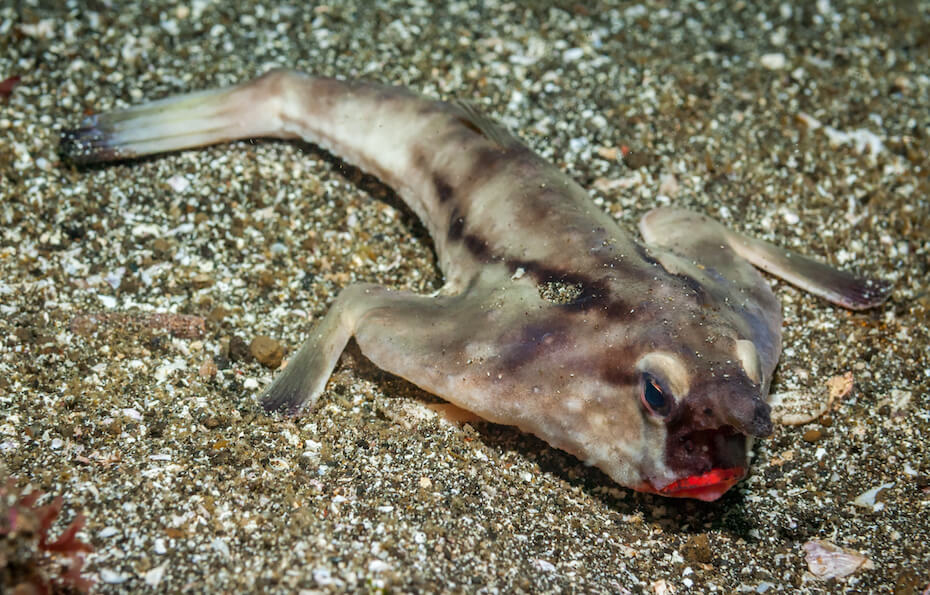
8. Red-Lipped Batfish
Look at those lips! And yet, somehow, the fact that the red-lipped batfish looks like it just applied a fresh coat of rouge isn't the strangest thing about the aquatic animal. This fish, usually spotted off the ghosts of the Galapagos Islands and Peru, also has an utterly bizarre shape. They tend to hang out on the ocean floor, using the strange horn on their heads to lure in prey. The horn even emits a light.
(via Shutterstock)
9. Saiga Antelope
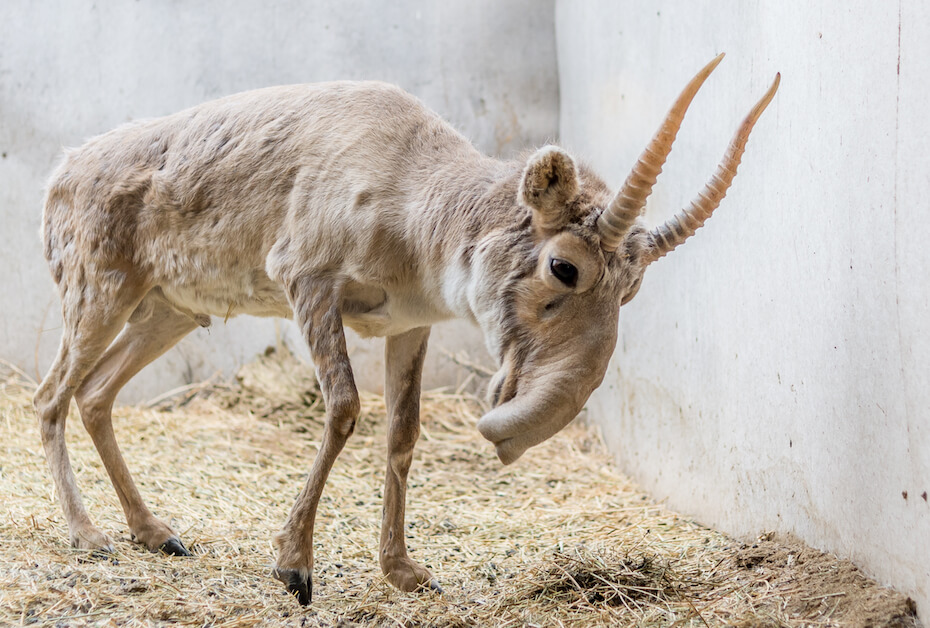
It only takes one glance at the saiga antelope to see that it doesn't quite resemble the antelope you've seen in the past. Not only is its head quite large in proportion to the rest of its body, but its almost elephant-like trunk, ending in two close-set nostrils to keep out dust, sets it apart from the rest. This species is critically endangered, and while it used to have a wide range, stretching across Eurasia, today is found only in one place in Russia and three spots in Kazakhstan.
(via Shutterstock)
10. Roseate Spoonbill
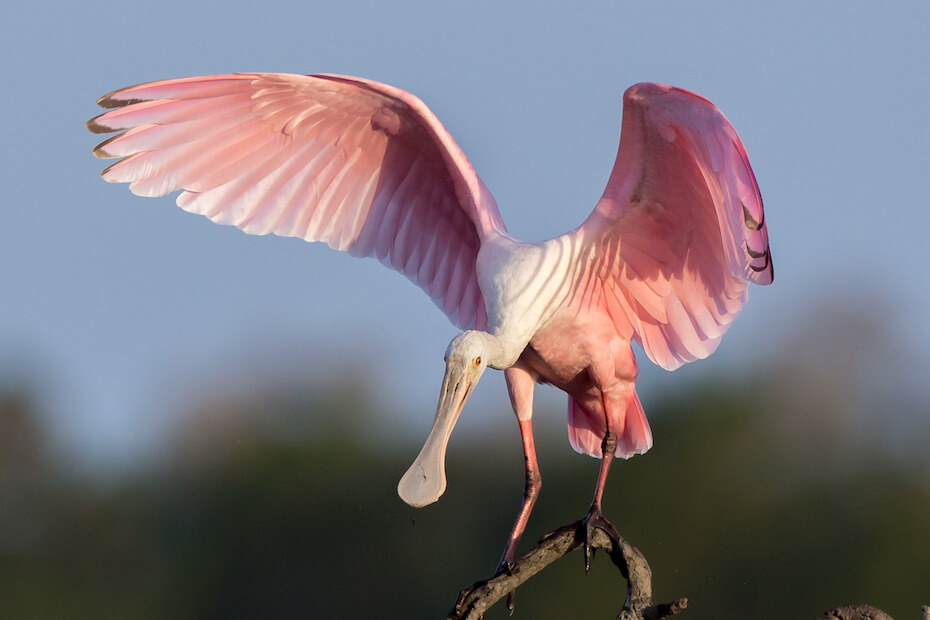
We're not sure if it's the vibrant, flamingo-like color or the unusually shaped bill that makes the roseate spoonbill truly unique. Like flamingos, they get their unusual color from their crustacean diet. The spoon-like shape of the bill allows them to move side to side through mud and locate their meals. Because of migration, it can be found from South America all the way to the Caribbean, Central America, Mexico and the Gulf Coast.
(via Shutterstock)
11. Chinese Water Deer
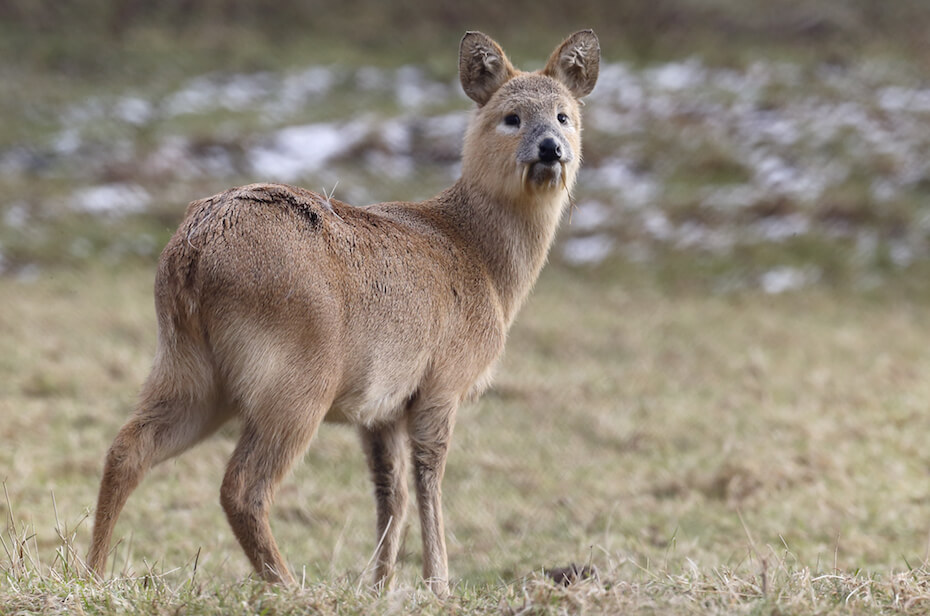
Besides the fact that they're much stockier than the deer you might be used to, the Chinese water deer can look pretty typical until you take a closer look at their mouths. Those odd fangs, however, are anything but the usual, and have earned them the nickname "vampire deer" in the west. Even so, they're herbivores, primarily feeding on reeds, grasses and root vegetables.
(via Shutterstock)
12. Giraffe Weevil
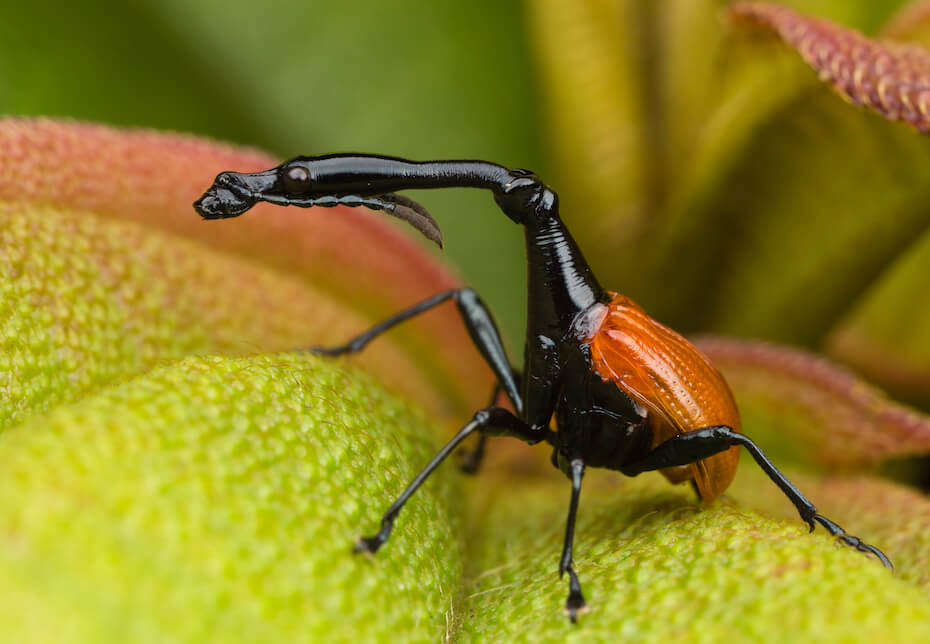
Madagascar is an incredible place featuring some truly bizarre creatures, and that includes the giraffe weevil, which gets its name from its elongated neck. This neck is an adaptation that allows the male beetles to be better at fighting, as well as building suitable nests. They're typically about an inch long, with the neck making up most of that length.
(via Shutterstock)
13. Axolotl
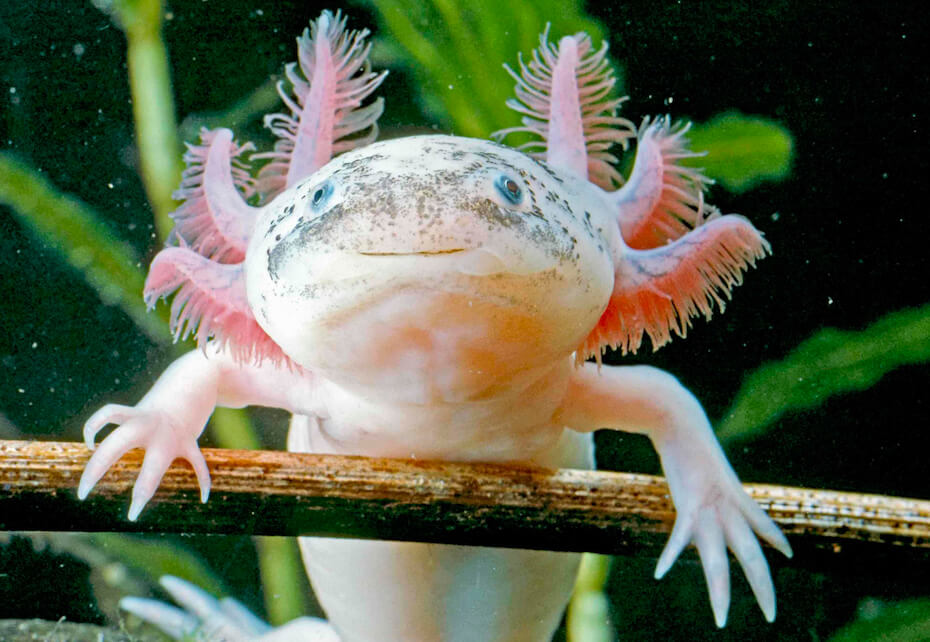
Axolotls have become quite popular in recent years because of just how strange they are, and you only have to see one example to understand that, as a species, they're one-of-a-kind. Also known as the Mexican walking fish, these amphibians are found in lakes near Mexico City. Unlike other amphibians, they also never undergo metamorphosis, maintaining their gills into adulthood instead of developing lungs and getting up on land. They look pretty spectacular, to boot.
(via Shutterstock)
14. Markhor
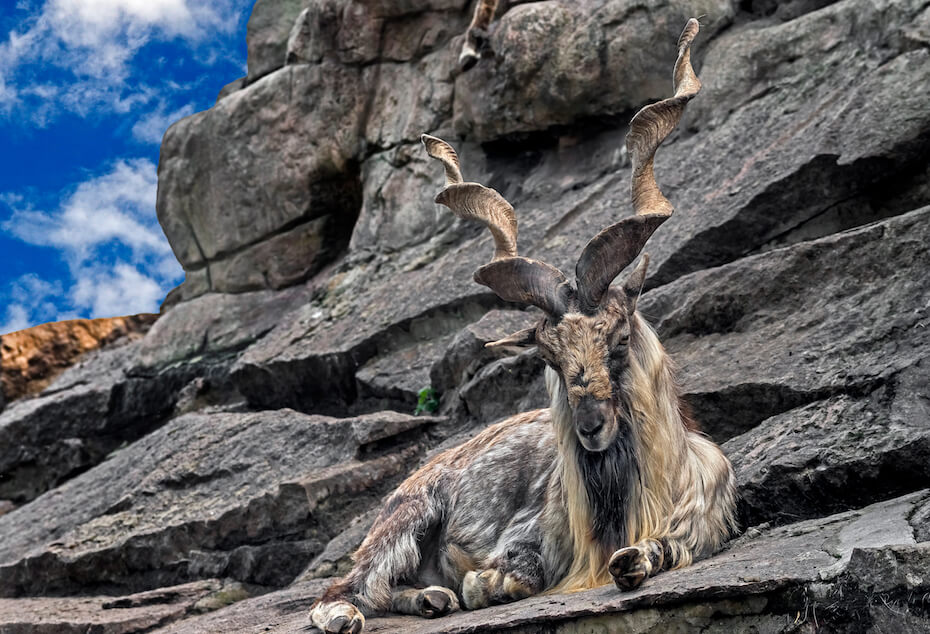
Ignore the horns, and the markhor might just appear to be a very large goat. But we think that when it comes to this animal, which is native to Central Asia, Karakoram and the Himalayas, it's impossible not to gawk at the incredible corkscrew-like horns, which can grow up to 63 inches long on the males. These impressive horns are used in competitions when vying for attention from female markhor.
(via Shutterstock)
Also read about: The 35 Cutest Dog Breeds of All Time
15. Silver Laced Polish Chicken
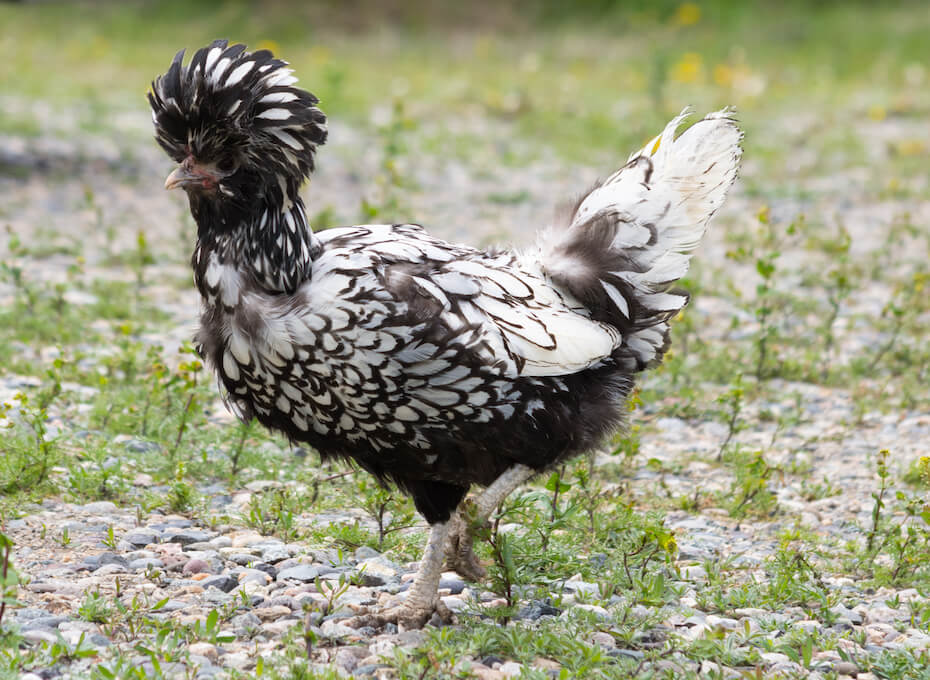
When you think of a domestic chicken, you probably have a very clear image in your mind of what that looks like. We bet you don't imagine gorgeous white and black coloring making intricate patterns across the feathers, with a crown of tall feathers across the head. They're a sought-after breed in the chicken world, often appearing as a show bird, but also being a productive egg-layer.
(via Shutterstock)
16. Lowland Streaked Tenrec
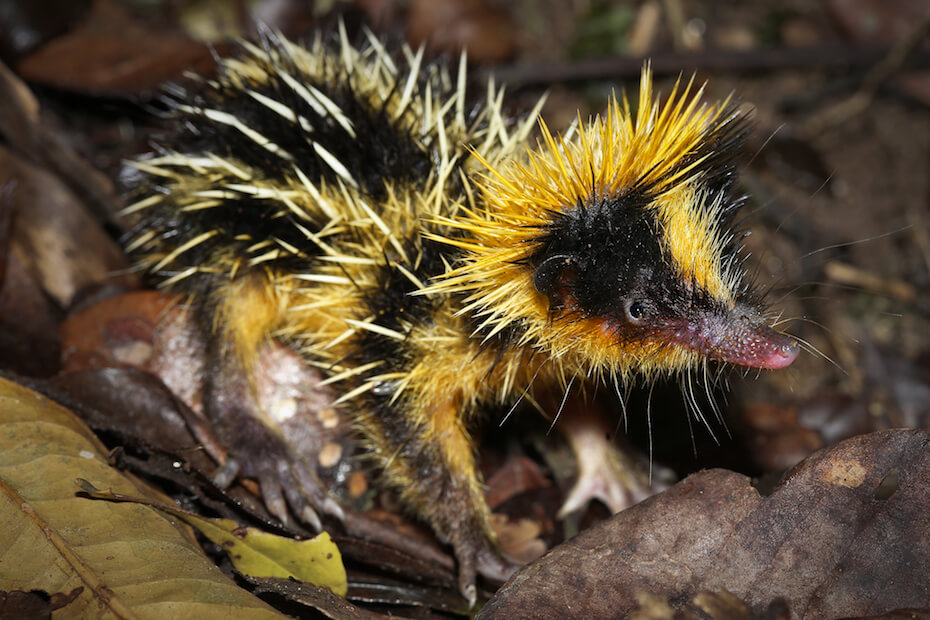
Here's another oddity from Madagascar that's instantly eye-catching. Tenrecs are an unusual branch of mammals found only on the island, and this creature is the most striking of them all with the vibrant yellow stripes standing in contrast to the black fur on its body. They're also quilled, like porcupines or hedgehogs, which can detach if they're attacked by predators.
(via Shutterstock)
17. Panda Ant
It's obvious that the panda ant isn't actually a panda, but it's not really an ant, either. Instead, it's a wingless species of wasp that lives in the forests of Chile. Though its coloration is quite cute, the black and white markings on its body serve as a warning to predators, telling them that they have a dangerous and painful sting.

(via Shutterstock)
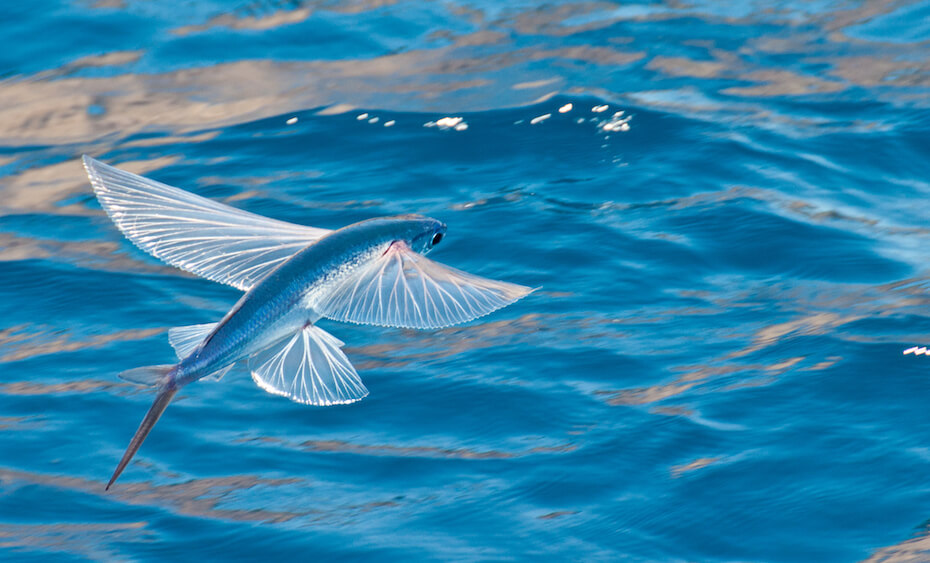
18. Atlantic Flying Fish
We've all heard of flying fish, but seeing these majestic creatures in action is a different thing entirely. Thanks to uniquely shaped pectoral and tail fins, this fish can leap out of the water and then glide on the air currents to soar for up to 40 feet. Though it's not exactly known why these fish take to the air, many believe it's to avoid predators in the depths.
(via Shutterstock)
19. Tarsier
Tarsiers are certainly odd little primates. They're found in the Philippines, Malaysia, Indonesia and Brunei, with their bodies built around accommodating their heavy heads. They have comparatively massive eyes, which in many cases can be larger than their brains. They can also turn their heads 180° in both directions, giving them 360° vision. This allows them to be great hunters of insects, as they're entirely carnivorous.

(via Shutterstock)
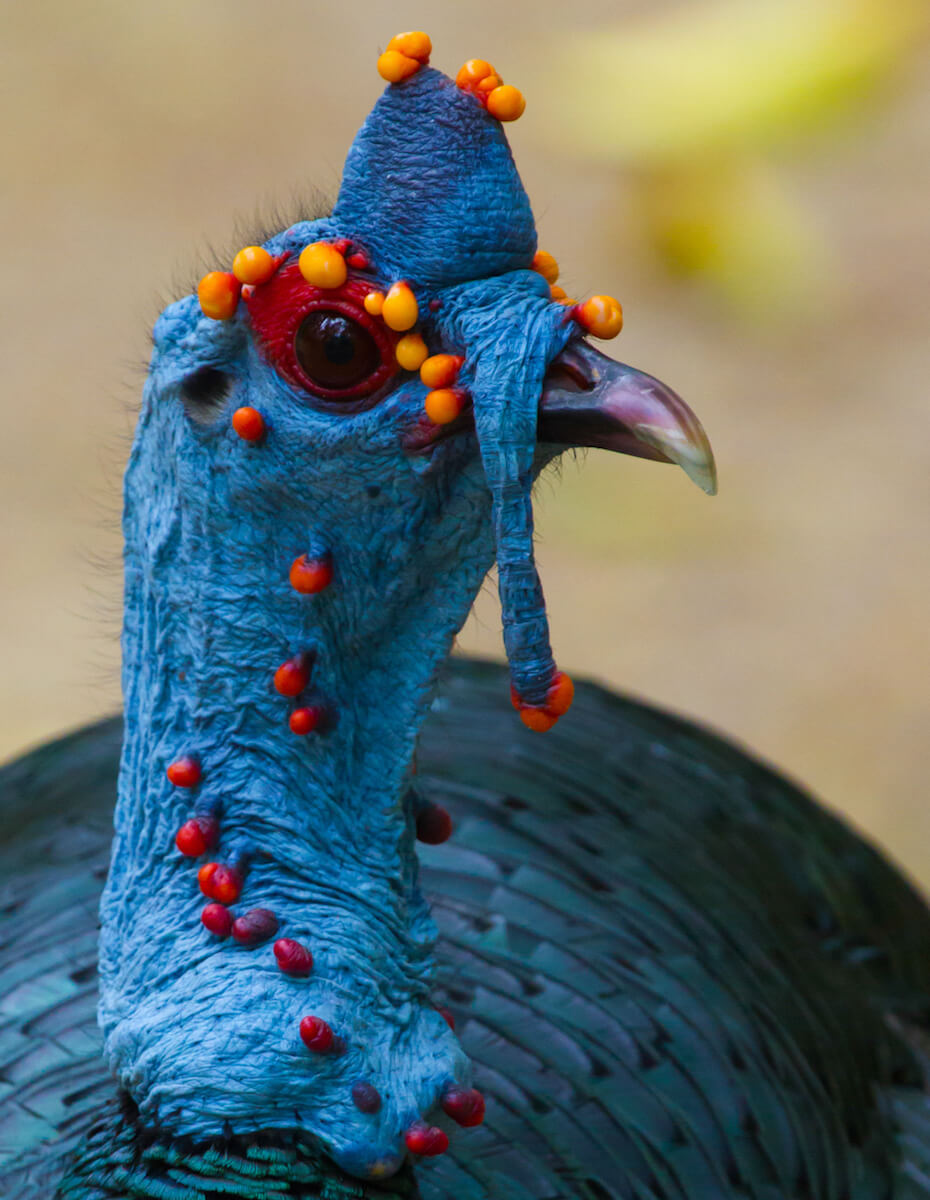
20. Ocellated Turkey
You wouldn't know how closely related the ocellated turkey is to the North American wild turkey just by looking at it. These bizarre animals, which live in Mexico, Belize and Guatemala, almost look like a kid with crayons was put in charge of picking the coloration. This turkey is covered in bronze, as well as blue-green iridescent feathers. Add to that the bright red skin around the eye and the orange and red nodules that cover its body, and this becomes one turkey that's impossible to forget.
(via Shutterstock)
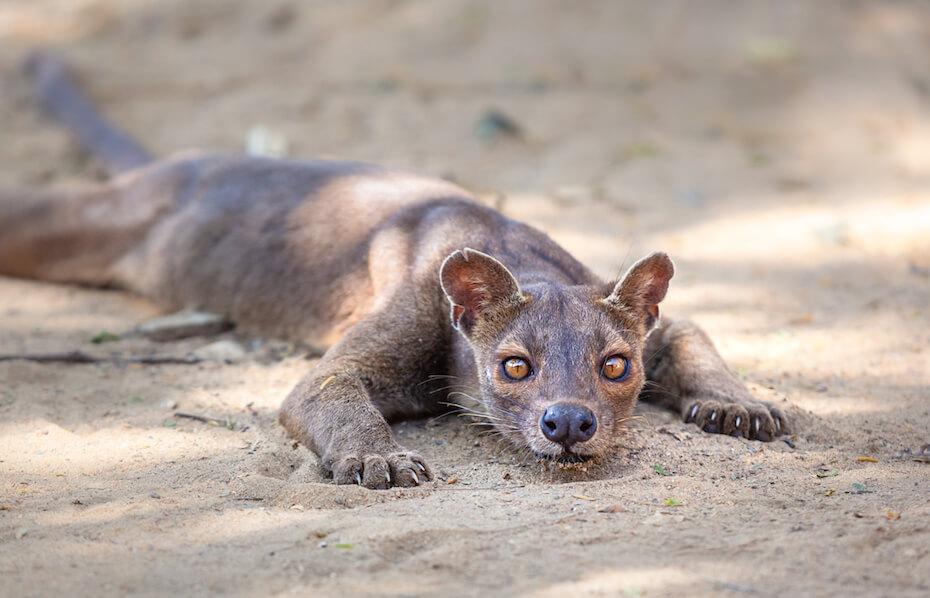
21. Fossa
While the unique fossa may look it belongs to the large cat family, it's actually more closely related to mongooses than felines. It's the biggest carnivorous mammal native to Madagascar, and has semi-retractable claws that allow it to very successfully climb trees head-first both up and down, hunting primates, rodents, lizards, birds and more.
(via Shutterstock)
Also read about: The 35 Weirdest Australian Animals You've Never Heard Of
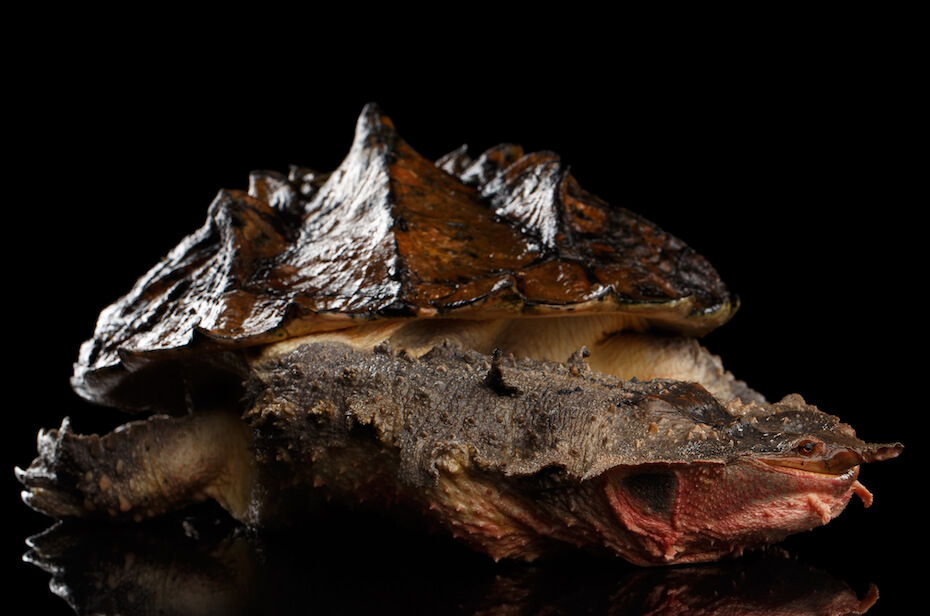
22. Matamata
At first glance, it can almost be tricky to identify the matamata as a freshwater turtle. Found primarily in the Amazon and Orinoco basins of South America, they don't move much, living in shallow waters, included streams, marshes and swamps. They have giant, flat heads with odd flaps of skin, and a horn at the end of the snout, as well as barbels on the jaw. The sharp spikes on its shell almost make it appear dinosaur-like, and both its flesh and its shell are dark brown in color, which can make it resemble fallen tree bark and fallen leaves, serving as camouflage.
(via Shutterstock)
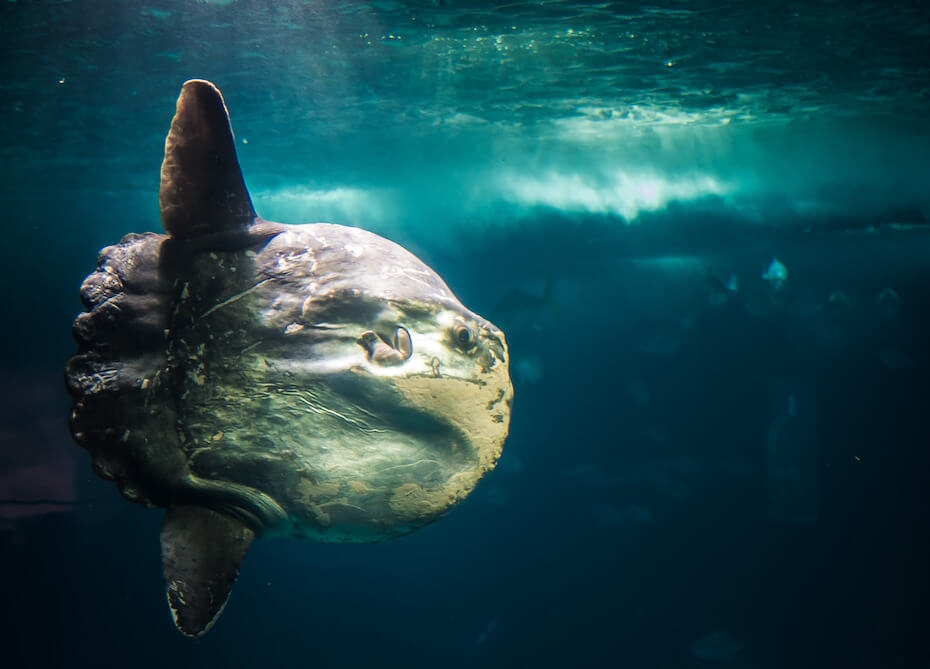
23. Ocean Sunfish
The ocean sunfish, also known as the mola mola, is one weird fish. For one, they look like one giant head with a tail and fins, making them instantly recognizable. They're also huge, with some adults weighing more than a ton, making them one of the heaviest bony fishes in the world. They live in tropical and temperate waters, where they prey on everything from fish to squids and crustaceans.
(via Shutterstock)
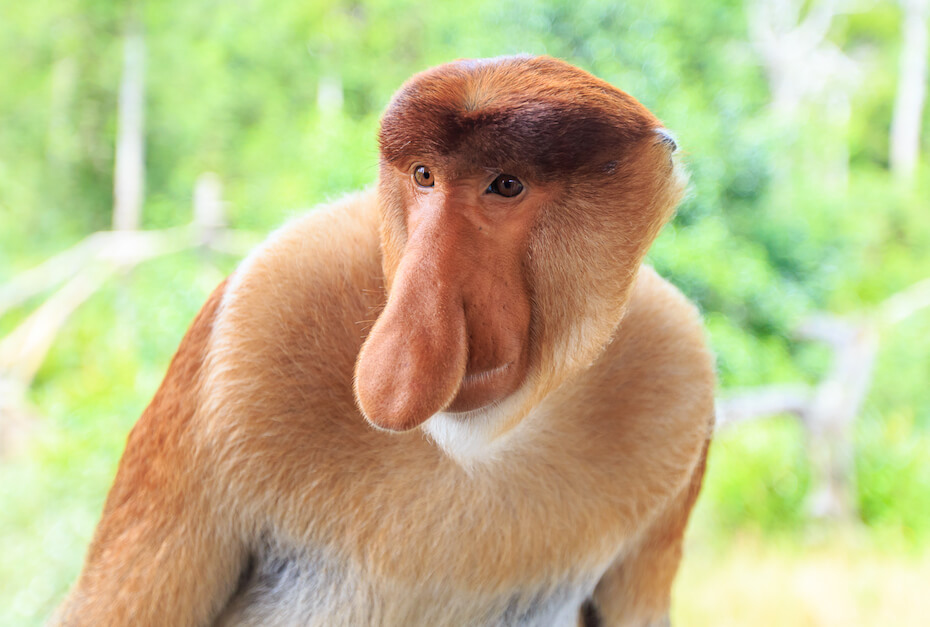
24. Proboscis Monkey
Look at that nose! This striking monkey, native to Borneo, is also known as the long-nosed monkey and is named after the scientific name for "nose." It's one of the biggest monkey species in Asia. The males have longer noses than the females, with schnozes than can be up to four inches long, stretching past the mouth. The females tend to prefer males who can make louder calls, with the nose potentially allowing more volume.
(via Shutterstock)
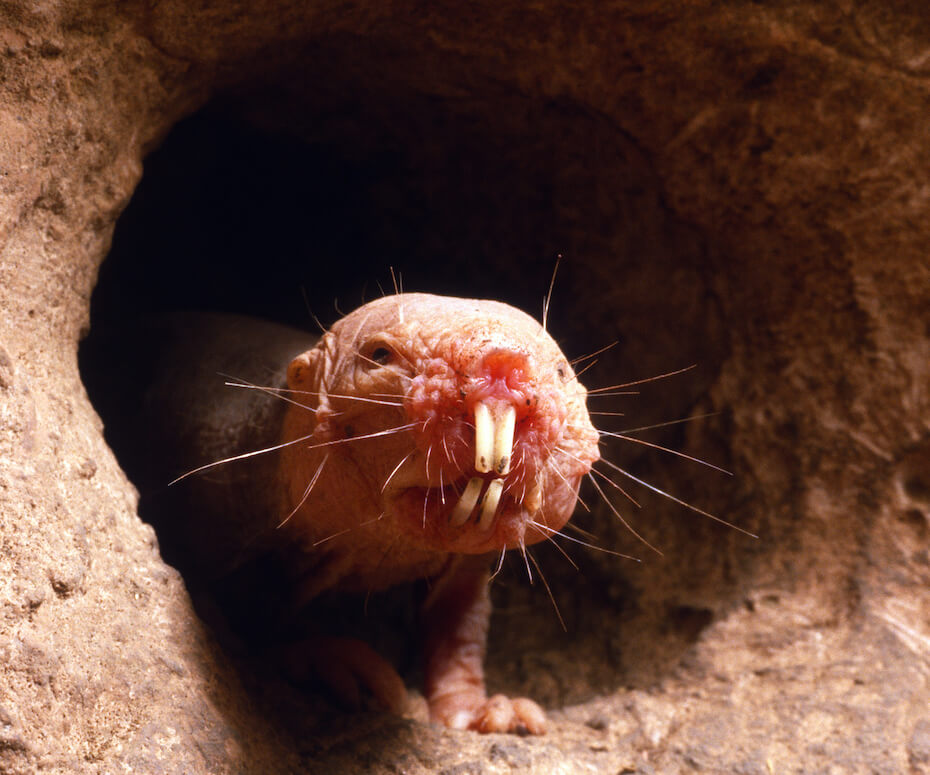
25. Naked Mole Rat
Can you believe that some people actually call the naked mole rat a "sand puppy"? These burrowing rodents, native to East Africa aren't just unusual in appearance (the hairlessness and giant digging teeth are impossible to ignore) but they're also almost entirely cold-blooded. They're also unique in lacking pain sensitivity in their skin and being resistant to cancer.
(via Shutterstock)
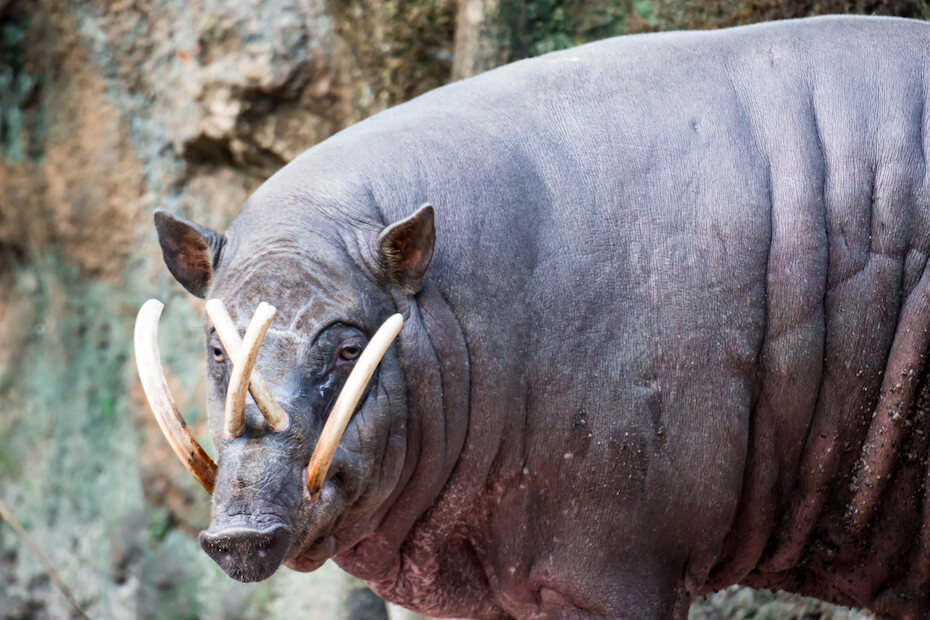
26. Babirusa
Babirusa are also known as deer-pigs and are found only in Indonesia. In addition to looking quite different from the average swine, their most notable characteristic is the upper canines in the males, which stretch like giant tusks backward toward the head. If they are not careful about grinding their tusks, they can even grow back to penetrate the skull!
(via Shutterstock)
27. Bushveld Rain Frog
Why are bushveld rain frogs so round and unusual-looking? It's for their safety. These amphibians live almost their entire lives underground, only leaving the safety of the earth on rainy days in order to feed and mate. Its tiny limbs are typical of burrowing frogs and toads, making them good diggers. When they're threatened, they inflate themselves into a balloon-like state, blocking their burrow holes. They're also known to make pretty funny sounds.
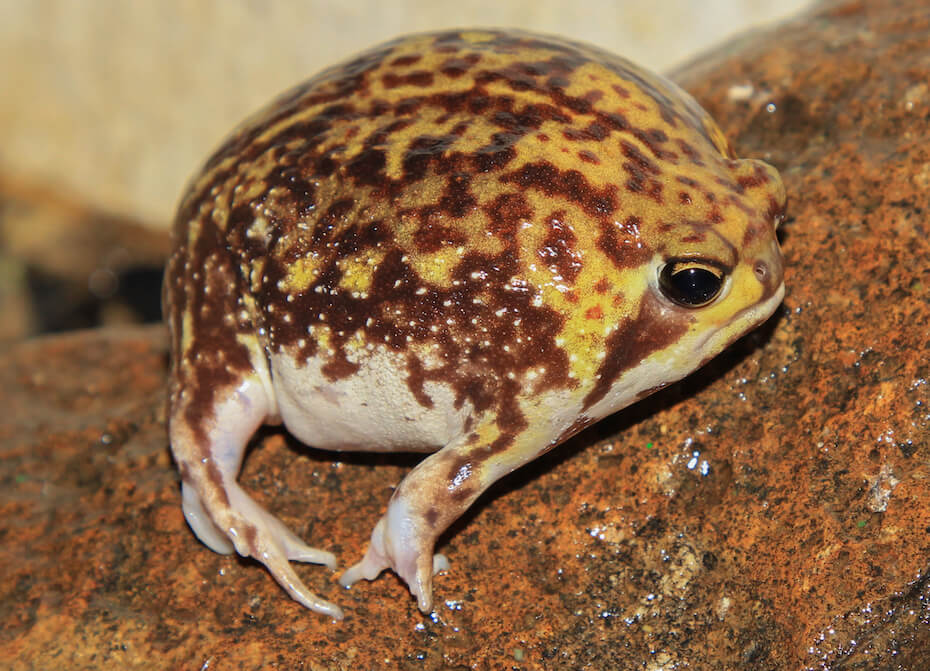
(via Shutterstock)
28. Giant Isopod
Fans of Animal Crossing: New Horizons' new diving feature will be very familiar with these unique deep-sea critters. They live in very deep, very cold waters of the Atlantic, Indian and Pacific oceans and can be up to 2.5 feet long, which is quite large compared to other isopod relatives that usually don't grow to more than two inches. Oddly enough, they're related to pill bugs—and even share a slight resemblance with their land cousins.

(via Shutterstock)
Also read about: 15 Unusual Dog Breeds You've Probably Never Heard Of
29. Tanuki
The tanuki is also known as the Japanese raccoon dog, which makes sense given its appearance. Still, the animal is unrelated to raccoons. Tanuki hold an important role in Japanese folklore, where they're said to possess supernatural powers including transformation, and the ability to possess human beings.
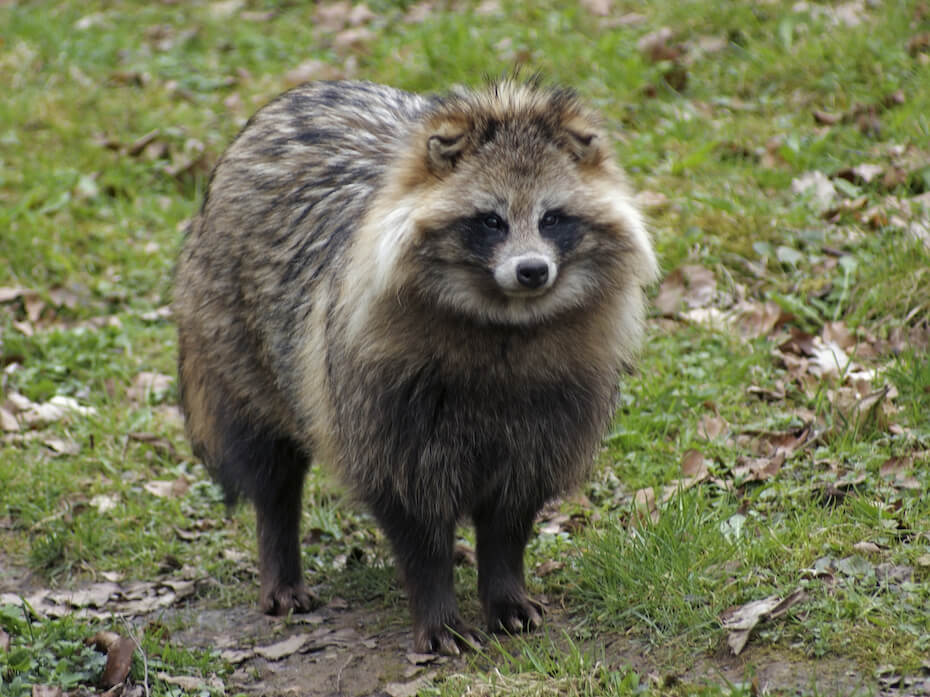
(via Shutterstock)
30. Star-Nosed Mole
The star-nosed mole's one-of-a-kind snout makes it unlike any other animal we've ever seen. It's found in the northeastern United States and southwestern Canada and has more than 25,000 tiny receptors in its nose, which it uses to navigate and search for its food, consisted of bugs, amphibians and small fish. It's also been said that they might be able to predict earthquakes and other seismic phenomena, which is pretty spectacular, if you ask us.
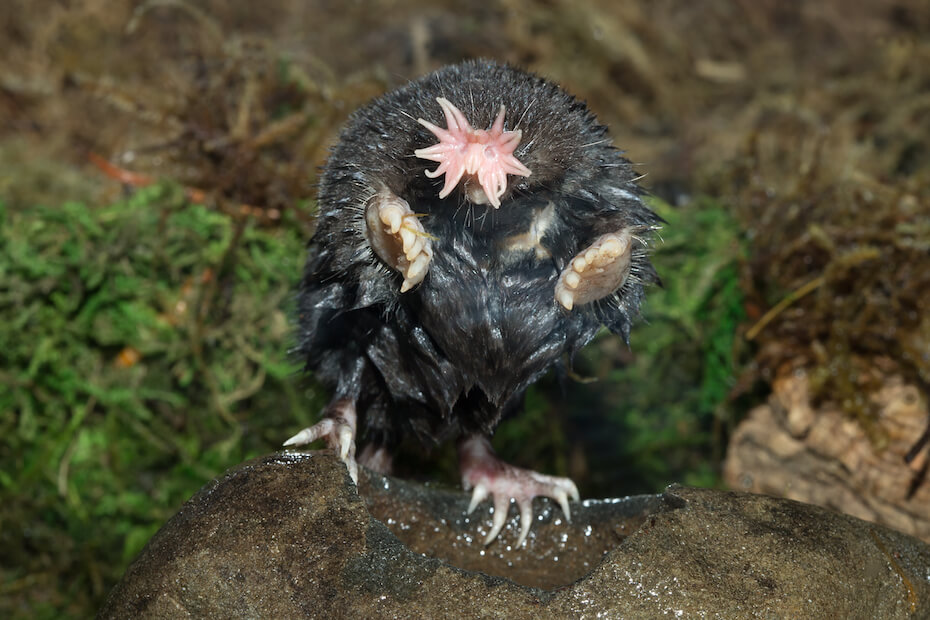
(via Shutterstock)
31. Long-Beaked Echidna
Long-beaked echidnas look like a big ball of spiky fluff with a long, finger-like snout, but they're not just special because of their unusual appearance. Echidnas are also monotremes, or egg-laying mammals, sharing the distinction only with platypuses. This echidna in particular lives in New Guinea, where it spends its nights foraging for insects on the forest floor.
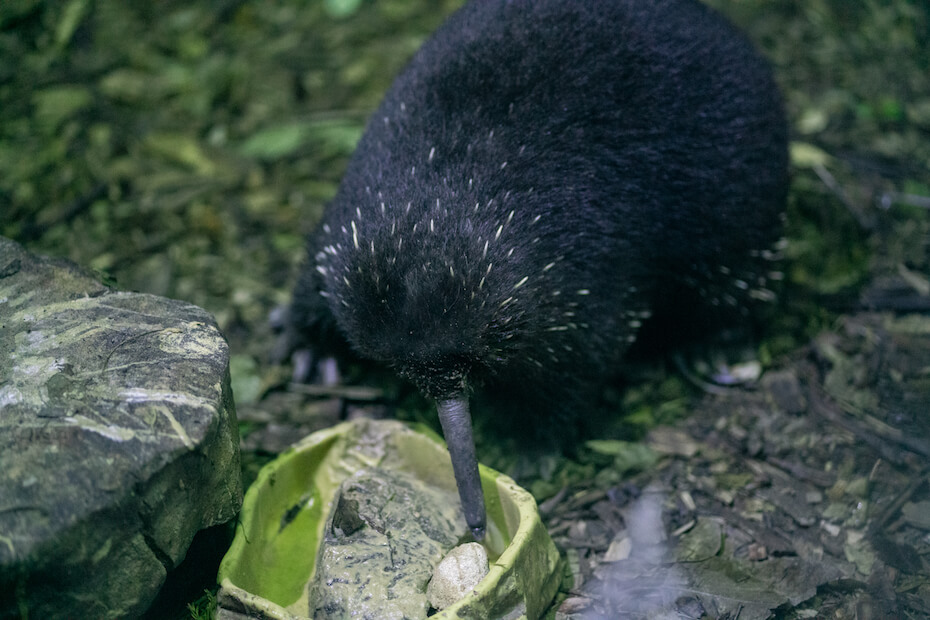
(via Shutterstock)
32. Magnificent Frigatebird
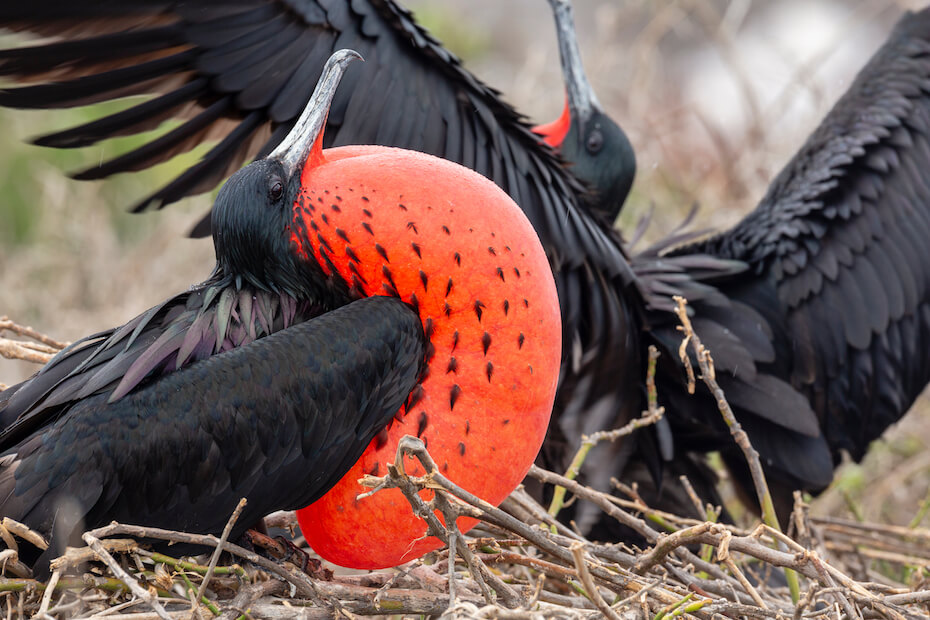
The magnificent frigatebird's bold and vibrant appearance makes it quite the admirable bird. The males have vividly colored gular sacs, which can be filled with air to make them look more imposing and attract mates. They also have quite a wide range, appearing along both coasts from Mexico and Florida down to Perú and Brazil, as well as in the Galápagos Islands.
(via Shutterstock)
33. Warty Anglerfish
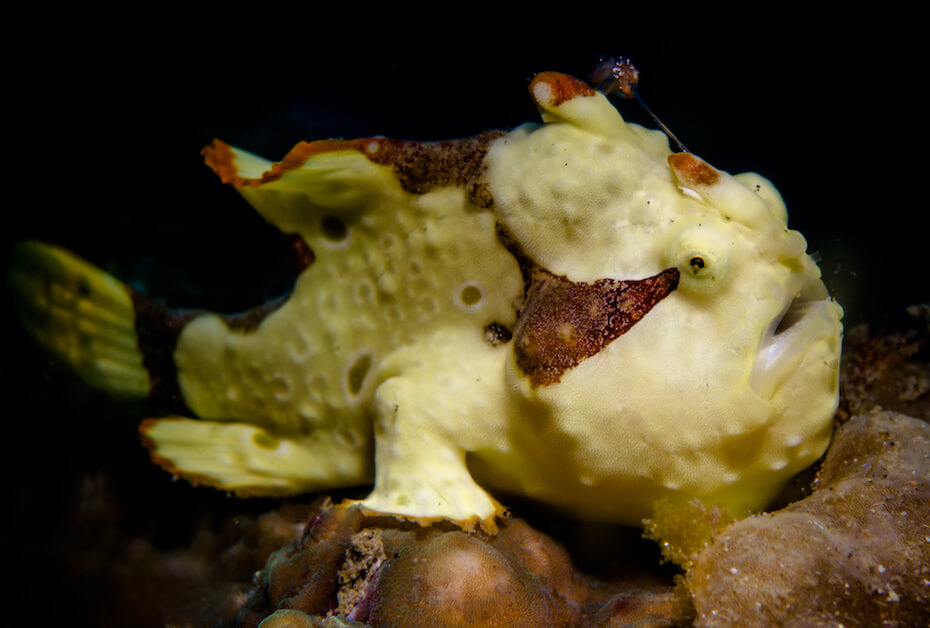
Not only do warty anglerfish look like a cartoonist's creation, but their behavior is pretty bizarre, too. They're also known as handfish because, instead of swimming, they typically walk along the seafloor using modified fins resembling hands. These anglerfish are found in coastal waters near Australia and Tasmania.
(via Shutterstock)
34. Golden Snub-nosed Monkey
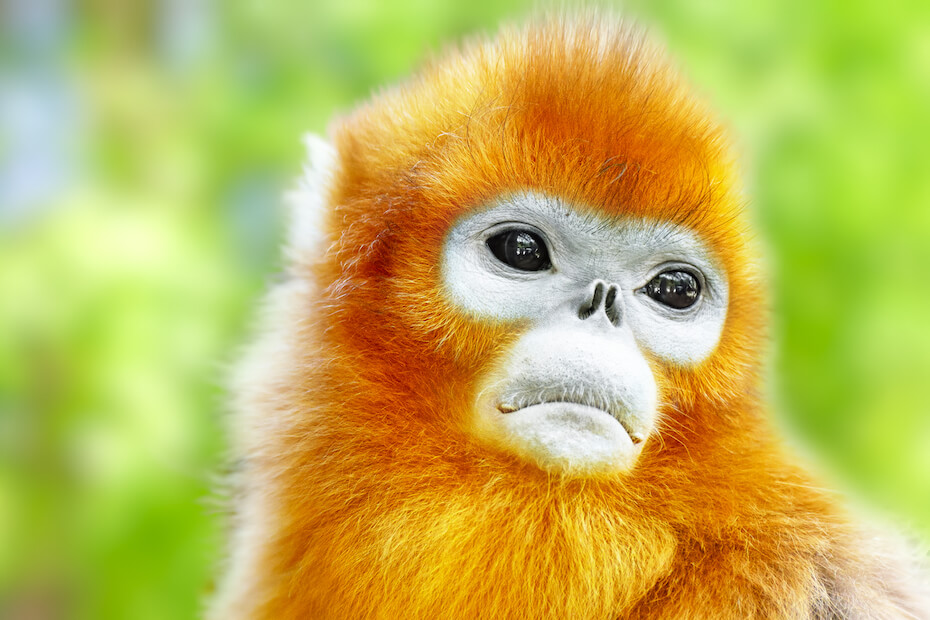
Why do these golden-haired monkeys resemble Voldemort? While the reasoning is not fully known, it's suggested that their stumpy noises and front-facing nostrils are an adaptation to the extremely cold temperatures they deal with in the mountains of Southwestern China. They might deal better without noses that can become frostbitten, and indeed, the species is known to be particularly good at withstanding cold.
(via Shutterstock)
35. Tardigrade
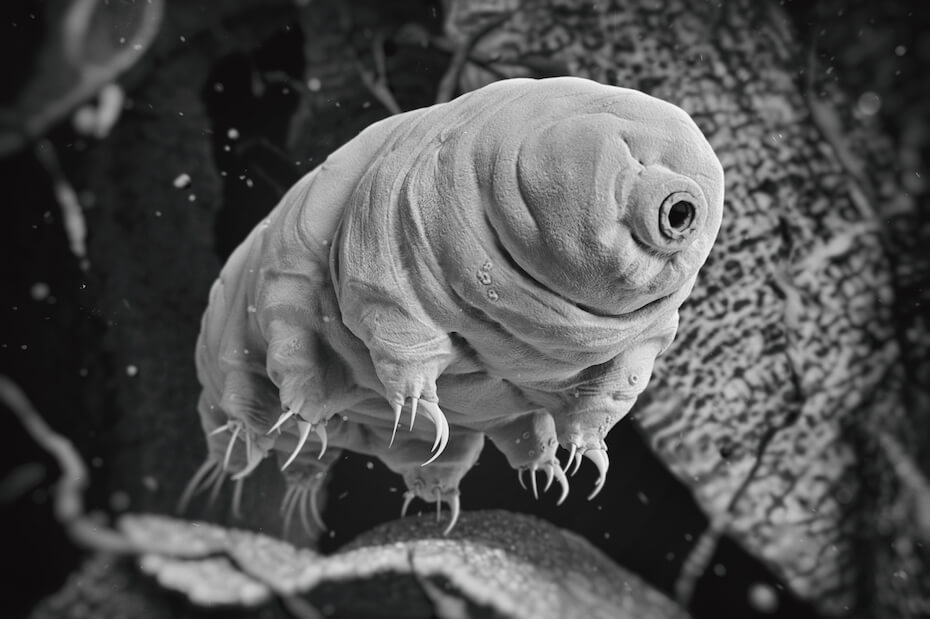
Tardigrades might be the most resilient animals on the planet. These eight-legged critters are microscopic and live in water, which is why they're sometimes called water bears of moss piglets. They've been known to survive extreme conditions, including both high and low temperatures, radiation, dehydration, air deprivation and starvation. Due to a crash landing of the Beresheet lunar rover in 2019, there may even be tardigrades living on the moon today.
(via Shutterstock)
Loved this list? Click HERE to discover incredibly big animals you have to see to believe.