Donkey Kong Bananza Is a Super Satisfying Platformer—and THE Reason to Have a Nintendo Switch 2
When I saw the first trailer for Donkey Kong Bananza in April of this year, I was immediately intrigued.
With the release of the Nintendo Switch 2 on the horizon, it seemed like a bold choice to release a 3D Donkey Kong platformer on the console before a mainline Mario title. Then, there was the fact that the first—and only other—3D Donkey Kong game had been the notoriously tedious Donkey Kong 64 in 1999. As more Bananza gameplay footage came out, I became more and more skeptical. While the movement looked fun and fluid, Donkey Kong's ability to scale any surface and pulverize the surrounding terrain made it look more like a giant sandbox than an actual game.
The kind folks at Nintendo sent me a review code of Donkey Kong Bananza to check out on the Nintendo Switch 2. After spending more than 44 hours in the game (and with plans to spend even more), I can happily say that this is a legitimate and seriously fun platforming game that's among Nintendo's all-time best titles.
Digging Into Donkey Kong Bananza
Donkey Kong Bananza throws players differently into the action, with your first task being punching through a wall of dirt to reveal the titular character, Donkey Kong. He's come to Ingot Isle to mine for delicious Banandium Gems, which aptly sets the tone for the entire game. Before long, he's collected his very first Banandium Gem, resulting in a nostalgic voice announcing, "Oh, banana!" and DK gobbling up the Banandium Chips within.
Quickly, fellow monkeys in the mine introduce ypou to the game's basic mechanics, with punching through the environment being essential to progression. In a 3D environment, having a versatile set of punches is critical, which is why, in addition to a standard punch, he can also hit upward toward the ceiling or tunnel downward, directly into the ground. From the first swing, these punches feel slick and impactful, paired with just the right sound effects against every bit of terrain to feel ridiculously satisfying.
Adding to this fun, the world is filled with gold to collect. Even before I knew whether there was some purpose to amassing a hoard of bold bouillon, I was followed veins of gold through the dirt to collect every nugget I could find in the world, and using DK's signature Hand Clap to attract each floating piece from afar and reveal hidden goodies.
After fighting the first enemies, hermit crab-like critters hiding in the gold, I found a huge stockpile of Banandium Gems. Before I could enjoy them, however, I was introduced to the evil VoidCo., led by Void Kong, who greedily sucked up all of the gems, digging deeper into the planet to mine its resources, and sinking Donkey Kong along with them.
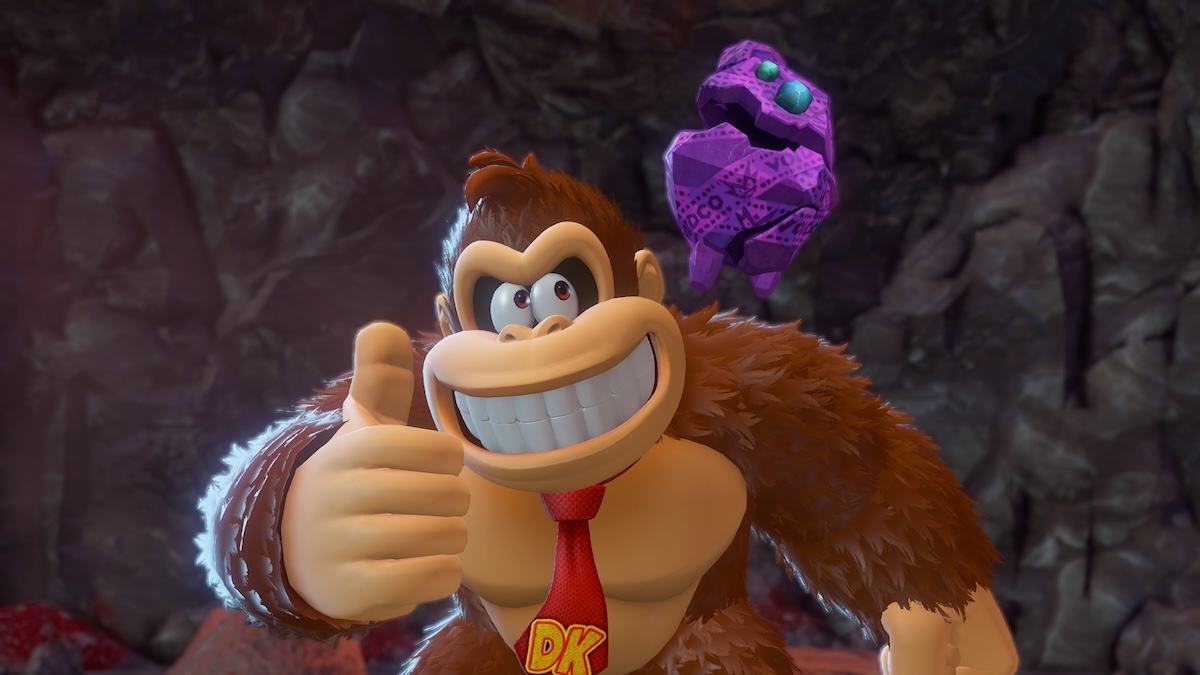
While perhaps DK's concern should be how he's going to get back home, he's instead more concerned with collecting more Banandium, so he continues his mission. The player is introduced to another important mechanic, ripping chunks out of the world to use as a tool, before also meeting a funny creature called Odd Rock (which all the trailers and promo materials have already spoiled to be a rapped teenage Pauline).
She's frightened of Donkey Kong at first, but after he sings a jaunty tune, Pauline comes to trust him, and the two team up as buddies. Even more, it turns out that her voice is special. In addition to the music notes leading the way to your next objective, her singing can break purple Void seals blocking off parts of the world. Working together, they scale the caved-in mine, fight a monster and find themselves diving even deeper into the planet.
(Donkey Kong Bananza via Nintendo)
Also read about: 8 Underestimated and Powerful Benefits of Gaming
Exploring the Lagoon Layer
It's here at the Lagoon Layer that we truly discover the amount of freedom and exploration available in the game. While the mine area seemed pretty straightforward, funneling players in one direction, the Lagoon Area is open and sprawling, allowing players to navigate however they see fit. It's also beautiful, featuring monkeys hanging out in an idyllic jungle environment on the water.
Of course, my first instinct was to see just how destructible this world was. I was pretty astounded not just by the fact that the whole hill could be torn up bit by bit using Donkey Kong's fists, but also how fun that process was. This was also my first encounter with an issue that would crop up again and again, as endless freedom of movement and destruction can create some truly awkward moments with the camera and visibility. Generally, this was my own fault, and I can't really imagine a workaround, but it was not a rare problem.
I also learned it can be easy to fall off the side of the layer you're on—especially when you're going fast. Unless you have a handy collectible Red Balloon on hand, this means losing gold. Early on, you don't have a ton to spare, and this isn't too bad, but later, each fall or "death" results in the loss of 500 gold, which can feel punishing even when you start racking up six-digit numbers.
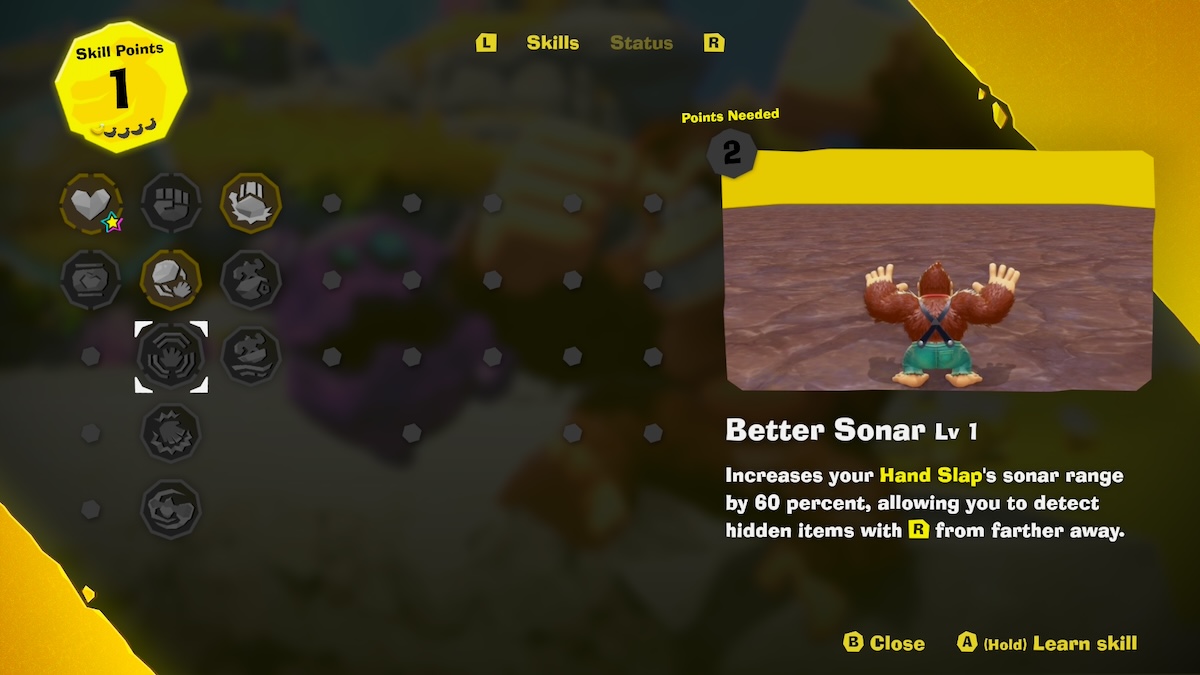
Collecting the bundle of three Banandium Gems here also introduced me to the Skill Points system, which I adore in this game. Essentially, every give Banandium Gems you collect equates to one Skill Point, which you can spend on various abilities in a skill tree and customize the way you play. For example, you can focus all of your points into increasing your health, making your punches hit harder or making your sonar better for scouting out hidden items. As a completionist, I geared my own builds toward finding secrets collecting items more easily, while you might prefer to prioritize survival-based skills. The skill tree also grows quite a bit as you play, making Donkey Kong more and more powerful with progression.
(Donkey Kong Bananza via Nintendo)
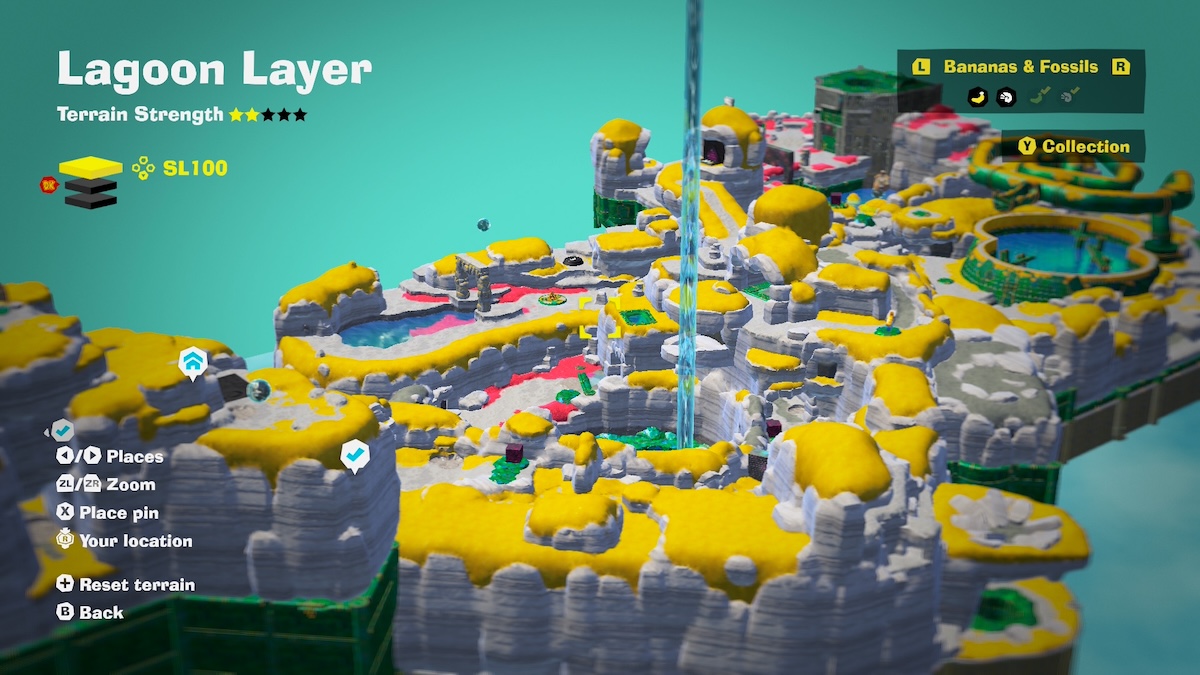
Digging around in this area further introduced me to yet another favorite element of the game in the form of treasure chests. While some are placed purposefully, others spawn randomly as you play, and they can contain anything from gold to Banandium Chips, fall-preventing Red Balloons, life-restoring Apple Juice and Bananza-inducing Melon Juice, or my personal favorite, treasure maps. These maps can either point you toward a Fossil or a Banandium Gem, showing you precisely where to find them on the (very intuitive) world map, and also indicating their location and distance when you sing.
(Donkey Kong Bananza via Nintendo)
From here, I was starting to get an idea of why I'd get so addicted to Donkey Kong Bananza. The openness of this area allowed me to really play with the fluid movement, learning to jump of off chunks for greater height, roll around for speed, climb absolutely anything and run around to my heart's content. Like Super Mario Odyssey, it also allowed for sequence breaking and reaching areas you shouldn't be able to get to yet by carefully chaining rolls and jumps to get tons of distance. This was incredibly gratifying to get right.
Further, it felt like the game was constantly rewarding me for being thorough and exploring everything I could. As you play, you'll be hearing "Oh, banana!" more often than you can count, and though some of them are easy to nab, they manage to still feel meaningful. Between them, you'll grab lots of extra gold, or helpful items, or Fossils, and feel like you're making important progress. While initially, I intended to try to rush through the game to get to the end and get out a review, I was having too much fun with this gameplay loop to let that happen, insisting on collecting every Fossil and Banandium Gem before moving on to the next area. This also proved to be an issue trying to put the game down in the evenings, where wanting to do just one more task led to another hour of gameplay.
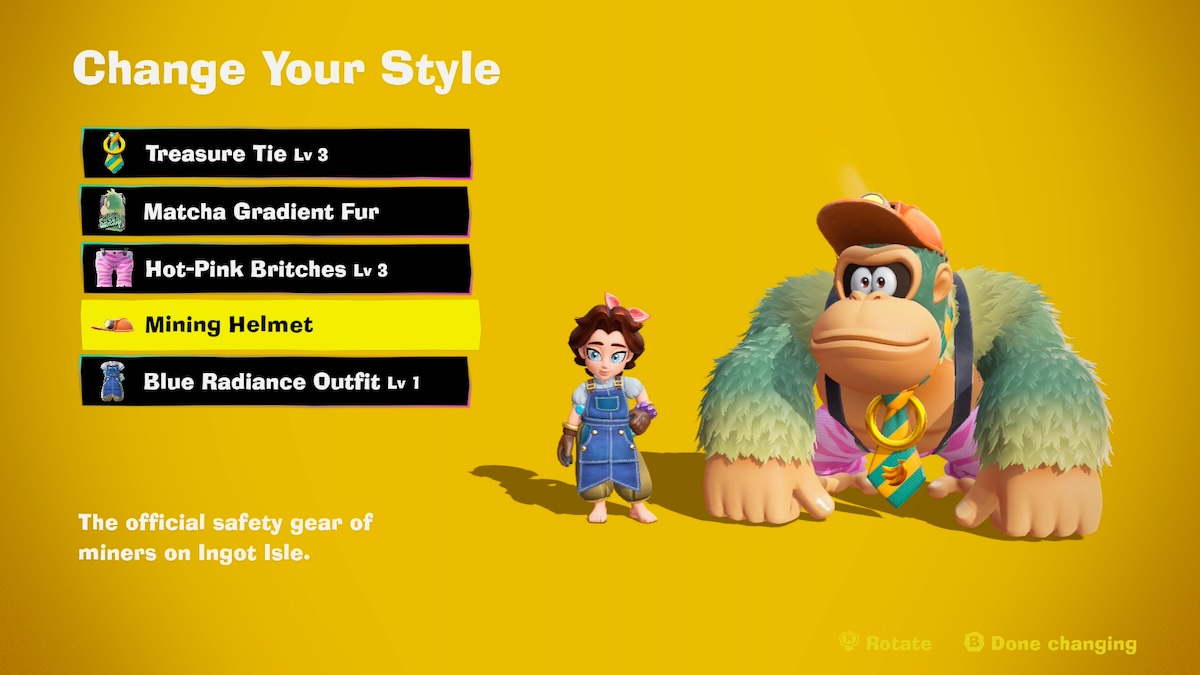
Speaking of Fossils, they're a type of currency that are specifically used to purchase wearable items, such as ties, pants and fur colors for Donkey Kong and cute ensembles for Pauline. Besides the differently colored fur, each of these have unique perks, and as you play through the various levels or focus on different goals, you'll want to change your outfits accordingly. Personally, I kept the Treasure Tie on through the majority of my playthrough because I couldn't get enough of finding treasures.
(Donkey Kong Bananza via Nintendo)
This level also gives players the chance to play around with and get to know the different types of terrain. For now, some types of material are too hard to be destroyed by anything but exploding boom rocks, and a hierarchy determines what terrain is hard enough to bust other types of terrain. Dirt is extra soft, while rock is a bit harder to break though. Some types are indestructible, while others require specific interactions between terrain types to progress.
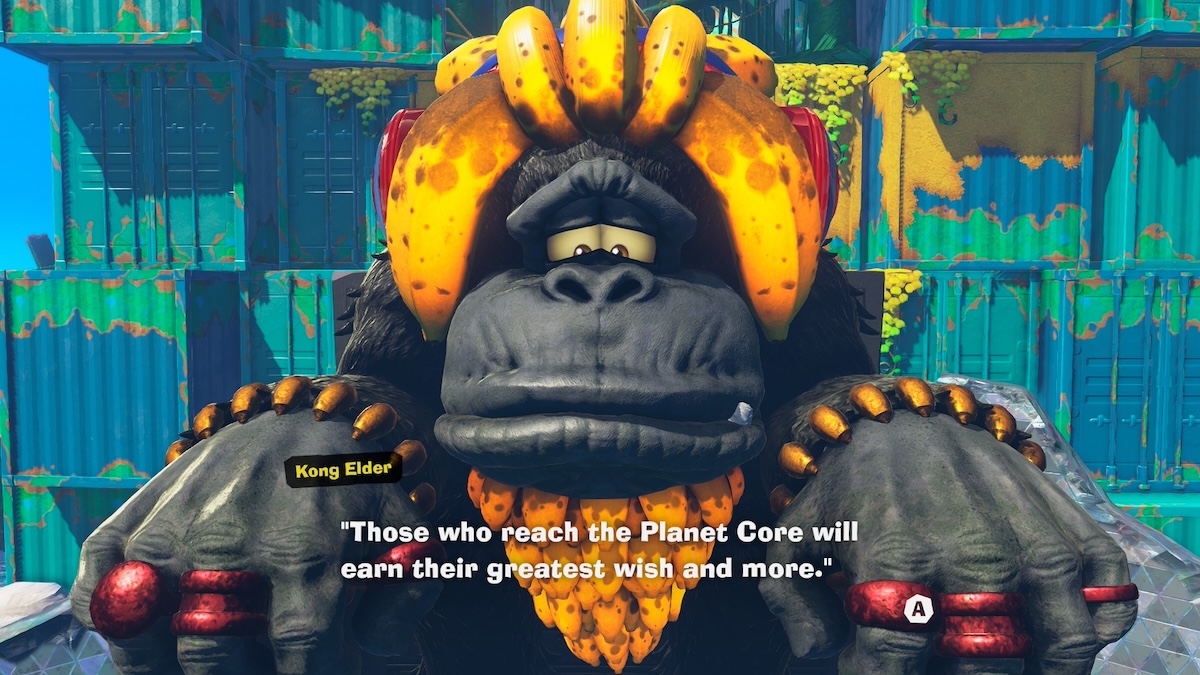
The Lagoon Layer also introduces players to the Kong Elder. Once you return a magical Ancient Record to the elder's "Eternatable," the Odd Rock's true nature as Pauline is revealed. Through a special trial, he also unlocks DK's Bananza powers with the help of Pauline's singing. In his Kong Bananza form, Donkey Kong grows bigger and stronger for a limited time, and the ability to punch through even the hardest of surfaces with ease. Pauline's Kong Bananza song is also bound to get stuck in your head, as are the themes associated with each of DK's creative five transformations. Later, you'll undergo similar processes to unlock the fluttering powers of the Ostrich Bananza and the super speed of the Zebra Bananza, plus two more I won't spoil (one of which is so overpowered I wound up using it constantly).
The Kong Elder also informs players of the true goal to make it to the Planet Core to grant your wishes. While Pauline yearns to return home, DK dreams only of Bananas. From there, you can use your new Kong Bananza powers to press onward, and have your first encounters with the baddies of Void Co.
(Donkey Kong Bananza via Nintendo)
They consist of the leader, the nasty Void Kong, and his right hands, the miner Grumpy Kong and the elegant Poppy Kong. Each of them are memorable and well designed, with a lot more originality and character than the Broodals in Super Mario Odyssey, for example, and the game teases them effectively before players actually face off against them.
Instead, players take on the first major boss, the octopus-like Peekabruiser (feeling a bit like something out of Splatoon) before a big sinkhole opens up, and it's time to dive even deeper toward the Planet Core to the Hilltop Layer.
Presentation in The Hilltop Layer and Beyond
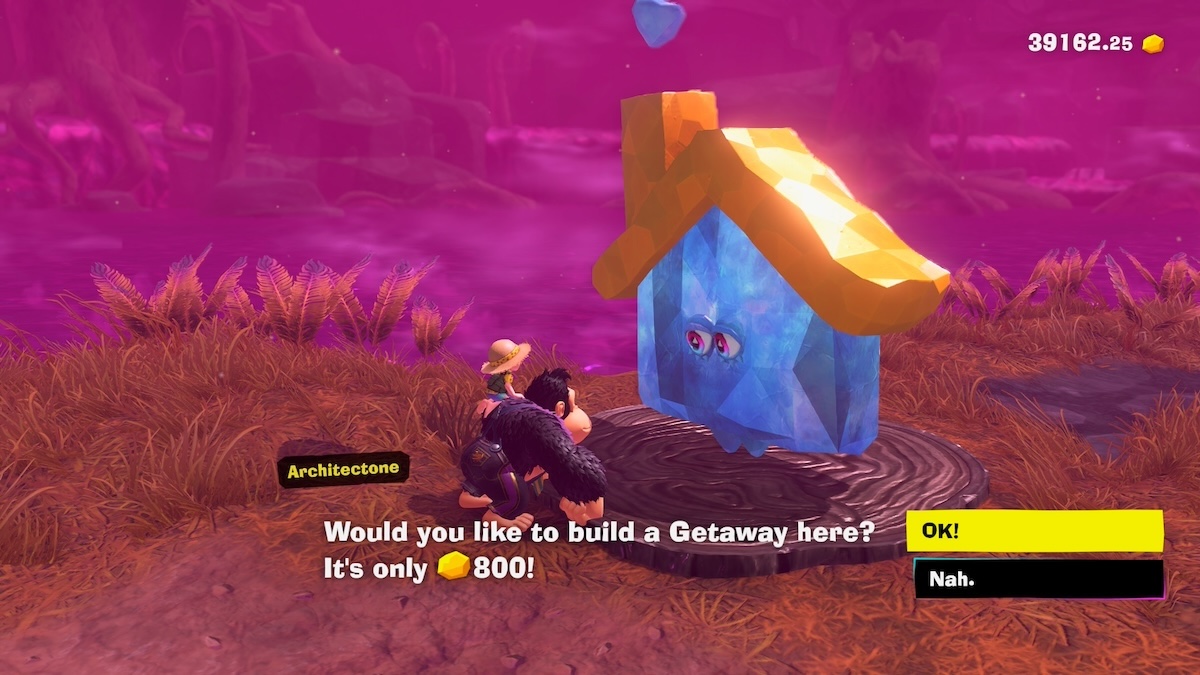
Reaching the Hilltop Layer, we learn even more about what makes Bananza the game it is. Here, we have our first meeting with a Fractone, a crystalline NPC with big googly eyes, reminiscent of something out of Banjo-Kazooie. These cute and friendly characters are the natives of this world, and in addition to being full of helpful hints, it's also possible to rip a chunk out of them when needed. It's okay—it doesn't hurt them, and they respawn immediately with no complaints.
The Fractones also run various shops and amenities, which is where having tons of gold is really going to come in handy. You can use it to purchase healing items and treasure maps in shops, and you'll also need some to convert your Banandium Chips into full-on Banandium Gems. A special Fractone called Architectone will build Getaways for a fee, creating a comfy resting spot for Donkey Kong and Pauline to rest, change outfits and listen to records (collected throughout the game). Even better, the more Getaways you unlock per layer, the more bonus health you get for resting.
(Donkey Kong Bananza via Nintendo)
The Hilltop Layer has a hilly theme, with grass, flowers and stone decorations, but it's not an especially memorable area beyond the fun of the gameplay. While the level design and enjoyment found in each layer are top-tier, I found the areas to leave a bit to be desired. Generally, they can be a little generic, and you'll find the expected ice and lava level, forest level, beach level, cave level and more, but it's the little twists and the characters who inhabit them that really make the game come alive.
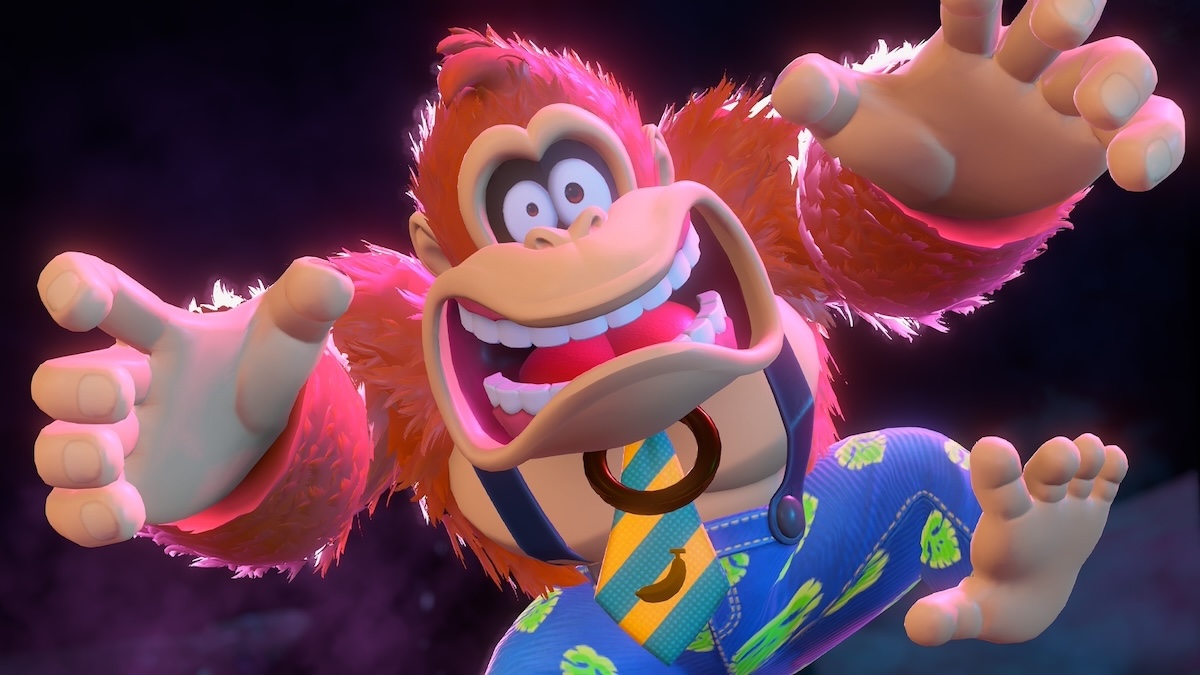
Donkey Kong also looks pretty different in this game than he has in the past, and perhaps it's because I've also been playing Mario Kart World, but I've grown used to how he looks and I find the look quite charming. He's super cute and expressive, and it's also fun watching his reactions to different stimuli as you play. It turns out DK isn't a fan of having wet fur, or getting a little too close to the edge of a cliff. Also, while I wasn't sure what to think of Donkey Kong in trousers at first, the change started making plenty of sense when I realized just how much time the camera would be following behind him.
(Donkey Kong Bananza via Nintendo)
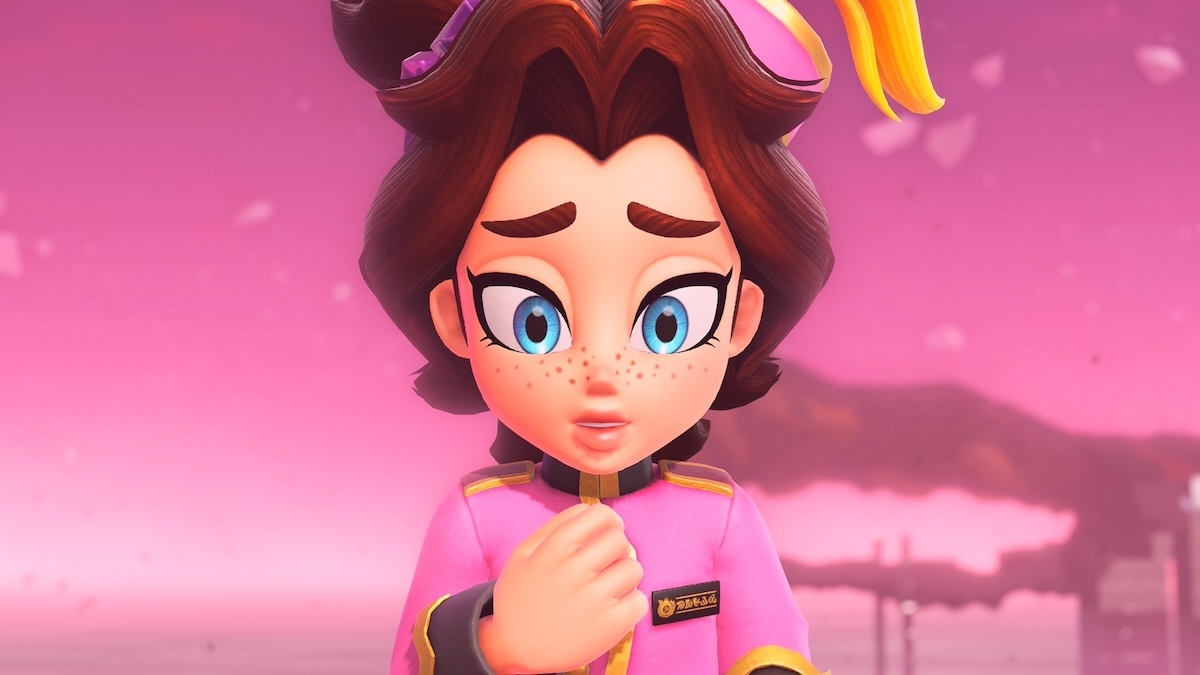
At first, Pauline seemed like a strange addition to this game, but the heart she adds to the story makes her inclusion entirely worth it. While supporting sidekick characters can sometimes be annoying, Pauline's presence was always welcome, and even uplifting, with her voice literally guiding the way for DK. She's never intrusive, nagging the player or solving a puzzle for them before they can thinking it out. Instead, I appreciated when she's call out a Banandium Gem or healing apple that I hadn't spotted myself.
(Donkey Kong Bananza via Nintendo)
The soundtrack is equally fabulous, consisting mostly of brand-new tracks that occasionally reference familiar motifs, with a healthy dose of nostalgia thrown in. Nintendo really knows how and when to dial it up to get the biggest response, while showing restraint and not relying entirely on recycling familiarity.
Throughout, I found all of the bosses to be well-designed and fun to fight, though the regular enemies didn't impress me as much. They were well suited to the gameplay, but they weren't nearly as original or memorable as the ones found in past Donkey Kong titles. That was, until a late-game revelation completely re-contextualized these enemies in a way that made me come to fully appreciate them. The creators of the game made some really thoughtful choices in the types of enemies and how they work, and I admire that.
Also read about: 6 Wholesome Dating Simulator Games for the Hopeless Romantic
Beating the Game
I kept at it, collecting absolutely everything possible within every layer until I got to layer 1000 and realized that if I ever wanted to beat the game and write a review in a timely manner, I'd need to get on with it and keep moving forward.
While I did, predictably, continue to get sidetracked along the way, at last, I reached the game's epic conclusion. I won't say too much about it, but it was way bigger, bolder and more fun than I could have anticipated, and every time I thought it was finally done, the game brought on even more surprises.
Longtime fans of both the Donkey Kong series and the Nintendo universe in general will really appreciate where the story goes and how everything ties back into the lore. The game knows exactly how to play with players' nostalgia to create an effectively and surprisingly moving narrative, and the conclusion was absolutely unforgettable, giving me what I wanted while requiring me to combine all the skills I'd accumulated up to that point to succeed. The final scenes were sweet and inspiring, and they even got me a little choked up.
And while I'd put in about 35 hours at that point, I was far from done. Once the credits roll, you're not even close to the end of the journey. The game opens up even more, with further objectives and special gauntlets that seriously amp up the challenge of the game, forcing players to max out all of the abilities in the skill tree if they want to succeed. One final and heroic challenge is a long and arduous trial with no checkpoints, and 44 hours in, I'm thinking I'm going to need to get the rest of the Banandium Gems and max out more of my skills before I'll best it.
Bottom Line
If you enjoy platformers with great movement, exploring big worlds and collecting lots of little goodies along the way, you're probably going to love Donkey Kong Bananza. It's a completionist's dream that provides both intrinsic and extrinsic satisfaction at every turn, and while the worlds might not be as instantly iconic as the ones that exist in other Nintendo titles, it's absolutely beautiful, and an excellent showcase of the graphical fidelity that's possible on the Nintendo Switch 2.
If you're breezing through the game, it's likely possible to beat it in under 10 hours, but to me, that's not what this game is about. I can easily see myself spending 50 hours or more within the world of Donkey Kong Bananza when all is said and done—and even then, I might create a brand new save file and start the adventure all over again. It's poised to be a major system seller, and it makes me so excited to see what else Nintendo has in store for us as they release more first-party titles.
Can't get enough of the Kongs? Click HERE to find out which one best suits your personality, based on your zodiac sign.