We recently spoke with Valley, the multi-JUNO-nominated indie-pop band made up of Rob Laska, Alex Dimauro and Karah James.
Over the past decade, Valley has built a global fanbase with more than 1.2 billion streams, turning everything from heartbreak and growing up to nostalgia and uncertainty into the kind of songs you want to scream along to.
Following their 2024 album Water the Flowers, Pray for a Garden, the band has been stepping into a new musical chapter with songs like “Vending Machine” and “Someday.” “Someday” takes a reflective look at how easy it is to keep waiting for the perfect moment instead of appreciating the life happening right in front of you, while their latest music continues to push Valley toward a bigger, freer and more playful sound.
Now, with even more new music on the way, we were excited to catch up with Valley about this next era, how their sound and relationship as a band have evolved, the stories behind the songs and what they’re looking forward to next.
Sweety High: “Someday” is built around this idea that we’re constantly saving things for the right moment instead of enjoying them now. Was there a specific experience that made you realize you were doing that in your own life?
Valley: I feel like there wasn’t a specific experience. I think with that song, it was interesting. It was the first time, I think, making music with Chase, who we make the records with, that he brought in more than just a little window of an idea. If the song’s a house, he brought in one furnished room. He brought in a good chunk of the chorus and the verse melodically and lyrically as well, and then we kind of finished writing it together.We changed the second verse and talked about the message of the song, which I think is why we resonated with it, because we knew it felt like a song that we could finish working on with him.
I don’t know if there was one experience that inspired it, but it was just a lot of conversation about how we do it all the time, whether we’re conscious of it or not. Whether it’s saving the nice cologne or saving the nice outfit for the perfect day to wear it. And it goes deeper than that, too. I feel like I do that every day with my creativity. I’m always thinking I’m going to write my last song. You’re always saving the great idea you have for the right moment or the right lyric.
I think the lesson is that, as long as you show up with your heart and your soul, as hippie as you can get with it, there’s no point in waiting around, because if you show up with the right intention, good things will always kind of come.
So I think the song came from that idea. It’s just us really exploring the present and how much of our lives we’ve lived not doing that. And then it’s too late and “someday” never arrives. Whether that’s in the context of a cologne or an outfit you’re saving and wearing, or literally living your life with the people that you love or people that maybe have left or passed on, the sentiment remains the same, I think.
Also read about: ONE OR EIGHT Talk New EN-GÏNE EP Fresh Off Head in the Clouds Performance
SH: There’s something bittersweet about realizing you sometimes don’t know you’re living through an important chapter. Is there an era of Valley that you appreciate differently now than you did while you were actually living it?
Valley: We’ve been a band long enough that there have been eras and chapters and things. I feel like I think of the start of the band, because when you start a band, all you want to do is get in a van and tour. All you want to do is put out your first song and see it on streaming or whatever. You have all these little points, and I think when we were in the middle of doing it, you’re always thinking about the next step in the path or on the ladder, or wherever you’re climbing to.
Looking back, I appreciate that time in a way because you’re a little younger, a little dumber, and there’s a real, beautiful ignorance to that time. I look back and appreciate those first few years of starting. I think those are really beautiful times that you don’t realize until later. You’re like, “Oh wow, that was a sweet, sweet time when there wasn’t a lot of pressure.”
There was that beautiful bliss and ignorance to just pursuing, I guess. There’s a beauty to it, for sure.
SH: “Vending Machine” and “Someday” are both part of this new chapter for the band. What are those two songs beginning to reveal about where you’re heading musically and creatively?
Valley: There was definitely a lot of thought behind “Vending Machine” being the first single. There wasn’t as much thought behind “Someday.”
With “Vending Machine,” we wanted to open the doors wide open and be like, “Here’s something different.” Here’s us recording a song live off the floor in the studio. You can tell it has a bit more bite. The guitars are loud, and there’s a ridiculousness to it that we maybe haven’t done before. That felt really interesting and fun and new. Especially with this era, we wanted to lead with something that just felt like the doors swung open.
With “Someday,” we were trying to still keep the aggressiveness of those guitars and stuff. We always joke with Chase that we wanted “Someday” to sound like Pinegrove covering Oasis. We wanted to lead with something that still felt intense but soft at the same time, and obviously there’s the meaning of the song.
I don’t know if they’re necessarily dictating what the record is that’s coming or the amount of music that’s coming, but they just felt like these confident little islands for some reason. They just felt right. And they’re not the last singles. We have another single coming that is very different from those two. Singles these days are interesting. You want to give people a good sampler of what the album is, but then that also feels like feeding into something that is a never-ending road. You kind of have to put out what you feel is right.
So I think with this album, those songs just felt right as the first two. I don’t think there was much more thought behind it other than trying something new and being a little experimental with it.

(Photo credit: Vanessa Heins)
SH: You’ve been a band for about a decade now. When you think about the people you were when you first debuted versus now, what parts of you have changed as a group?
Valley: I think we have a better understanding of where we fit into the musical zeitgeist, and I think that just comes from better understanding how to make albums and how to make songs.
It’s a lot of unlearning. When you’re starting out, you’re wanting to learn and soak up everything. You’re like, “How do you get this drum sound? How do you write that kind of song? How do you get that synth sound? How do you make the lights at the show look like that?” You’re just absorbing all this stuff to build your own creative world.
I think the biggest thing that’s changed is we’ve learned to let go of that constant chase of, “Well, we need to know what’s happening right now so we can learn from that and make it our own.”
I think we’ll always pull inspiration from things, but we’ve learned how to trust our guts a lot more versus looking for external inspiration. A lot more comes from within and just being excited about something and not caring if it’s like, “Oh, right now this is happening in the landscape of music. Let’s lean into a little bit of that.”
It’s like, no, we’re just leaning into our guts and what we feel is right. That’s changed the most.
I think that shows in the music if you listen to our albums in order. You can see us starting somewhere with our first record that felt very honest and spur-of-the-moment. I recently heard the term “brushstroke music,” and I feel like our first album felt a lot more like that, just in the moment we made it.
Then it got a little more technical and mechanical, in a good way and a fun way, and now we’ve kind of landed back into this more brushstroke musical way. It’s just trusting our guts more than ever. That’s changed the most since the beginning, and it’s worked well for us.
Also read about: Jenna Raine on Embracing Life at 22 With Debut Album Jeans, Boys & Jesus
SH: On the other hand, what would Valley of 2016 be most surprised to learn about what you guys have become?
Valley: Oh, man. I think they’d just be proud. I think they would be proud of us for sticking through it.
Over the last 10 years, there have been a lot of moments where we could have shut the door. We lost a band member. We lost a lot of money touring, not making a dollar, just losing money, to get to Asia, to get to Europe, to get to all these places. I think they would just be proud of us for sticking with it.
I think the biggest thing we’ve learned from the last few years is that if you don’t stop and you find a way to keep going, you’ll find your pasture. You’ll find your patch of grass. I think we’re starting to realize where ours is.
I think they’d just be proud of us for sticking with it. It would have been easy to give up multiple times, but I think they’d be proud that we kept going.
SH: You’ve experienced everything from viral songs to touring around the world. Has your definition of success changed as you’ve gotten older?
Valley: Yes. Oh my gosh, so much. Especially with this album and the expectations around this album.
I think when we made Water the Flowers, Pray for a Garden, looking back, we did have something to prove. At the time, we didn’t understand that. We didn’t know. Maybe that was somewhere in the unconscious because we were parting ways with a band member who was so instrumental in producing and building the songs with us, and then realizing, “Oh, we have to do this as three,” and going back to these things that we forgot we were able to do. And the songs were still there.
There was maybe this internal proof to ourselves that, “Oh, we can do this.”
This album is way more about leaning into that even more, but also ditching the expectations of anything other than the process being the gift. I think that’s been the biggest thing.
The definition of success now is just truly realizing that it’s never going to be enough. So if it’s never going to be enough, then you just have to enjoy the process and enjoy what’s in front of you. It’s so much easier said than done, but it’s really the truth.
If 2016 Valley was looking at us now, I think there’d be a shock. The success is there. It’s all the things we wanted. We’ve toured the world, we’ve played amazing festivals, we’ve had songs go No. 1 on radio. But it’s never enough, and you can go down that path really dangerously because there’s always something to look up at and be like, “Well, we’re not that yet.”
I think now we’ve just accepted that making the albums and touring them, that’s the gift. That’s the success. Everything else that happens outside of that, I don’t think it’s healthy to define success that way.
We’ve learned that the streams and all the things that come with that definition of success aren’t the things we’re going to look back on in our lives. We’re going to remember playing shows in Japan and meeting people who have soundtracked their lives to our music. We’re not going to remember stats and analytics that defined success.
That’s been the biggest change in our mentality around success: just having fun and enjoying the process. And for anyone listening, it’s truly never enough. Our producer Chase says that a lot of the time, and it’s just true. It’s never going to be enough, no matter how big it gets. You’re always going to be looking to your left or right and being like, “Well, I don’t have that.” We can’t live like that. That’s just unsustainable. Enjoy it.
SH: Is there a song from your catalog where the meaning has completely changed for you as you’ve gotten older?
Valley: Yeah, for sure. I mean, even the obvious answer is “Like 1999.” We obviously had a viral TikTok moment with that song, and it’s such a sonic departure from the music we make now.
People can look at it in a bunch of different ways and recognize the band, or not recognize the band, for that song. Like any artist you talk to who has been in that position, and just piggybacking on what we were just talking about, you have to be thankful for any success that introduces your band to the world.
I think my relationship with that song has changed. At one point, after it did really well, I felt a lot of maybe shame or embarrassment about a song that maybe doesn’t fully represent what my personal playlist looks like or something.
But my relationship with it now has changed so much because it’s not actually about the song. It’s about the bridge that that song built for an audience around the world to discover us.
If that song helps people discover this new record, or “Vending Machine,” or our last album, Water the Flowers, Pray for a Garden, or our first album, that’s the real gift of having a song like that.
The world isn’t silly. People will listen to that song and then listen to the other music and make their own judgment and assumptions about whether they like it or not. That’s what you can’t control.
My relationship with that song is healthy now because it’s just a bridge. It’s a gateway. It’s a path that leads to all the rest of the music that we have, and you can’t control what that path is.
So it’s just gratitude for all the songs, and that one in particular, I think, is needed to move on from it.
Also read about: KIIRAS Opens Up About Their Global Roots, SAAY’s Mentorship and What Comes Next
SH: What is one thing that you’re making a conscious effort to be more present about during this next chapter?
Valley: I definitely want to be more present on release days.
I think artists, a lot of the time, will talk about how stressful they are because you’re making sure everything is uploaded properly and goes to plan. There’s a lot of social media involved on a release day. You’re often doing interviews or going to radio and stuff like that.
Release days or release weeks can just be really clouded with, again, all the things I was talking about with success. Not the gross part, but it can cloud just sitting in the gratitude of, “We put out something that we’re really proud of,” and taking a second to appreciate the fact that we even get to do it.
So I think I want more presence on release days and release weeks. They can get really busy and crazy. Maybe that’s a really literal answer, but I’ve been thinking about that a lot leading up to our album announcement in September.
Just enjoy being done and being in that process of putting all the information and the visuals and everything into the world. Just be a bit more present with that versus being stressed about it all going well and checking the analytics and stuff.
So, yeah, more presence, just being in the release campaign. We’re all human. We’re all going to check the comments and make sure no one’s talking shit about us. It’s only human, but as little of that as possible.
SH: Keeping with the message of “Someday,” if you could send one message back to Valley at the very beginning and tell yourselves not to wait until “someday” to do something, what would it be?
Valley: There are a lot of funny ones, way more literal ones. But I’m a big Back to the Future believer.
I don’t know if I would tell them anything because then we wouldn’t be here right now. I do get worried about shifting one tiny thing in the timeline because I don’t know; we might not be a band. That one thing could change everything.
I’m a big believer in not messing with the past, so I don’t know if I’d tell them anything. Just live your life the way it’s unfolding.That’s a good question. I’ve never thought about that, but I think I’m going to go with my Back to the Future theory: just tell them nothing.
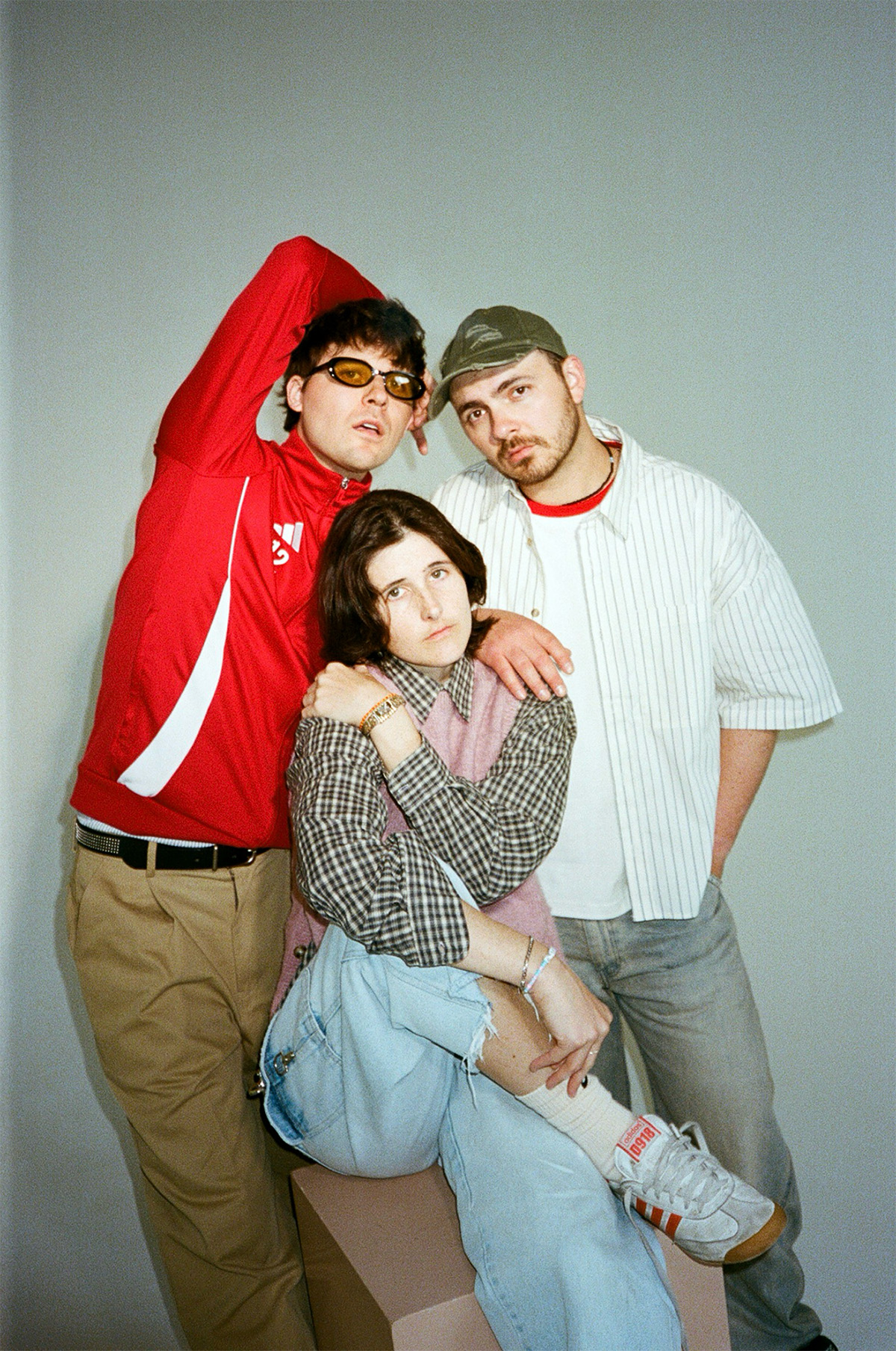
(Photo credit: Vanessa Heins)
SH: Is there anything else you want to add? Anything you want to say to the fans or something we haven’t talked about yet?
Valley: Thanks to anyone reading, for listening to our band. We’re very excited for the album coming, Do You Need to Be Entertained?, and the tour.
It’s going to be a busy 2027. A lot of touring, a lot of songs, a lot of album, a lot of all that. It’ll be good.
For more insights from the bands that inspire us, click HERE to read our interview with Chanpan on autogratis and more.