Coffee can taste bright and lively, yet that same morning cup may bring heartburn or acid reflux for coffee lovers with sensitive stomachs.
The best low-acid coffee brands take different routes to a smooth brewed cup: bean selection, darker or slower roasting, laboratory checks and, in some cases, published pH results.
This review tests seven “stomach-friendly” claims on equal scales.

(via Unsplash)
Also read about: 7 Things You’ll Relate to If You Only Drink Your Coffee Iced
What Low-Acid Coffee Means
Regular coffee often sits near pH 5 and some low-acid products exceed 5.5. Yet pH measures acidity strength, not the total amount of acidic compounds. Titratable acidity, chlorogenic acid content, roast, caffeine, serving size and personal tolerance also affect the brewed cup and the impact on your system.
Compared with more acidic coffee, a low-acid cup may have a smooth, less sharp flavor than traditional coffee. It still cannot guarantee relief from heartburn. A meta-analysis of studies related to GERD and coffee consumption shows that coffee and other caffeine sources commonly trigger GERD symptoms for some people. Anyone who wants to drink coffee despite persistent acid reflux should track personal reactions and seek medical advice when needed.
How We Evaluated the Brands
We checked current product pages against six points: acid-reduction method, numerical evidence or third-party testing, farming certifications, origins, roast and flavor range and formats. Published taste notes describe the intended profile; they are not independent taste tests.
Independent pH testing earns more confidence than an unqualified “gentle” label, but few brands can invest in additional evaluations. Plus, pH tells only part of the story.
Contaminant screening is separate from acidity testing. We took into account certifications like USDA Organic, Fair Trade and Bird Friendly certification, even though these address farming or sourcing, not stomach comfort. They show the general values of the brand and how beans go from farm to buyer.
Low-Acid Coffee Brands at a Glance
Here is a preview of the main differences between the leading offers:
| Brand | Low-acid evidence | Certifications | Roast and flavor | Potential drawbacks |
| Fabula Coffee | Bean selection plus gentle roast; no pH published | USDA-certified organic | Light, medium and dark roasts; decaf and flavored options available | No numerical acidity result |
| Java Planet | Naturally low-acid beans; no exact pH published | Organic (USDA); Smithsonian certification on select products | Medium to dark roast; flavored options available | No numerical acidity result |
| Puroast | Brewed pH 5.82; university-validated brand research | USDA Organic on some products only; LACCSA low-acid credential | Medium and dark roasts; decaf and flavored options available | Main lines not certified organic |
| Lifeboost | Bean selection, roasting and pH-testing (no testing details published) | USDA-certified organic | Light, medium and dark, plus decaf, flavored and limited editions | One main sourcing region. No numerical acidity result |
| Alex’s | Brewed pH between 5.4 and 5.7 and lower chlorogenic acids | Organic (USDA), kosher | French and espresso roasts, Rise & Shine and Half Caff lines; flavored single-serve cups | Compact core roast range |
| Purity | EASE roast has a pH of 5.19, as reported by the brand | USDA Organic, Biodynamic, Smithsonian | Full roast range—EASE created for digestive health; full and ⅔ decaf options available | No flavored options |
| Lucy Jo’s | Published brewed pH by product, from 5.1 to 6.02 | Certified organic | Medium, medium-dark and dark roasts; decaf available | Broad contaminant tests not disclosed |
Product availability and other information may change. This review is current as of September 2026.
1. Fabula Coffee
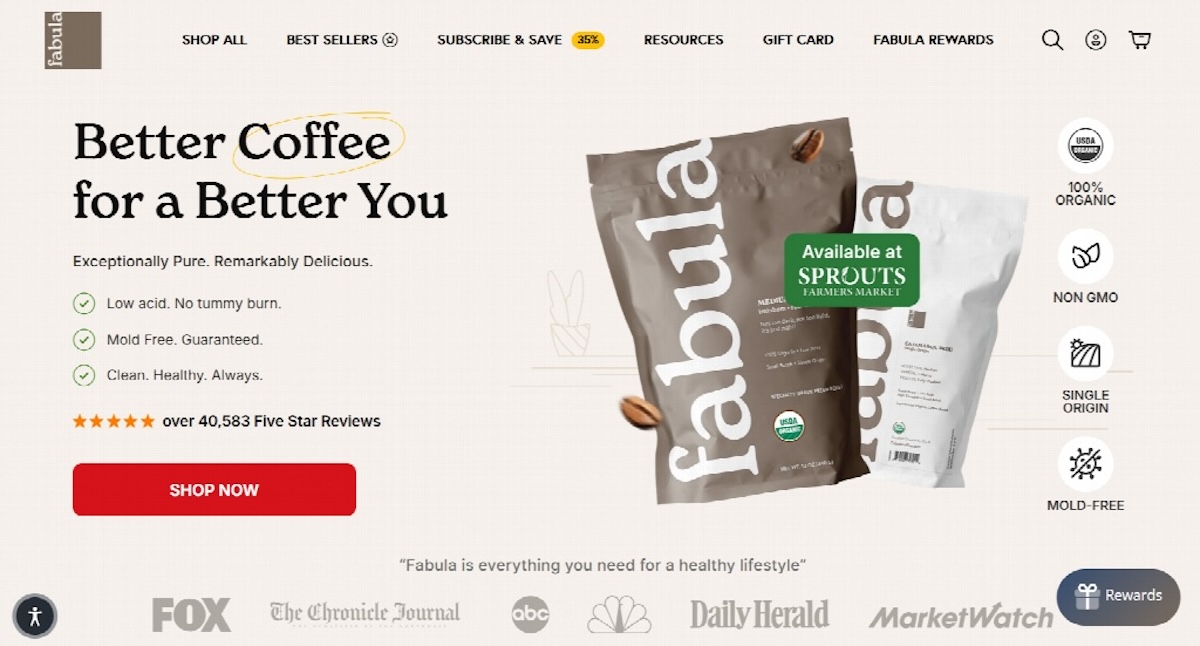
Fabula Coffee builds low-acid coffee from specialty-grade Arabica chosen for varietal, microclimate and growing conditions, then uses a gentle roast to reduce acidity without a chemical treatment. Fabula’s low-acid coffee comes from high-altitude, shade-grown farms in Peru, Mexico, Colombia and other countries. The Peru medium roast has a smooth, rich taste of praline, nuts and chocolate; lighter roasts, dark roast and Colombian espresso add to the range of roasts.
The beans go through independent screening for more than 550 compounds, including mycotoxins, molds, pesticides, herbicides and heavy metals. That supports the clean coffee claim, although the company does not publish a pH or titratable acidity result for the brewed product. Fabula roasts beans daily, so each order gets freshly roasted coffee.
- Low-acid coffee basis: Bean selection, microclimate and a controlled roasting method.
- Certification: USDA Organic.
- Origin: Single-origin Arabica from Peru, Mexico, Colombia and other countries.
- Roast and flavor: Light, medium, dark, espresso and flavored choices.
- Formats: Whole-bean coffee, ground coffee, pods, instant, cold brew and decaf coffee.
- Limitation: No published numerical acid level for direct comparison.
(via Fabula Coffee)
2. Java Planet
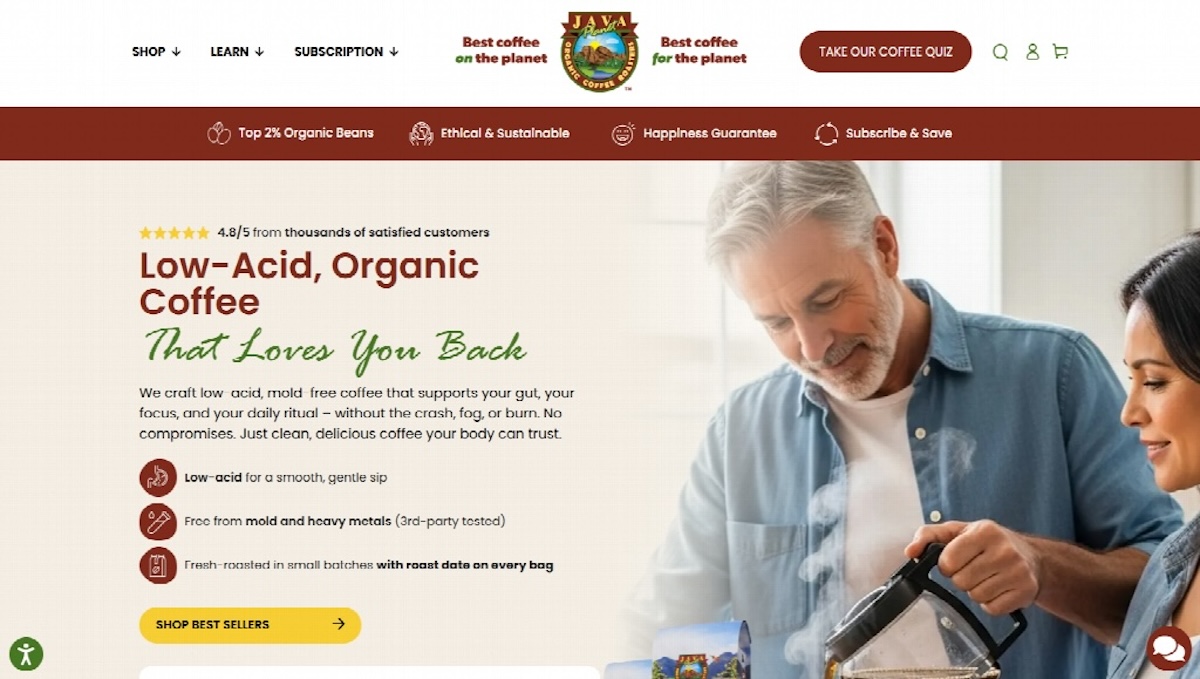
Java Planet offers one of the broader origin selections among low-acid coffee brands. Its specialty Arabica lineup includes Ethiopian and Guatemalan medium-roast coffee, medium-dark beans from Peru and Colombia and dark-roast lots from Sumatra, Costa Rica and Papua New Guinea. The first sip can taste fruit-toned or earthy rather than following one house flavor.
All core coffee beans are USDA Organic and selected products carry Smithsonian Bird Friendly certification. The family-run roaster says an independent lab checks for mold and heavy metals. However, its low-acid overview describes a pH “closer to neutral” without giving a figure for each choice once brewed.
- Low-acid coffee basis: Naturally low-acid coffee beans from selected origins.
- Certification: USDA-certified; selected products carry Smithsonian Bird Friendly certification.
- Origin: Multiple single origins from Africa, Asia and the Americas.
- Roast and flavor: Medium through dark, with fruit, cocoa and earthy profiles.
- Formats: Whole beans, ground, decaf, half-caff, espresso and flavored blends.
- Limitation: Exact pH and titratable acidity remain undisclosed.
(via Java Planet)
3. Puroast
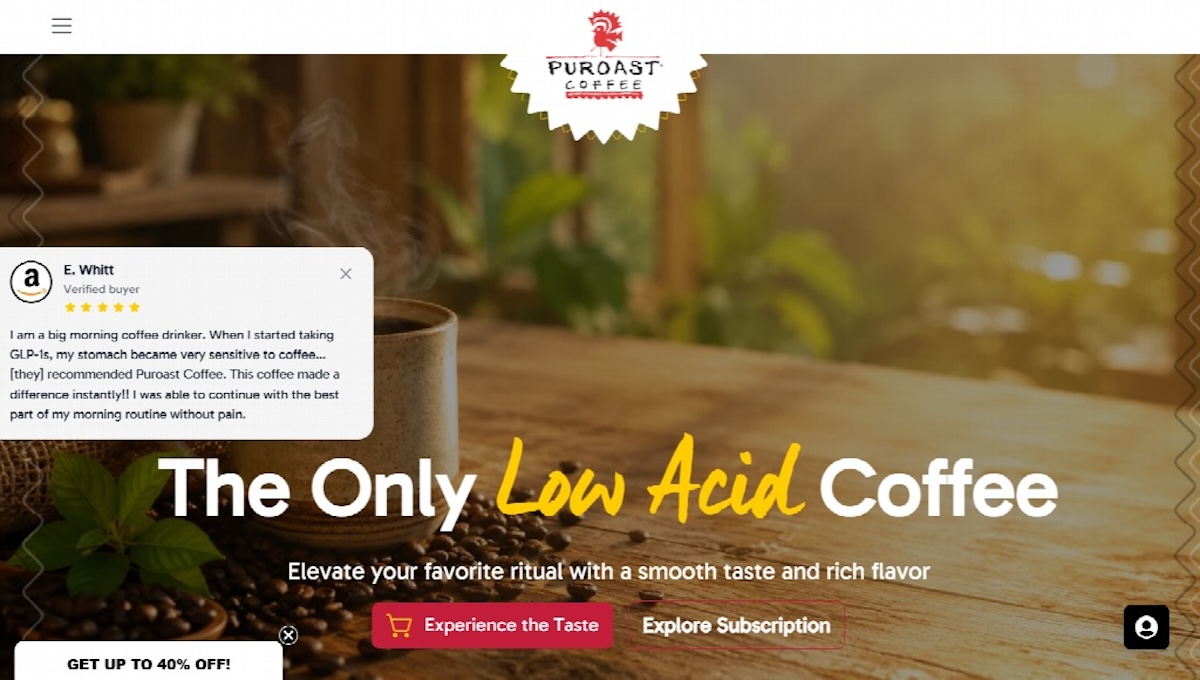
Puroast makes the most explicit numerical case here. Its unique roasting process applies conduction heat with biomass fuel. The company reports pH 5.82 and five times less acid than average commercial options, citing work associated with UC Davis and North Carolina A&T. The patented method uses only coffee and heat.
The range favors a bold, smooth taste. Coffeehouse Blend is a medium roast blend, while Coffeehouse French Roast and Dark French Roast offer darker roasts flavor without the oily surface or bitter taste that can define less balanced coffees. Decaf, half-caff, Italian espresso, pods and flavored varieties are available for different brewing methods.
- Low-acid coffee basis: Patented slow conduction roast; published pH 5.82.
- Certification: USDA Organic on some products only; the main lines are not certified.
- Origin: Blend origins mostly undisclosed; Ugandan and Colombian single-origin options available.
- Roast and flavor: Medium or dark roast, with full-bodied flavor and low bitterness.
- Formats: Whole bean, drip grind, pods, decaf, half-caff and flavored options.
- Limitation: Many bags come in 20-ounce or 2.5-pound sizes and sourcing detail is thin.
(via Puroast)
Also read about: If You’re Obsessed With Coffee, You’ll Relate to These 9 Truths
4. Lifeboost
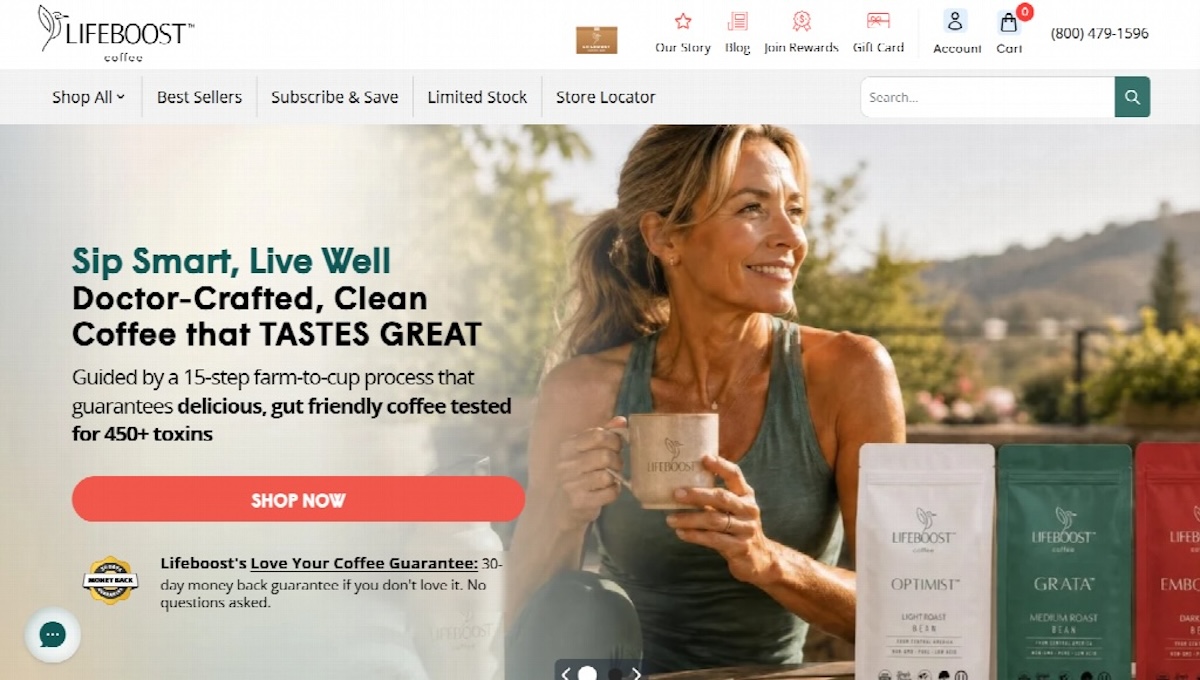
Lifeboost uses single-origin Arabica grown under forest shade at about 5,700 feetin Nueva Segovia, Nicaragua. Cherries are hand-picked, spring-water washed and sun-dried. The TrustPure process adds third-party checks for more than 450 substances, including mycotoxins, pesticides, glyphosate and heavy metals.
On selected product pages, Lifeboost markets its pods as pH-tested and up to 27.7% less acidic than common store-bought coffees, although we were unable to find the supporting test details. “Grata” medium roast has a smooth taste of cream, nuts and dried fruit; “Embolden” dark roast leans toward cocoa, dark chocolate and a heavier body. The catalog also includes cold brew coffee, espresso, flavored varieties, pods and Swiss Water decaf.
- Low-acid coffee basis: Growing, processing, pH checks and a proprietary roast.
- Certification: USDA Organic at the farm level.
- Origin: Mostly Nicaragua.
- Roast and flavor: Light to midnight-dark, from citrus to dark chocolate.
- Formats: Beans, grounds, pods, capsules and decaf.
- Limitation: Limited origin variety and public pages do not show a pH value for each roast.
(via Lifeboost)
5. Alex’s Low-Acid Organic Coffee
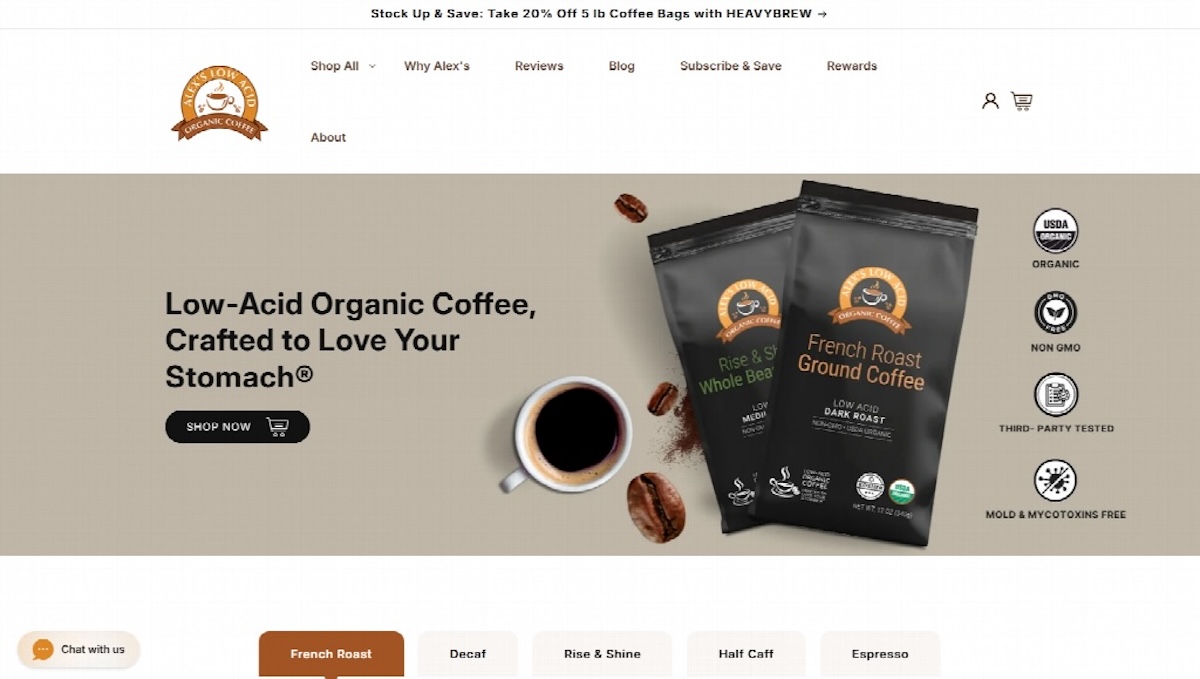
Alex’s targets chlorogenic acids rather than relying on pH alone. Its hot-air convection system keeps beans off heated steel and testing covers CGA types, contaminants, mold, pathogens, pesticide residues, glyphosate and heavy metals. Published comparison data lists pH 5.3 versus 5.1 for the other brands tested, with up to 25% lower CGA levels.
Among the most popular products, French Roast blends Chiapas, Nicaragua and Honduras beans for a dark roast with a chocolate-led taste and no burnt edge. Rise & Shine combines Sumatra and Chiapas for caramel, white pepper and vanilla; the decaf has brown sugar, pear and nut notes. Every core roast uses USDA Organic, non-GMO specialty beans.
- Low-acid coffee basis: Hot-air roast that reduces measured chlorogenic acids.
- Certification: USDA-certified organic.
- Origin: Mexico, Nicaragua, Honduras and Sumatra, depending on the blend.
- Roast and flavor: Medium roast, dark French roast, espresso, decaf and half-caff.
- Formats: Whole bean, fresh ground, K-Cup-compatible pods, steep bags and bulk bags.
- Limitation: Fewer core blends than larger low-acid coffee brands carry.
(via Alex’s Low-Acid Organic Coffee)
6. Purity
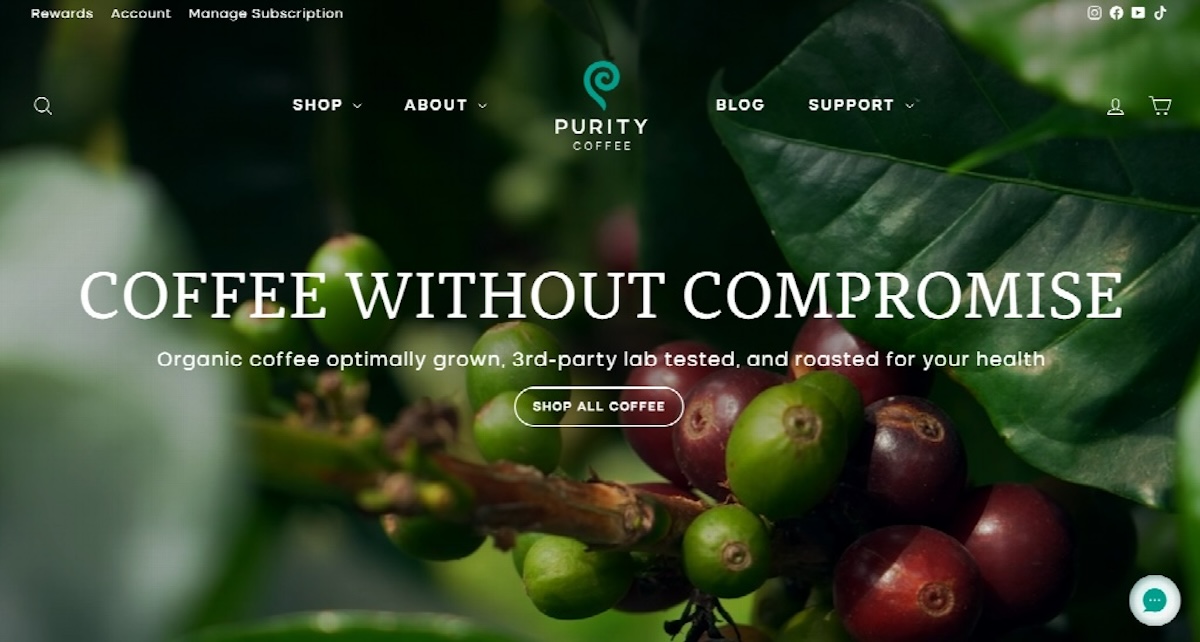
Purity’s EASE is a dark roast blend developed for lower acidity and a full-bodied flavor. Its taste notes—dark chocolate, roasted walnut and brown spice—fit drinkers who add milk as well as those who take a cup black. The beans are specialty-grade Arabica, USDA Organic, Demeter-Certified Biodynamic and Smithsonian Bird Friendly.
The brand publishes certificates of analysis for mold and mycotoxins and uses third-party tests for other contaminants. The company provides an internal pH estimate, claiming that EASE is the brand’s least acidic coffee at pH 5.19. FLOW medium roast and CALM water-processed decaf broaden the catalog, though EASE remains the clearest match for sensitive stomachs.
- Low-acid coffee basis: Darker roast profile designed for lower acidity.
- Certification:USDA, Biodynamic and Smithsonian certifications.
- Origin: Traceable, regeneratively farmed specialty Arabica.
- Roast and flavor: EASE has a dark chocolate, walnut and brown-spice taste.
- Formats: Whole beans, ground, pods, sachets, 5-pound bags and decaf.
- Limitation: No flavored product lines.
(via Purity)
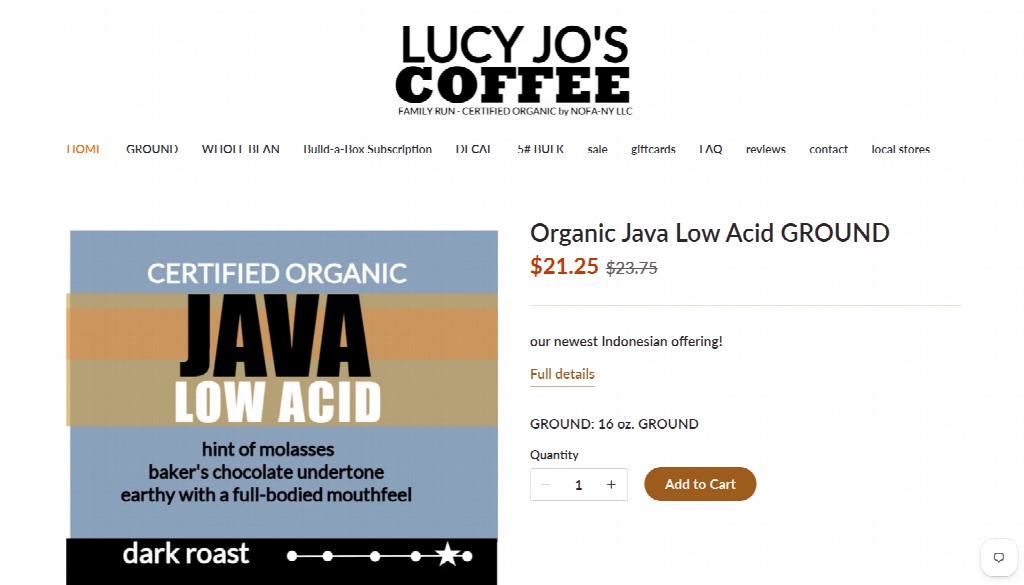
7. Lucy Jo’s Coffee
Lucy Jo’s selects naturally low-acid coffee beans rather than applying an extra treatment. It publishes clear product figures: Sumatra at pH 5.8, Mellow Belly at 5.6, Low Acid French Roast at 6.02, Timor at 5.1, Peru at 5.4 and Mellow Belly decaf at 5.3. Water chemistry can change the final brewed result, a caveat the roaster states directly.
The certified-organic, family-run roastery sells a large low-acid collection that includes Brazil, Java, Flores, Brainstorm, Mellow Belly blends, French roast and cold brew. Both regular and dark decaf appear alongside half-caff choices. That makes it easy to run home taste tests across smooth and earthy flavor profiles.
- Low-acid coffee basis: Naturally lower-acid origins, supported by product pH values.
- Certification: USDA Organic.
- Origin: Indonesia, Timor, Peru, Brazil and several blends.
- Roast and flavor: Broad range, from a mellow taste to an earthy French roast.
- Formats: Whole bean, ground, decaf, half-caff.
- Limitation: Broad mycotoxin and heavy-metal screening is not disclosed.
(via Lucy Jo’s Coffee)
Also read about: 15 Cute Instagram Captions for Every Photo of a Hot Drink in a Mug This Winter
How to Choose a Low-Acid Coffee
Start with proof that matches your concern. For verifiable low acidity, compare pH and ask whether it describes beans or brewed coffee. If heartburn follows bitterness or chlorogenic acids, CGA data may say more than a dark roast label. For contaminants, check the panel, frequency and whether it covers the finished product.
Next, choose according to the way you brew. A French press needs coarse grounds, an espresso machine needs fine grounds and a standard coffee maker usually suits medium-ground beans. Cold brew can extract fewer titratable acids than hot coffee in some conditions, but studies do not show a universal pH advantage.
Finally, pick a taste you will enjoy. Darker beans often reduce some sharp chlorogenic compounds, while lighter roasts retain more bright fruit character. A splash of milk can soften perceived intensity, though it will not change every reflux trigger. Buy a small bag first; your favorite coffee must pass your own stomach and taste tests.
Red Flags on Low-Acid Labels
Marketing can outrun the evidence. Before paying a premium, look for several warning signs:
- “Low acid” with no method, pH, CGA result, or laboratory detail
- A contaminant test presented as proof of low acidity
- A fixed claim that every dark roast reaches the same pH
- A guarantee to prevent heartburn or cure stomach issues
- “Organic” used as a substitute for acidity data or flavor information.
Individual tolerance still decides whether a morning cup works. No label can guarantee freedom from heartburn: even a lab-tested, gut-friendly option can cause symptoms because caffeine, serving size, meal timing and other compounds affect digestion.
Final Notes
These seven low-acid coffee brands suit different priorities.
- Fabula Coffee combines a varied organic range with broad contaminant screening.
- Puroast and Lucy Jo’s provide the clearest pH figures.
- Alex’s adds CGA data.
- Java Planet offers origin choice.
- Lifeboost pairs a wide range with extensive contaminant tests.
- Purity backs its range with strong certifications.
Great flavor remains personal; start with a verifiable claim, then consider format and comfort.
For even more on coffee, click HERE to discover 25 terms you should know to order the perfect cup of coffee.