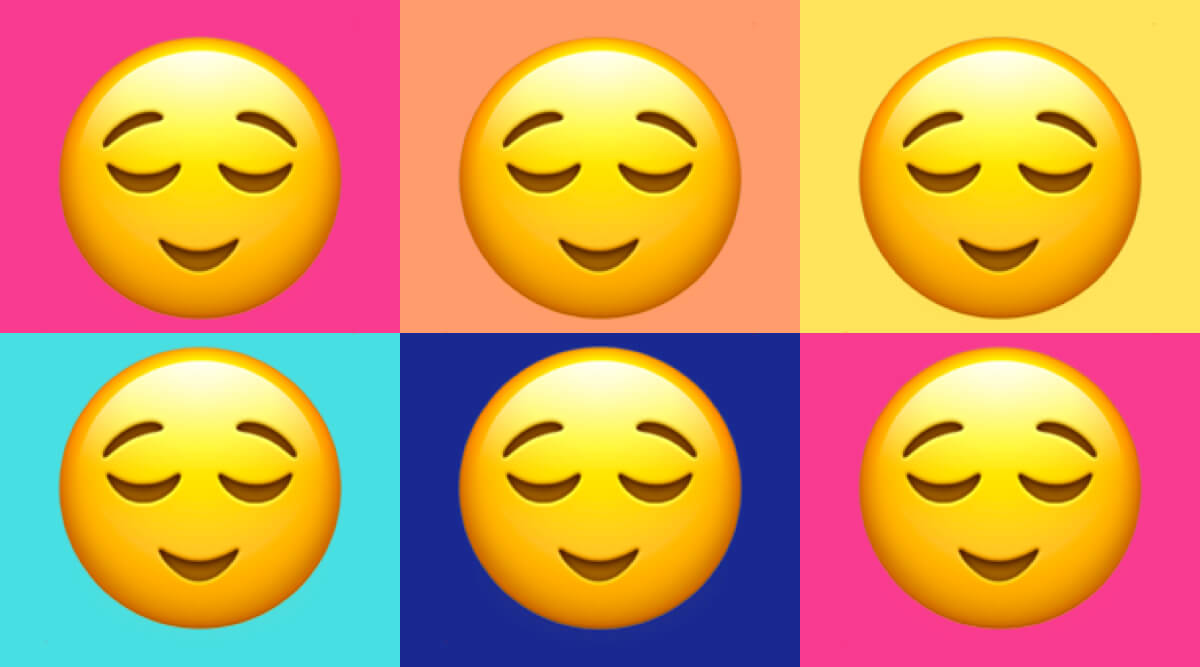
There’s a good reason that the “relieved face” 😌 emoji is known as one of the nicest emojis around.
Whether you just turned in a huge project or you’re finally curled up in bed after a long day, there’s a good chance you’ve felt like sending the 😌. But what does this calm little face actually say when it pops up in your texting threads?
Like most emojis, the meaning of the relieved face shifts depending on who’s sending it and why. Here’s how to read it (and when to use it yourself).
What 😌 Means
As its name would convey, this emoji stands for a sense of relief as well as overall pleasant feelings, contentment, calm and peace. Just don’t get it twisted with the pensive face 😔 or the disappointed face 😞, as that could really throw off your texting game.
Here are a few common translations:
- “Phew, I’m so glad that’s over.”
- “I’m calm, comfortable and content right now.”
- “Thank you, I really appreciate that.”
- “No stress here, just good vibes.”
Basically, if the 😌 shows up in a chat, the sender is feeling at ease. Context is what tells you exactly why.
Other Interpretations of 😌
However, 😌 can also mean:
- Self-care mode: After a spa day, a long shower or a full night of sleep, the 😌 says “I feel brand new.”
- Smug satisfaction: Paired with a little shade or a brag, it can read as “I’m above the drama” or “I told you so.”
- Peaceful bliss: It’s also a go-to for cozy moments like rainy days, good music and quiet nights in.
If the message around the emoji is positive, the 😌 is almost always sincere. If it comes after something petty, take it with a grain of salt.
Also read about: What Does the 🥹 Emoji Mean?
Where 😌 Comes From
The official Unicode name for 😌 is “relieved face.” It was added to Unicode in 2010 and became part of the standard emoji set in 2015. The design shows closed, relaxed eyes and a soft smile, which is why it’s so easy to connect with a deep exhale.
Over time, people started using it for more than just relief, and it became shorthand for feeling calm, grateful and totally unbothered.
Also read about: What Does the 🙃 Emoji Mean?
😌 From a Girl
From a girl, the 😌 emoji generally conveys a sense of comfort—and if they’re using it with you, chances are that they feel safe and happy when they’re chatting with you. It can also imply gratitude, especially following an act of kindness.
That said, don’t assume a girl sending the 😌 is flirting. Most of the time, she’s simply telling you she’s relaxed and happy, so read the rest of the conversation before jumping to conclusions.
Also read about: What Does the 😇 Emoji Mean?
😌 From a Guy
From a guy, the 😌 emoji is usually associated with chill vibes. They’re feeling happy and unbothered. They may use the emoji following the calm after a stressful situation, and feel like they can share the moment with you.
Again, don’t read too far into it. A guy sending the 😌 is more likely to be saying “all good on my end” than anything deeper, so just match his easygoing energy.
Also read about: What Does the 😴 Emoji Mean?
Common 😌 Combos and What They Mean
Emoji pairings can change the tone completely. Here are a few worth knowing:
- 😌✨ usually signals a glow-up, a fresh start or a perfectly peaceful day.
- 😌🤍 leans into quiet gratitude and warm, sincere feelings.
- 😌😏 often reads as smug, playful or a little flirty, like “I know exactly what I’m doing.”
Also read about: What Does the ☺️ Emoji Mean?
When to Use 😌 (and When Not To)
The 😌 works best in casual, low-stakes chats. Send it to a friend after finishing finals, to say thanks for a favor or to share a cozy-night mood in the group chat.
It can fall flat in serious moments, though. If someone is venting or you’re apologizing, a calm, content face may come across as dismissive or smug, even if you didn’t mean it that way. When in doubt, lead with your actual words and let the emoji back them up.
The 😌 is all about relief and good vibes, but there’s plenty more to decode. Check out What Does the 😏 Emoji Mean?