Sponsored

Let’s be real—there’s a major difference between window shopping for the ring of your dreams and actually beginning the search for the perfect ring you intend to wear for the rest of your life.
And as you spend hours scrolling, you’re likely to see one term show up everywhere: “IGI-certified ring.” You might just stare at it, at first. What is that? Does my ring need a certification? No one teaches about these things, which is why we’re writing this right now to help.
Imagine that someone who cares too much is looking at your diamond under a microscope. They take careful notes of everything they see, and present you with those notes. That’s basically what the IGI is all about.
IGI, short for International Gemological Institute, is a grading lab that specializes solely in diamonds. They determne how big a diamond is or isn’t, what the color of it is like, how clean it looks on the inside and how well it’s cut. After checking all of this out, they get it down on paper.
That paper matters more than people realize. Without it, you’re just trusting whatever the seller tells you. With it, you actually know precisely what you’re buying. It makes a big difference when we’re talking about something as expensive as a diamond.
If a seller can’t hand you that paper, you need to be asking why.
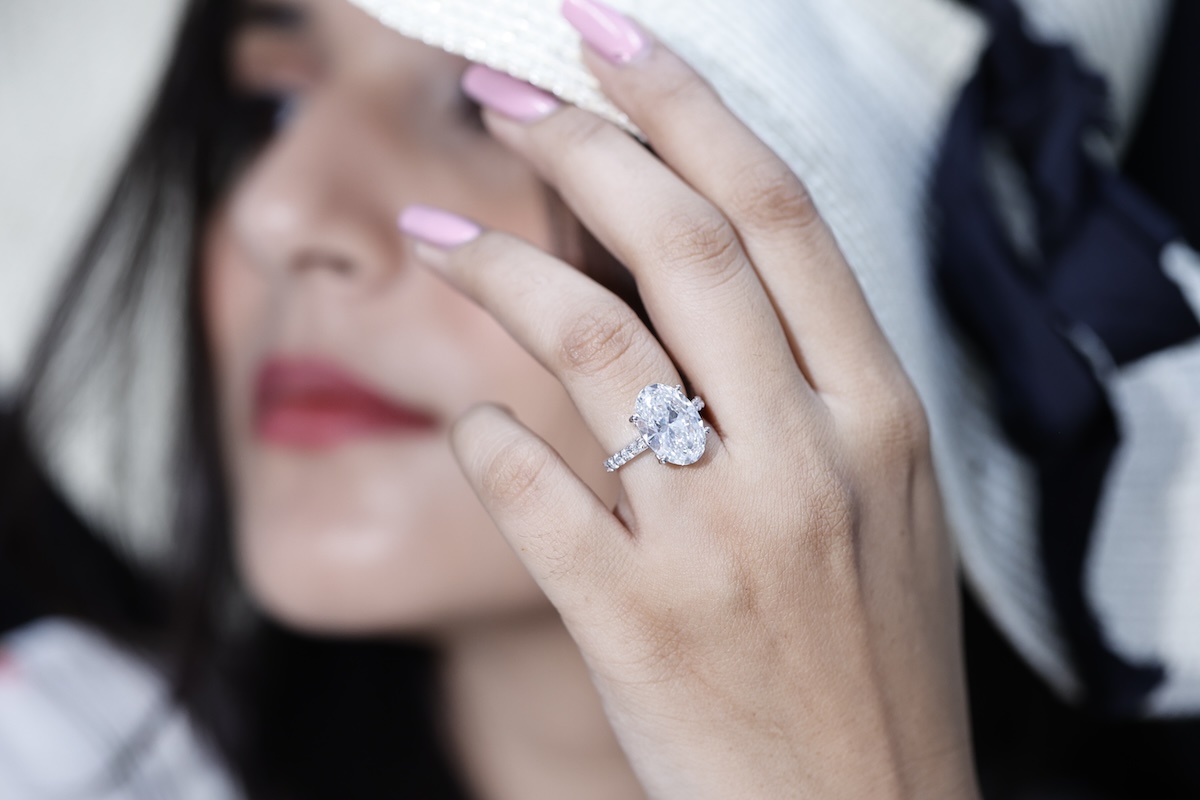
People think that a lab-grown diamond is fake, like it’s glass, or plastic, or some kind of substitute. It’s not. A lab-grown diamond engagement ring is crafted from a diamond grown in a lab. It has precisely the same sparkle and same durability, and even a jeweler isn’t able to tell by sight whether it’s natural or lab-grown.
It’s only the place of origin that’s different. One of them was potentially formed in nature and laid buried for a billion years.The other was grown in a laboratory over a couple of weeks. Even if it’s not a natural diamond, it’s still a diamond.
Lab-grown diamonds went viral for a reason, and it’s not just because it’s in fashion these days.
Money’s a big factor. When you go with lab-grown options, you can get a noticeably bigger stone for less, compared to a mined diamond the same size.
But for many girls, of course, it means more to know exactly where their diamond comes from. There was no digging, no waste and no sourcing nonsense.
Increasingly, lab-created diamond rings aren’t just the backup option, but the informed pick.
Also read about: Gemstones With Meaning: How to Choose Jewelry That Tells Your Story
A Quick Shopping Checklist
There are a few things to keep in mind when you actually start looking for your ideal diamond engagement ring.
You’ll probably hear the word halo a lot while shopping for rings. This refers to small diamonds circling your main stone. This makes the center diamond look even bigger and adds extra shine, without requiring a massive stone in the middle. It’s a good option if you want that wow factor without the price tag that often comes with it.
Like the marriage itself, a diamond engagement ring is a commitment, so don’t rush the research part. Ask for the paperwork, understand what you’re buying and keep asking questions until everything actually makes sense to you. Once you have all of this in mind, you’ll be in a great place to go out and find your perfect ring.
For more on the significance of jewelry, click HERE to learn the symbolic meanings behind the most popular metals for accesssories.
Suggested Articles: