When you think about emojis, the first ones that come to mind are probably smiley faces and various hearts, but that’s just the tip of the iceberg when it comes to these versatile and innumerable symbols.
One beloved but less-discussed category of emojis is animals, which includes the classic dove 🕊️. Like most emojis, its rich meaning goes beyond the literal bird with a branch. If you’re curious about all of the things it symbolizes, just keep scrolling.
The 🕊️ Symbol
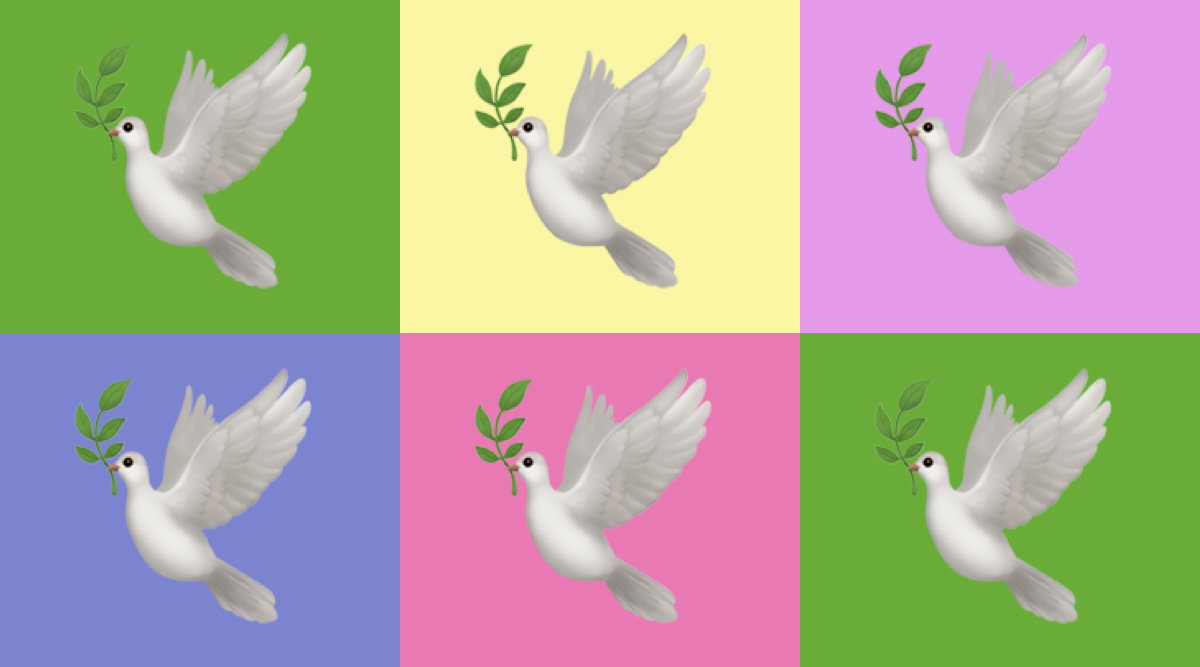
The 🕊️ emoji shows a white dove with its wings spread, flying from right to left with its feet tucked away and carrying a green olive branch in its beak.
It was approved as part of Unicode 7.0 back in 2014, and then added to Emoji 1.0 in 2015, originally known by the title “Dove of Peace.”
The dove’s link to peace goes back thousands of years. In the biblical story of Noah’s Ark, a dove returns to Noah with an olive branch, signaling that the flood waters have receded and a new beginning is on the way. In Christianity, the dove is also a symbol of the Holy Spirit.
In 1949, artist Pablo Picasso even drew a dove for the World Peace Congress in Paris, and the image went on to become one of the most recognized peace symbols in the world. That long history is a big reason the emoji carries such a serious, hopeful tone.
Also read about: What Does the 💥 Emoji Mean?
What 🕊️ Means
Taken at face value the 🕊️ dove can represent flight and feeling as free as a bird. It’s also an animal rich with symbolism, as the image of a dove carrying an olive branch is a popular symbol of peace.
In this context, the emoji can represent everything from love and harmony to innocence, agreement, gentleness or even faith. People might also use it as a symbol to spread joy, to celebrate births or unions or commiserate and support with loss, often with religious connotations.
Because doves are often released at weddings and memorial services, the emoji also shows up around big life moments. Some people use it to celebrate a marriage or a new baby, while others use it on posts honoring someone who has passed away, as a gentle way of saying “rest in peace.”
During difficult moments in the news, it’s also commonly used to express hope for peace and solidarity. Since the emoji can be both joyful and solemn, the surrounding text and the situation matter a lot.
Also read about: What Does the 😴 Emoji Mean?
Emojis to Pair With 🕊️
Pairing the dove with other emojis can fine-tune its message:
- 🕊️🤍 or 🕊️💕: Warmth, gratitude or gentle affection
- 🕊️🙏: Faith, hope or a heartfelt thank you
- 🕊️✌️: A call for peace after an argument
- 🕊️🌿: A fresh start or a new chapter
- 🕊️😇: Innocence and good intentions
🕊️ From a Crush
The 🕊️ emoji isn’t one people really use in a risque or aggressively flirtatious manner, typically reflecting friendship, togetherness or a deeper type of relationship instead.
Your crush might use it as a symbol of affection or gratitude, or to reflect their faith in better things and a brighter future. If you’ve had a disagreement recently, they might use this emoji to suggest that they want to resolve the situation and for both of you to come to a peaceful agreement.
The dove might also reflect that they feel blessed to have you in their life in some way. Be sure to pay attention to the context to determine whether they mean it in a general, friendly way, or the dove might mean something more.
For example, if you’ve been in an argument and your crush texts “I hate fighting with you 🕊️,” they’re probably extending an olive branch (literally) and hoping to make up.
On the other hand, a “Thanks for always being there 🕊️” is more about appreciation and trust than romance.
Looking for even more guidance for decoding emojis? Click HERE to check out our thorough guide to the most commonly used ones.